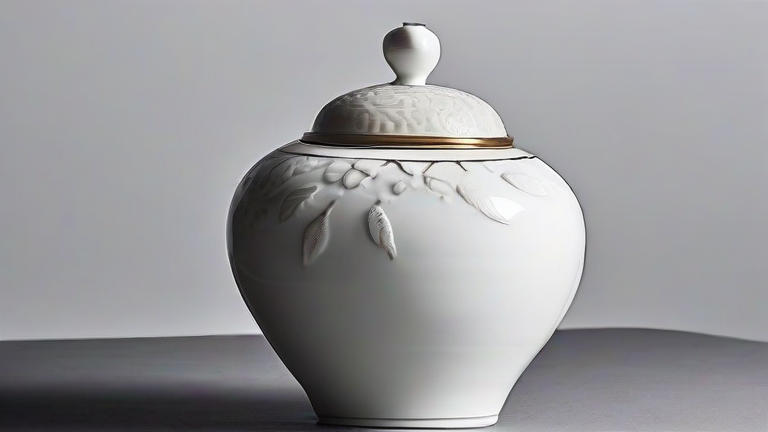
TL;DR: Porcelain is a high-fired ceramic born in China around 2,000 years ago, prized for its translucency, strength, and purity. To understand its culture, trace its evolution from imperial Chinese kilns to European “white gold” factories, then learn to identify key eras and decorative styles.
Step 1: Start with the Chinese Origins (Tang to Ming Dynasties)
Begin your study in China, where true porcelain (kaolin clay + petuntse, fired at 1,280°C+) emerged during the Tang dynasty (618–907). Focus on the Song dynasty (960–1279) for its refined, monochrome glazes like celadon and qingbai. By the Ming dynasty (1368–1644), the Jingdezhen kilns perfected blue-and-white ware using cobalt underglaze. To build cultural context, note that porcelain was not just tableware—it was a symbol of imperial power, traded along the Silk Road and given as diplomatic gifts.
If you want to dig deeper, check out our guide on Porcelain History & Culture: A Business Guide.
Step 2: Trace the Global Export Boom
Next, study how porcelain became a global commodity. From the 16th century, Portuguese and Dutch traders shipped millions of pieces to Europe, where the Chinese designs were copied but never matched. The term “china” became synonymous with fine dining. Pay attention to export wares like Kraak porcelain (thin, decorated with panels) and later “Chinese Imari” (overglaze enamels). For cultural depth, examine how these pieces influenced local ceramics in Japan (Arita, Imari) and the Middle East (Iznik tiles).
Step 3: Master the European “White Gold” Revolution
Europeans spent centuries trying to replicate porcelain. Key milestones: Medici porcelain (Florence, 1575, soft-paste), then the breakthrough at Meissen, Germany, in 1708 under Johann Friedrich Böttger. Learn the difference between hard-paste (true porcelain, like Chinese) and soft-paste (clay with glass frit, easier to mold at lower temps). Meissen’s famous crossed-swords mark, Sèvres’ pastel ground colors, and Wedgwood’s jasperware (not true porcelain but stoneware) are essential cultural artifacts. Understand that porcelain became a status symbol—royal “porcelain rooms” displayed entire collections as proof of wealth and taste.
Step 4: Identify Key Decorative Styles and Marks
To read a piece’s history, learn visual cues. Blue-and-white (underglaze cobalt) spans Ming to early Qing. Famille verte (green, yellow, iron-red) and famille rose (opaque pink enamel) are Qing dynasty (1644–1912) innovations. Look for reign marks (e.g., “Qianlong” six-character marks) but beware: many later pieces bear apocryphal marks. For European wares, check for factory marks: Meissen’s swords, Sèvres’ interlaced Ls, Royal Copenhagen’s three wavy lines. Use a magnifying glass to detect hand-painting vs. transfer printing (after 1750s).
Step 5: Visit Museums and Handle Reproductions
Culture is best felt, not just read. Visit a major collection (e.g., the Victoria & Albert Museum, London; the Palace Museum, Beijing; or the Metropolitan Museum of Art, NY) and spend time observing light passing through thin rims. If you cannot travel, buy a modern reproduction or antique shard (for under $20) to feel the weight and glaze texture. Compare a hard-paste teacup to a bone-china piece (a British 18th-century innovation with 50% bone ash) to appreciate differences in translucency and strength.
Step 6: Understand Porcelain’s Cultural Legacy Today
Porcelain remains a cultural touchstone: from fine dining’s “formal china” to contemporary artists like Ai Weiwei, who famously dropped a Han dynasty urn to critique tradition. Study how porcelain is used in rituals (
Leave a Reply