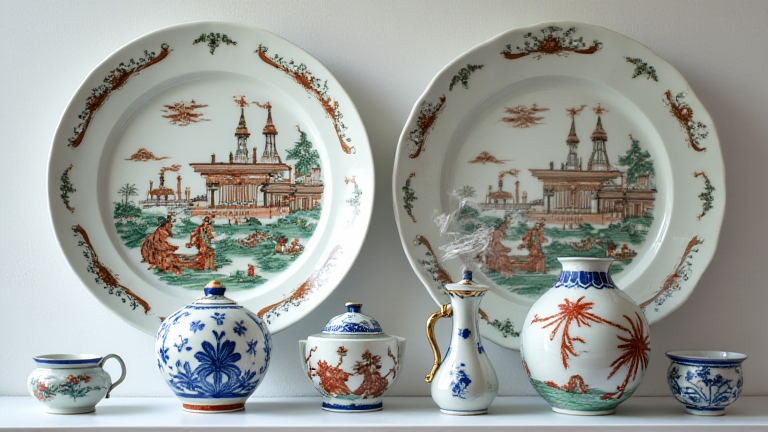
TL;DR: To understand porcelain, begin by tracing its origins from ancient China’s secret firing techniques to its global influence on art and trade. Focus on identifying key historical periods and cultural symbols to appreciate the material’s significance beyond mere aesthetics.
Understanding the Origins
Start your journey by acknowledging that porcelain is not just a material, but a cultural phenomenon that began in China over a thousand years ago. The term itself derives from “porc” (pig) and “celana” (cloth), a misnomer from Marco Polo, but the history is far more complex. Look for resources that detail the discovery of kaolin clay in Jingdezhen, the imperial kilns that set the standard for quality. Understand that early porcelain was exclusively for the Chinese imperial court, making it a symbol of supreme power and purity. This foundational knowledge helps you distinguish between true porcelain and earlier stonewares or later imitations found in other regions.
Tracing Global Influence
Next, explore how porcelain traveled the world via the Silk Road and later maritime trade routes. Study the impact of the “China Trade” on European economies and aesthetics. Focus on how European artisans, particularly in Germany and France, struggled for centuries to replicate the Chinese secret. The breakthrough by Johann Friedrich Böttger in Meissen is a pivotal moment to study. It marked the beginning of European porcelain production and the subsequent rise of distinct national styles. By mapping this movement, you can see how porcelain became a global commodity that shaped diplomatic relations and consumer desire across continents.
Analyzing Artistic Styles
Learn to identify the major stylistic periods. Begin with the blue-and-white aesthetic, which dominated Ming Dynasty production and was widely imitated. Notice the motifs used, such as dragons, phoenixes, and lotus flowers, and understand their symbolic meanings in Chinese culture. Then, move to the famille rose period, which introduced vibrant pastels and intricate floral designs. Compare these with European interpretations, such as the Rococo style in Sèvres or the Neoclassical simplicity in Wedgwood. Each style reflects the cultural values of its time and place, offering a window into the artistic trends of different eras.
Applying Cultural Context
Finally, apply this knowledge by examining how porcelain is used in daily life versus ceremonial contexts. In many Asian cultures, specific types of porcelain are reserved for tea ceremonies or ancestral rites, highlighting their spiritual significance. In the West, porcelain often signifies refinement and status, used in formal dining settings. When analyzing a piece, consider who made it, who used it, and why. This contextual approach transforms a simple object into a narrative of cultural exchange and artistic innovation.
FAQ
Q: What is the main difference between porcelain and stoneware?
A: Porcelain is fired at higher temperatures, making it more translucent, durable, and less porous than stoneware, which is generally opaque and denser.
Q: Why is Jingdezhen famous in porcelain history?
A: Jingdezhen is known as the porcelain capital of the world because it was the primary center for imperial production in China for centuries, setting global standards for quality.
Q: How can I date a porcelain piece at home?
A: Examine the base mark, glaze color, and decorative style, then compare them with reference guides or museum catalogs to identify the specific period and manufacturer.
Leave a Reply