Porcelain History & Culture: A Complete Beginner’s Tutorial
TL;DR: Porcelain is a high-fired ceramic defined by its translucency, whiteness, and ringing sound, originating in China and later replicated in Europe. This guide outlines the key historical milestones and cultural contexts you need to understand to appreciate this material’s global impact.
Understanding the Material
Before diving into history, it is crucial to understand what defines porcelain. Unlike earthenware or stoneware, true porcelain is made from a specific mixture of kaolin, feldspar, and quartz. When fired at temperatures exceeding 1200 degrees Celsius, these materials vitrify, creating a non-porous, hard, and white body. The defining test for porcelain is translucency; if you can see light through a thin edge of the piece, it is likely true porcelain. Additionally, tapping a porcelain object produces a clear, high-pitched ring, distinguishing it from the dull thud of other ceramics.
If you want to dig deeper, check out our guide on Porcelain History & Tech: 10 Cultural Secrets.
Step-by-Step Historical Context
Step 1: Identify the Chinese Origin. Your study must begin in ancient China, specifically during the Tang Dynasty (618–907 AD), where the first true porcelains appeared. However, it was the Song Dynasty that perfected the art. Focus on the “Jade White” porcelains of the Ding and Ru kilns. Understanding this era helps you appreciate the initial value of the material, which was so prized that it was often reserved for the imperial court. The Chinese kept the secret of kaolin extraction and high-temperature firing for centuries, making porcelain a symbol of luxury and status.
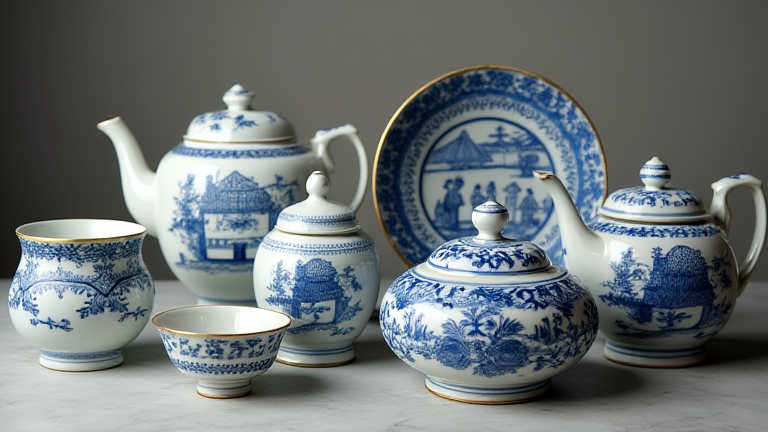
Step 2: Trace the Trade Routes. Next, examine how porcelain reached the West. The Silk Road and maritime trade routes facilitated the movement of Chinese goods to Europe. By the 16th and 17th centuries, Delft in the Netherlands and later other European centers began producing tin-glazed earthenware to imitate the look of Chinese blue-and-white porcelain. This period is known as “Delftware” or “Majolica.” Recognizing these imitations helps you distinguish between authentic Chinese exports and local European adaptations in museum collections or antique markets.
Step 3: Analyze the European Revolution. The turning point occurred in the early 18th century in Germany. At the Meissen factory, Johann Friedrich Böttger and Ehrenfried Walther von Tschirnhaus succeeded in creating hard-paste porcelain, breaking the Chinese monopoly. This event sparked a porcelain fever across Europe. France, with Sèvres, and England, with Wedgwood and Chelsea, developed their own distinct styles. French porcelain became known for its delicate, pastel colors and intricate floral patterns, while English porcelain often featured neoclassical designs and harder, whiter bodies. Understanding these national differences is key to authenticating pieces.
Step 4: Explore Modern Cultural Significance. Finally, consider how porcelain has evolved in modern culture. It is no longer just for tea sets or formal dining. Contemporary artists use porcelain for sculpture, jewelry, and architectural elements due to its versatility and strength. In cultural contexts, porcelain remains a symbol of refinement and hospitality. In many Asian cultures, serving tea in porcelain is a ritual that emphasizes respect and mindfulness. In the West, it often signifies wealth and social standing, particularly in formal dinnerware sets.
Practical Tips for Beginners
When starting your collection or study, always inspect the base of the item for maker’s marks. These marks are often hidden under the glaze and can reveal the manufacturer, location, and even the year of production. Learn to identify common marks from major factories like Meissen, Sèvres, and Wedgwood. Additionally, be cautious of restorations. Hairline cracks filled with glue or missing pieces are common in antique porcelain. Use a magnifying glass to check for these flaws, as they significantly affect value and structural integrity. Finally, handle pieces with clean, dry hands to avoid leaving oils on the surface that can dull the gl
Leave a Reply