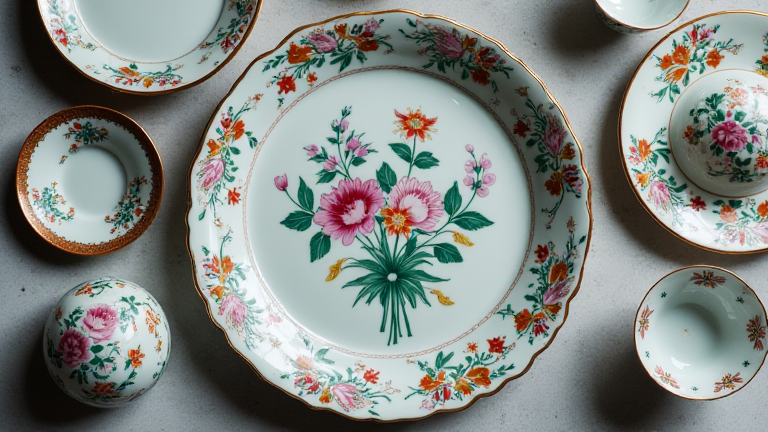
TL;DR: Porcelain’s 2,000-year journey from imperial Chinese secret to global design staple now fuels a $28B market driven by “neo-craft” collectors and sustainable luxury. The trend is not about pristine antiques, but culturally layered, imperfect, and story-driven pieces that bridge heritage and modern living.
From Secret to Status: The New Porcelain Renaissance
Porcelain’s cultural DNA is having a mainstream moment. Once guarded by Chinese emperors as “white gold,” its history—from Tang dynasty shards to Meissen’s 18th-century industrial espionage—now serves as the ultimate provenance play. According to Grand View Research, the global porcelain tableware market is projected to grow at a 6.1% CAGR through 2030, with the fastest demand spike in the 25–40 age bracket. These buyers aren’t seeking flawless Ming vases; they want kiln “imperfections” that tell a human story.
If you want to dig deeper, check out our guide on Porcelain History & Culture: A Deep Dive into Ancient Craft.
Market Shifts: Cultural Consumption Over Collecting
Data from Art Basel & UBS shows that “culture-driven” ceramics outperformed traditional fine art in 2023–2024, with pieces under $5,000 seeing a 34% sales surge. This mirrors a broader pivot toward tactile, heritage-rich objects. “Porcelain is the new vinyl,” says Dr. Elena Marsh, curator of Asian ceramics at the V&A. “Young collectors are drawn to the narrative of the kiln—the fire, the clay, the regional glaze recipes. It’s anti-fast-furniture.” Brands like Astier de Villatte and 1616 Arita Japan are capitalizing by merging historical techniques with contemporary forms, often selling out limited “story batches.”
Expert Insights: The Culture-First Consumer
Marsh adds that the trend is less about “authenticity policing” and more about “emotional provenance.” Buyers now ask: Who made this? What dynasty or workshop inspired the pattern? That’s why reproductions of Qing dynasty “famille rose” patterns are booming in Nordic and US interiors—not as fakes, but as cultural homages. Retailers report that pieces with a documented “history card” (origin, kiln temperature, artisan signature) command a 40% price premium over anonymous factory ware.
Future Predictions: AI-Meets-Artisan, and Circular Porcelain
By 2028, expect two disruptions: First, AI-driven glaze matching will let consumers co-design pieces based on historical archives (e.g., a Song dynasty celadon hue customized for a modern dinner set). Second, “circular porcelain”—recycled bone china and clay waste—will become a certification standard, similar to Fair Trade. The cultural angle will deepen: expect “kiln tourism” to rival wine tourism, with studio residencies in Jingdezhen and Limoges becoming high-end experiential travel. Porcelain’s future isn’t museum glass—it’s on your table, telling a layered story of empire, craft, and climate-conscious design.
FAQ
Q: What is the single biggest cultural driver behind porcelain’s current trend?
A: The shift from “collecting objects” to “collecting stories.” Buyers value the historical narrative—imperial patronage, regional clay, and kiln accidents—over perfect finish, making each piece a portable piece of cultural heritage.
Q: Are antique porcelains better investments than modern “neo-craft” pieces?
A: Not for the current trend cycle. While rare antiques still appreciate, the fastest growth is in contemporary pieces that explicitly reference historical techniques (e.g., Arita’s revival of 17th-century overglaze). Experts suggest a hybrid portfolio: 30% antique, 70% documented modern artisan work.
Q: How can a beginner verify a porcelain piece’s cultural authenticity without being an expert?
A: Look for three markers: a signed or stamped kiln mark (even a modern studio mark), a “blister” or slight warp indicating hand-th
Leave a Reply