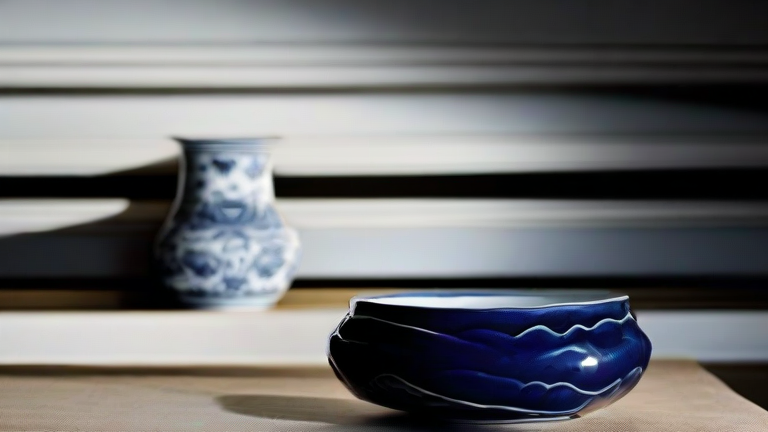
TL;DR: Porcelain evolved from a closely guarded Chinese secret into a global symbol of artistic refinement and cultural exchange over two millennia. Its journey reflects human innovation, trade dynamics, and the enduring desire for beauty in everyday life.
The Secret of the White Gold
For centuries, the production of true porcelain was a state secret in China. Unlike earthenware, which is porous and requires glazing to prevent leakage, true porcelain is vitrified. This means the clay body and glaze fuse together during firing, creating a non-porous, translucent, and incredibly strong material. The key ingredients are kaolin (china clay) and petuntse (porcelain stone), found primarily in Jingdezhen, often called the “Porcelain Capital” of the world. The firing temperature required exceeds 1,200 degrees Celsius, a technological leap that allowed artisans to achieve a pure, snow-white finish that had no parallel in the ancient world. When these delicate vessels first reached the Middle East and Europe via the Silk Road, they were so prized that they were often broken into pieces to be set into gold frames, a practice that gave rise to the term “china” for tableware in many Western languages.
If you want to dig deeper, check out our guide on **The Surprising Health History of Porcelain: From Medicine .
Global Trade and Cultural Exchange
The arrival of porcelain in Europe sparked a frenzy of imitation and innovation. For decades, European alchemists and potters attempted to replicate the Chinese material, often resulting in “soft-paste” porcelain that was less durable and more yellowish. The breakthrough came in the early 18th century in Germany, where the Meissen factory finally cracked the code, establishing the first major European porcelain industry. This success was not just industrial; it was cultural. Porcelain became a canvas for artistic expression, with Chinese motifs like dragons and landscapes inspiring European designers, while European floral patterns and mythological scenes eventually influenced Chinese export ware. This cross-pollination created a unique hybrid aesthetic that defined the taste of the aristocracy for two hundred years. Today, this history is visible in the design of modern dinner sets, where the elegance of Meissen or Limoges meets the timeless purity of Jingdezhen.
Modern Aesthetics and Personal Growth
In the contemporary lifestyle, porcelain has transcended its role as mere tableware to become a symbol of mindful living and personal growth. The ritual of using fine porcelain for tea or coffee encourages a slower pace, allowing individuals to appreciate texture, weight, and form. Collectors and enthusiasts often view porcelain as a form of tangible history, connecting them to global trade routes and artistic movements. Furthermore, the rise of minimalist design has brought back the appreciation for the “wabi-sabi” aesthetic, where imperfections in handcrafted pieces are celebrated rather than hidden. Engaging with porcelain art, whether through collecting, cooking, or simply decorating, fosters a deeper connection to cultural heritage. It reminds us that beauty is not just visual but also tactile and historical, offering a moment of calm in a fast-paced digital world. By understanding the 2,000-year journey of this material, we gain a new perspective on the objects that surround us, turning a simple cup into a vessel of cultural significance.
FAQ
Q: What makes true porcelain different from other ceramics?
A: True porcelain is non-porous, translucent, and fired at higher temperatures, making it stronger and more durable than earthenware or stoneware.
Q: Which country is considered the birthplace of porcelain?
A: China is widely recognized as the originator of true porcelain, with production centers like Jingdezhen leading the industry for centuries.
Q: Why was porcelain so valuable in Europe historically?
A: It was valued for its beauty, durability, and the difficulty of reproducing it, making it a status symbol for the wealthy and a driver of international trade.
Leave a Reply