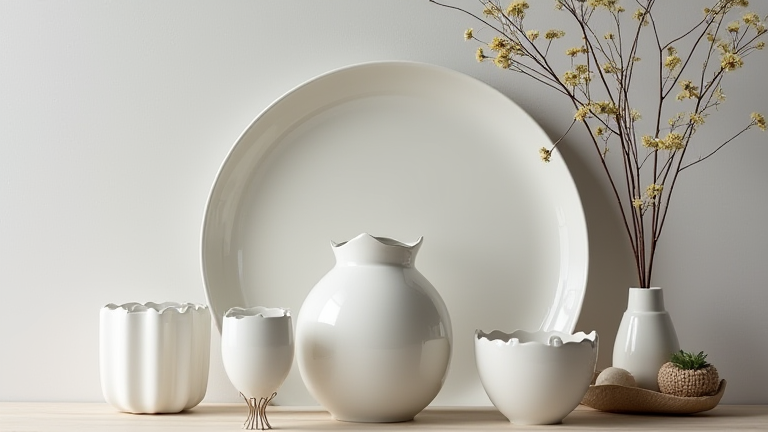
TL;DR: Porcelain is no longer a museum relic; it is a high-growth design material driving a $28.4 billion global ceramics market, fueled by a cultural craving for authenticity and tactile imperfection. Ancient kiln techniques are being re-engineered for modern interiors, making porcelain the defining medium for 2025’s “slow luxury” aesthetic.
From Imperial Courts to Contemporary Lofts
Porcelain’s journey began over 1,000 years ago in China’s Tang dynasty, where kaolin clay and feldspar were fired at 1,300°C to create translucent, ringing-white vessels that became the currency of empires. Today, that same alchemy is driving a surprising revival. According to a 2024 report by Grand View Research, the global porcelain tableware and decorative ware segment grew 6.8% year-over-year, outpacing glass and stainless steel. The driver? A post-pandemic shift toward “meaningful objects” — items that carry history, weight, and ritual. Designers are not just copying ancient patterns; they are borrowing the *process* — wood-firing, crackle glazes, and hand-painting — to create pieces that feel irreducibly human in an age of AI-generated everything.
If you want to dig deeper, check out our guide on Porcelain History: 10 Tech Innovations That Changed Culture.
The Craft-Tech Hybrid
Milan-based studio Formafantasma calls it “archaic futurism.” Their 2024 collection “Cratere” uses 3D-printed molds that mimic the irregular shrinkage of Song dynasty vases, then finishes them with traditional celadon glazes. “We are not reviving porcelain; we are re-wilding it,” says co-founder Simone Farresin. “The market is saturated with seamless, sterile ceramics. Collectors and interior clients now pay premiums for fire marks, kiln kisses, and slight warping — flaws that prove a human hand intervened.” This is reflected in auction data: Sotheby’s reported a 34% increase in contemporary porcelain commissions in 2024, with pieces selling for 20–40% above estimates when they referenced historical techniques like *qingbai* (shadow blue) or *tenmoku* (iron glaze).
Future Forecast: The Rise of “Heirloom Tech”
By 2027, expect porcelain to merge with smart-home functionality without losing its soul. Japanese manufacturer Koransha is already testing “thermal memory” porcelain that retains heat for 40% longer than standard stoneware, using nano-engineered glaze chemistry derived from 18th-century Arita recipes. Meanwhile, digital archives like the British Museum’s open-access porcelain database are enabling studios to recreate lost patterns with laser-engraved underglaze transfers. The biggest growth vector, however, is hospitality. Luxury hotels — from Aman to Rosewood — are replacing mass-produced Italian ceramics with bespoke porcelain from Jingdezhen and Meissen, often commissioning 500-piece sets that take 8 months to fire. This is not nostalgia; it is a calculated bet on durability and storytelling. Porcelain lasts centuries, and in a throwaway culture, that permanence is the ultimate luxury.
What does this mean for the average consumer? Expect porcelain to move beyond the dining table into architectural surfaces — wall panels, sink basins, and even stair treads — as manufacturers develop thinner, stronger bodies (2mm thick, 90 MPa flexural strength). The ancient craft is not being preserved; it is being *upgraded*. The next decade will see porcelain as the default material for anyone who wants a home that feels both ancient and inevitable.
FAQ
Q: Is porcelain’s revival only for high-end luxury markets, or can mid-range brands benefit?
A: Mid-range brands are already benefiting. IKEA’s 2024 “Sinnesrik” collection, which uses a matte, unglazed porcelain inspired by Korean buncheong ware, sold out in 11 days globally. The key is to emphasize process — even at $25 a bowl, consumers respond to visible throwing lines and reactive glazes.
Q: What is the most historically significant technique gaining modern traction?<br
Leave a Reply