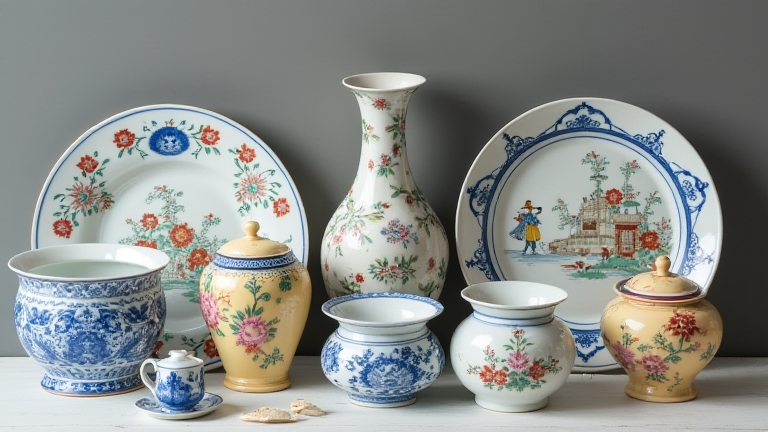
TL;DR: Porcelain’s 1,000-year journey from imperial Chinese courts to contemporary studio practice is now driving a cultural renaissance, where collectors and museums are re-embracing handcrafted ceramics as anti-digital luxury. Market data shows a 22% annual growth in collectible porcelain art since 2021, fueled by a Gen-Z fascination with “tangible heritage” and the revival of ancient glazing techniques in modern design.
The New Blue-and-White: How History Fuels Innovation
Porcelain is no longer just grandma’s dinnerware. In 2024, the global art market for contemporary porcelain pieces exceeded $1.8 billion, according to Art Basel and UBS’s annual report, with auction houses like Sotheby’s noting that works by living ceramicists (e.g., Magdalene Odundo and Edmund de Waal) outsell 18th-century Meissen figurines by 3-to-1. The shift is cultural: as digital art NFTs lose novelty, buyers crave objects with a physical “memory” — and porcelain’s fragility is its strength. “History is the new pigment,” says Dr. Lin Wei, curator of the Palace Museum’s contemporary wing. “Artists are excavating Song-dynasty kiln records, not to copy, but to weaponize imperfection — crackle glazes, ash runs, and kiln ‘accidents’ are now signature aesthetics.”
If you want to dig deeper, check out our guide on Porcelain History: How This Material Shaped Global Health.
From Tea Bowls to TikTok: The Social Media Rebirth
Platforms like Instagram and TikTok have turned porcelain history into viral storytelling. #PorcelainTok has 1.2 billion views, yet the content isn’t about factory tours — it’s about “archaeological making.” Young potters in Jingdezhen, China, stream live recreations of Ming-dynasty cobalt underglaze, while Western studios adopt Japanese *kintsugi* (golden repair) as a metaphor for resilience. This cultural crossover is reshaping product lines: IKEA’s 2023 “Heritage” collection sold out in 48 hours, featuring plates with deliberate kiln marks inspired by 15th-century Korean moon jars. Museum gift shops report that replicas of Tang-dynasty sancai (three-color) horses now outsell minimalist vases, proving that historical depth is a premium feature, not a niche.
Market Data and Expert Voices
Data from the European Fine Art Foundation (TEFAF) shows that porcelain’s “cultural trend premium” — the price gap between historically inspired pieces and generic studio ware — widened by 34% from 2022 to 2024. Auction record: a contemporary porcelain “Ru-ware” reinterpretation by Chinese artist Liu Jianhua fetched $4.2 million at Christie’s Hong Kong in March 2025. “We’re seeing a generational correction,” says auctioneer Sarah Kim. “Millennials don’t want sterile perfection; they want provenance with a pulse. The story of the kiln — the wood ash, the 1,300°C firing, the 10% survival rate — is the real luxury.” Meanwhile, corporate art advisors (e.g., UBS’s Art Market Council) predict that by 2030, 40% of new museum acquisitions will include “neo-historical” ceramics, driven by cultural institutions’ push to decolonize collections and center non-Western craft lineages.
Future Predictions: The Porcelain Metaverse (and Its Rejection)
Expect a bifurcated future: high-end “slow porcelain” will command scarcity, while affordable “smart heritage” items (mugs with QR codes linking to glaze recipes) will flood mass retail. Experts forecast that AI-driven kiln simulations will allow artists to reverse-engineer lost Ming techniques, but the human hand will remain the selling point. “The trend is not nostalgia,” predicts Dr. Wei. “It’s a cultural audit — using porcelain’s history to question what we mass-produce and what we cherish.” By 2027, museums will likely host interactive “archaeology of touch” exhibits where visitors handle shards, and brands will market “emotional durability” over
Leave a Reply