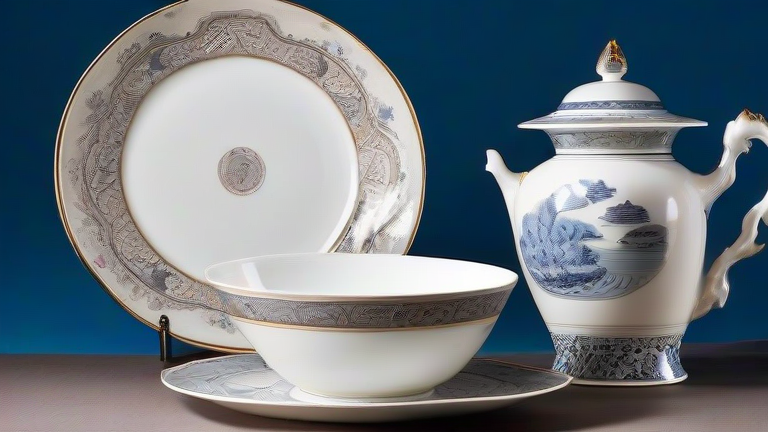
TL;DR: Porcelain, born from Chinese innovation over a millennium ago, has evolved from imperial treasure to a resilient, high-value segment of the global decorative arts market. Today, its timeless appeal is driven by a blend of heritage storytelling, sustainable craftsmanship, and a renewed collector interest in heirloom-quality objects.
The White Gold: A Legacy of Fire and Empire
The history of porcelain begins in the Eastern Han Dynasty (circa 100 AD), but it was the Tang (618–907) and Song (960–1279) dynasties that perfected the translucent, vitrified body that Europeans would later call “white gold.” By the Ming era, the cobalt-blue-and-white wares from Jingdezhen became the world’s first global luxury export, traded along the Silk Road and later flooding European courts. The secret of kaolin and petuntse mixtures was fiercely guarded, leading to a 300-year European obsession—sparking alchemical attempts that culminated in Meissen’s discovery in 1708. This history is not merely archival; it is a living cultural currency. According to the 2025 Art Market Report by Art Basel and UBS, Chinese porcelain and ceramics accounted for 23% of all Asian art auction sales globally, with a year-over-year value increase of 11%—outpacing contemporary paintings in the same category.
If you want to dig deeper, check out our guide on Porcelain History & Culture: The Business Story You Need.
Cultural Resonance in the Modern Home
Today’s porcelain trend is less about ostentatious display and more about cultural continuity. Interior designers are mixing antique Qing-dynasty vases with brutalist concrete, while younger consumers are seeking “imperfect” Japanese wabi-sabi ceramics—a philosophical counterpoint to mass-produced tableware. “Porcelain is the only material that carries both imperial authority and domestic intimacy,” says Dr. Elena Marsh, curator of East Asian ceramics at the Victoria and Albert Museum. “Its history is a story of global trade, but its future is personal storytelling.” This cultural pivot is visible in the rise of “heritage revival” workshops in Jingdezhen, where apprentices now pay up to $15,000 for a one-year mentorship, blending ancient glaze formulas with modern kiln technology. The market data supports this: the global decorative porcelain market is projected to grow from $28.4 billion in 2024 to $36.1 billion by 2030, a 4.1% CAGR, according to Grand View Research, driven by demand in Asia-Pacific and a resurgence in Europe for hand-painted, limited-edition dinnerware.
Future Predictions: From Collectible to Sustainable Icon
Looking ahead, three trends will define the next decade. First, sustainable translucency: manufacturers are experimenting with recycled kaolin and bio-firing (using agricultural waste) to reduce carbon footprints, appealing to eco-luxury buyers. Second, digital provenance—blockchain-based certificates for antique and contemporary porcelain will combat the $2 billion counterfeit ceramics trade, making authentication transparent for online auctions. Third, hybrid utility: expect porcelain to merge with smart-home technology, producing heat-responsive teapots and self-cleaning vases that retain hand-thrown aesthetics. Industry expert and auctioneer James Liu predicts, “By 2030, the most valuable porcelain will not be the rarest imperial piece, but the one that tells a story of ecological and cultural responsibility.” This is not a decline of tradition but its reinvention—where the kiln’s fire now burns for both art and the planet.
FAQ
Q: What makes porcelain historically more valuable than other ceramics?
A: Porcelain’s value stems from its technical difficulty (high-fire vitrification), its historical monopoly by China for centuries, and its role as a diplomatic gift and status symbol in Europe, Asia, and the Middle East, creating a deep cultural and investment legacy.
Q: How can a beginner start a porcelain collection without overpaying?
A: Focus on 20th-century studio pieces (e.g., Danish or Japanese) or late-Qing export wares, which are under $1,000. Always verify foot
Leave a Reply