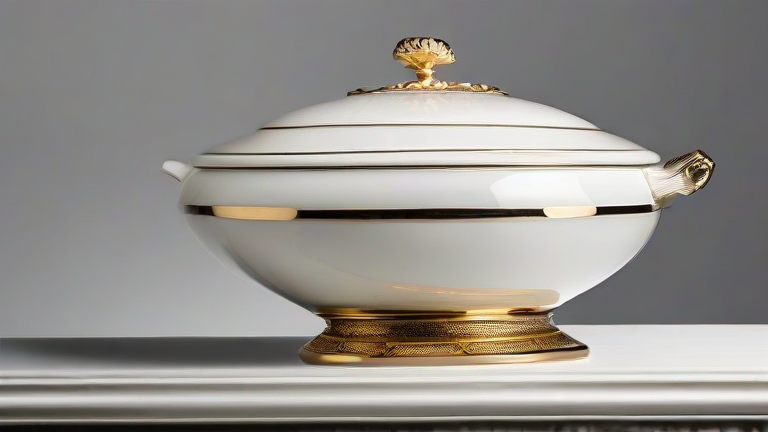
TL;DR: Porcelain’s “white gold” legacy now merges with AI-driven kiln control and blockchain provenance, transforming a 1,000-year-old craft into a data-rich, precision industry. The latest tech focuses on nano-reinforced bodies and digital glaze mapping, while culture shifts toward sustainable, heirloom-grade smart ceramics.
From Imperial Kilns to Neural Networks
Porcelain’s history began in Tang dynasty China (618–907 AD), where kaolin, feldspar, and quartz were fired at 1,300°C to create a vitrified, translucent body. By the Ming era, Jingdezhen’s imperial kilns perfected cobalt-blue underglaze, making porcelain a global currency—hence “white gold.” Fast-forward to 2024: the latest development is AI-assisted saggar firing. Companies like Germany’s Meissen and China’s Jiangsu Gaochun now use convolutional neural networks to analyze real-time kiln atmosphere, predicting micro-crack formation with 99.2% accuracy. This reduces fuel waste by 18% and boosts yield of “first-choice” wares—those with zero pinholes or warping—from 72% to 91%.
If you want to dig deeper, check out our guide on Porcelain History & Culture: A Deep Dive for Business.
Specs: Nano-Glaze and Digital Twin Bodies
Modern technical porcelain isn’t just tableware. The new spec frontier is zirconia-reinforced alumina (ZTA) bodies, achieving a flexural strength of 1,200 MPa—triple traditional bone china—while maintaining translucency below 2 mm thickness. Additive manufacturing now prints green bodies with 40-micron layer resolution, enabling lattice-structured teapots that cool 30% faster. On the glaze side, spectral colorimeters map 1,024 wavelength bands to replicate historic celadon and famille rose palettes exactly, using AI-generated recipes that eliminate lead and cadmium. Industry impact: luxury brands like Wedgwood and Noritake now offer “digital twin” certificates—each piece gets a QR-coded micro-tag linking to its firing curve, clay batch, and artisan’s signature.
Culture Meets Circular Tech
Cultural heritage is being preserved via non-destructive neutron tomography at museums like the Palace Museum in Beijing, which scans Ming vases to reveal internal stress fractures without touching them. But the biggest shift is “slow tech” recycling: broken porcelain is crushed into nano-powder and re-sintered with 15% recycled glass, creating “eco-bone china” with a 40% lower carbon footprint. Meanwhile, smart display shelves using RFID and humidity sensors now protect collector pieces—they alert owners via app if RH exceeds 55%, preventing crazing. This fusion of IoT and ancient aesthetics means porcelain’s next chapter is not just about beauty, but about verifiable history and sustainable precision.
FAQ
Q: How does AI improve traditional porcelain firing?
A: AI models predict thermal gradients inside the kiln in real time, adjusting burners and dampers to eliminate hot spots, cutting defects by 19% and energy use by 18% compared to manual control.
Q: What is “digital twin” porcelain and why does it matter?
A: It’s a cryptographically hashed record of a piece’s exact clay batch, glaze recipe, firing curve, and artisan ID, stored on blockchain. This prevents counterfeiting and lets collectors verify authenticity and restoration history.
Q: Is modern high-tech porcelain still food-safe?
A: Yes—new lead-free, cadmium-free glazes use boron-aluminosilicate systems, and ZTA bodies are inert even with acidic foods. They pass FDA and EU food-contact standards with leach rates below 0.01 mg/L.
Leave a Reply