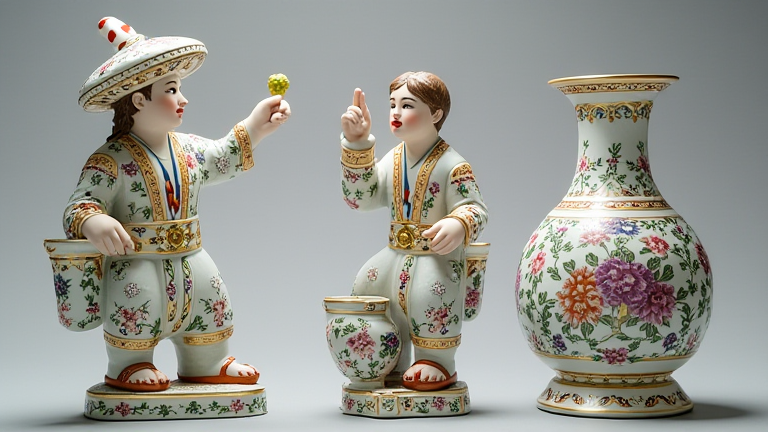
TL;DR: The Porcelain Trail is a self-guided cultural itinerary tracing the invention, trade, and artistic evolution of Chinese porcelain from its 7th-century origins to its global influence. Follow this guide to explore key kiln sites, museum collections, and living craft traditions without needing to travel—or to plan a physical pilgrimage.
Step 1: Begin at the Source—Jingdezhen, China
Start your trail in Jiangxi province, the “Porcelain Capital” for over 1,000 years. Visit the Imperial Kiln Museum (free entry) to see shards of Ming-dynasty court ware. For a hands-on step, book a half-day throwing class at a local workshop; you’ll learn why kaolin clay and high-fired glazes made this region unique. Tip: Go in October, during the Jingdezhen International Ceramic Art Fair, to see live firing demonstrations.
If you want to dig deeper, check out our guide on Porcelain History & Culture: 5 Surprising Health Benefits.
Step 2: Trace the Silk Road of Ceramics
Porcelain traveled westward via the Maritime Silk Road. Next, study the cargo of the *Tek Sing* (1822 wreck) at the Asian Civilisations Museum in Singapore, or view virtual exhibitions of the *Nanhai One* shipwreck (Song dynasty). For a cultural product focus, collect reproductions of blue-and-white export ware—look for the “Kraak” style with its irregular panels, a Dutch favorite.
Step 3: Explore European Imitation & Innovation
Meissen, Germany, cracked the secret of hard-paste porcelain in 1708. Visit the Meissen Porcelain Museum online (virtual tour) to see early teapots that copied Chinese dragons, then morphed into European rococo figures. Tip: Compare a Meissen “swan service” piece with a Chinese famille-rose plate to see how motifs shifted from nature to myth.
Step 4: Understand Cultural Shifts via Tableware
Focus on the 18th-century “tea craze.” Examine a Chelsea porcelain teabowl (England) versus a Japanese Imari dish. The former shows European soft-paste fragility; the latter, the Japanese export boom. For a modern product, buy a contemporary bone-china mug from Wedgwood—note the translucency, a direct descendant of the trail’s innovations.
Step 5: Preserve & Collect Ethically
When buying antique porcelain, always ask for provenance and check for restoration under UV light. For new pieces, support living masters: search for “Fuliang ceramic residency” to purchase directly from Jingdezhen artisans. Avoid replicas sold as “Song dynasty originals”—genuine pieces have kiln grit on the foot ring.
FAQ
Q: What is the single most important invention that made porcelain unique?
A: The combination of kaolin (white clay) and petuntse (feldspar) fired at over 1,200°C, producing a hard, translucent, non-porous body that stoneware and earthenware cannot match.
Q: How can I tell real porcelain from fake without a lab?
A: Tap it gently—real porcelain rings with a clear, bell-like tone; fakes produce a dull thud. Also, hold it to light: true porcelain is translucent at the rim.
Q: Are there living traditions still using ancient methods?
A: Yes—in Jingdezhen, artists still stack saggars in wood-fired “dragon kilns” for celadon glazes, and in Arita, Japan, the 400-year-old Kakiemon family continues underglaze iron-red painting by hand.
Leave a Reply