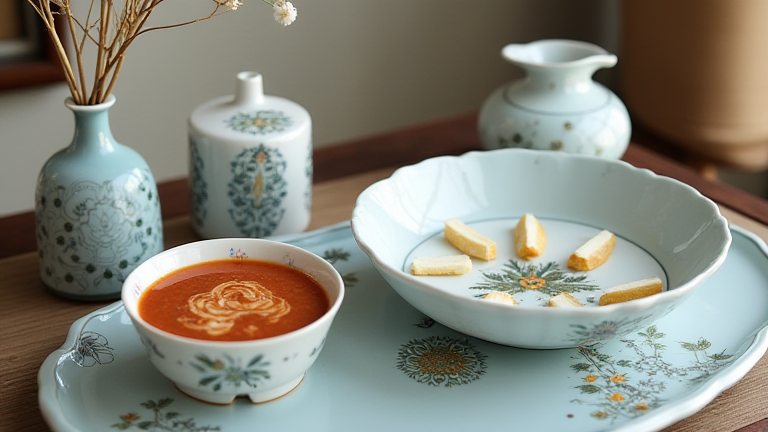
TL;DR: Porcelain history spans millennia, originating in China and evolving into a global cultural symbol of refinement and artistry. To understand its culture, one must study its regional variations, production techniques, and the social status it conferred upon its owners throughout the centuries.
Understanding the Origins
Begin your journey by exploring the earliest forms of porcelain, which emerged in the Tang Dynasty of China around the ninth century. Unlike earthenware or stoneware, true porcelain is made from kaolin clay and feldspar, fired at extremely high temperatures to achieve a white, translucent, and vitrified finish. This material was initially reserved for imperial use, signifying power and purity. To grasp this foundational era, visit major museum collections that house Tang “eggshell” ware. Look for pieces that demonstrate the early mastery of translucency, a hallmark that would later captivate the world. Understanding this origin is crucial because it establishes porcelain as more than a vessel; it is a cultural artifact that represents technological sophistication and aesthetic refinement.
If you want to dig deeper, check out our guide on Porcelain History & Culture: A Guide to Its Rich Heritage.
Tracing the Global Influence
Next, examine how porcelain traveled along the Silk Road to Europe, where it became a highly sought-after luxury good. In the eighteenth century, European powers attempted to replicate Chinese techniques, leading to the founding of major porcelain factories in Meissen, Germany, and Sèvres, France. Each region developed distinct cultural signatures. For example, Meissen is known for its cobalt blue decorations and delicate figures, while Sèvres is celebrated for its soft pastel colors and intricate floral patterns. To understand this cultural exchange, compare side-by-side exhibits of Chinese export ware with European imitations. Notice how European artists adapted Chinese motifs like dragons and landscapes into their own artistic styles. This cross-cultural pollination created a unique global vocabulary of decoration that continues to influence modern design.
Appreciating Regional Styles
Dedicate time to studying specific regional styles to deepen your cultural appreciation. In Japan, the concept of “wabi-sabi” influenced porcelain production, resulting in pieces that emphasize asymmetry, imperfection, and natural beauty. Japanese Raku ware, for instance, is fired at lower temperatures, creating a rustic texture that contrasts sharply with the smooth perfection of Chinese porcelain. In contrast, German porcelain often features bold, three-dimensional modeling, such as the famous Meissen “Cane Sugar” figurines. To fully appreciate these differences, attend local gallery openings or workshops that focus on specific traditions. Engage with the tactile qualities of different glazes and forms. Understanding these regional nuances allows you to identify the cultural values embedded in each piece, whether it is the harmony with nature in Japan or the opulence of European courts.
Modern Relevance and Care
Finally, explore how porcelain remains relevant in contemporary culture. Today, it is used not only for dining but also for high-end art installations and architectural elements. If you are acquiring porcelain pieces for your own collection, learn proper care techniques to preserve their integrity. Handle pieces by the body rather than the rim, avoid abrasive cleaners, and store them in padded boxes to prevent chipping. Join online forums or local collecting societies to connect with enthusiasts who can share insights on authentication and history. By caring for these objects, you participate in the preservation of a cultural heritage that has shaped global aesthetics for over a thousand years.
FAQ
Q: What is the main difference between porcelain and stoneware?
A: Porcelain is fired at higher temperatures, making it harder, more translucent, and less porous than stoneware.
Q: Why was porcelain so valuable in Europe?
A: It was difficult to produce and imported from Asia, making it a rare luxury item that signified wealth and status.
Q: How can I identify authentic antique porcelain?
A: Look for specific marks, glaze characteristics, and historical motifs, but consult an expert for valuable pieces to ensure authenticity.
Leave a Reply