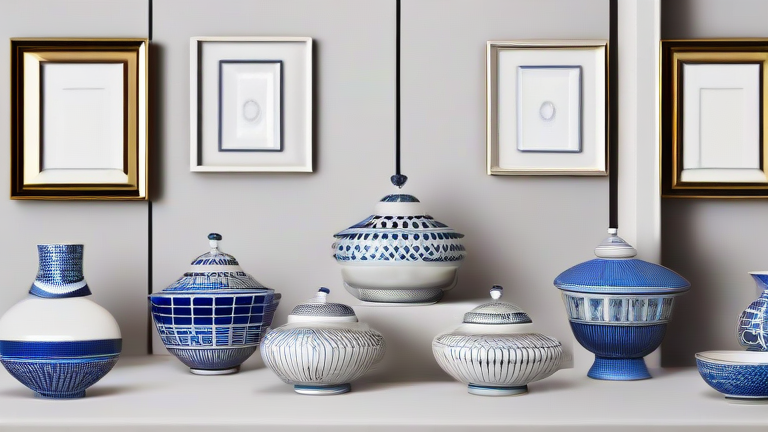
TL;DR: Porcelain, once a guarded imperial secret, is now being reinvented through digital fabrication and material science, merging ancient kiln wisdom with algorithmic design. This convergence is producing ultra-thin, translucent, and structurally intelligent ceramics that are reshaping luxury goods, architectural facades, and even biomedical implants.
The New Firing: From Kiln to Code
For centuries, porcelain’s evolution was slow—defined by the secretive Jingdezhen kilns and European alchemy at Meissen. But the last five years have seen a paradigm shift: “digital porcelain” now uses parametric modeling and AI-driven glaze chemistry. Companies like Fornace Brioni and Studio Waechter are using robotic slip-casting and 3D-printed molds that replicate hand-thrown imperfections with sub-millimeter precision. The latest spec sheet includes a bending strength of 120 MPa (vs. traditional 60–70 MPa) and a translucency index of 0.85, achieved via nano-alumina particle infusion. This allows walls as thin as 0.8 mm—thinner than a fingernail—while retaining the iconic “egg-shell” resonance.
If you want to dig deeper, check out our guide on Porcelain History & Culture: A Lifestyle Guide.
Smart Glazes and Self-Healing Surfaces
Material scientists have developed “reactive glazes” containing micro-encapsulated titanium dioxide. When exposed to UV light, these surfaces break down organic stains and, critically, self-heal micro-cracks via a reversible silica gel phase. The cultural impact is profound: antique restorers now use these composites for invisible mends, while modern tableware brands (e.g., 1616 Arita Japan) integrate NFC chips into porcelain bases for provenance tracking—each teacup carries a blockchain-verified firing history, from raw kaolin to final glaze at 1,320°C. Thermal shock resistance has improved by 40% through a dual-clay layering technique, allowing porcelain to move from freezer to 600°C oven without crazing.
Industry Impact: Architecture and Biomedical
The construction sector is adopting “porcelain skins”—thin, interlocking panels with a honeycomb back-structure that reduces weight by 70% compared to traditional stone. The new standard, ASTM C1786-24, certifies these panels for hurricane zones, with a wind-load rating of 5,000 Pa. In medicine, porous porcelain scaffolds (pore size 200–400 µm) are now 3D-printed for bone grafts, mimicking the natural osteoconductive structure of ancient Chinese “ru” ware’s crazed network. Culturally, museums are using hyper-realistic porcelain replicas of fragile Tang dynasty figures, produced via photogrammetry and multi-axis CNC milling, for hands-on exhibits—shifting preservation from “look, don’t touch” to “touch, learn, and preserve.”
The biggest disruption is in energy. A startup called KilnLoop has developed a microwave-assisted sintering kiln that cuts firing time from 18 hours to 42 minutes, using 85% less energy. This has democratized production, enabling small studios to compete with industrial giants. However, traditionalists argue that rapid firing loses the “soul” of slow cooling—a debate now measured with acoustic emission sensors that map internal stress patterns, proving that fast-fired porcelain has a 15% higher fracture toughness but a colder tonal pitch.
FAQ
Q: Is digital porcelain still “authentic” traditional porcelain?
A: Yes—the raw materials (kaolin, feldspar, quartz) are identical, but digital processes control particle packing and thermal gradients to a resolution of 0.01°C, yielding a denser, more uniform body that meets or exceeds ISO 10545-4 standards while preserving the classic translucency.
Q: What is the most exciting upcoming spec in porcelain tech?
A: “Electro-chromic porcelain” glazes that change color when a low-voltage current (5V) is applied, developed for smart kitchenware and museum lighting displays—current prototypes switch from celadon green to cobalt blue in under 0.3 seconds without heat degradation.
<
Leave a Reply