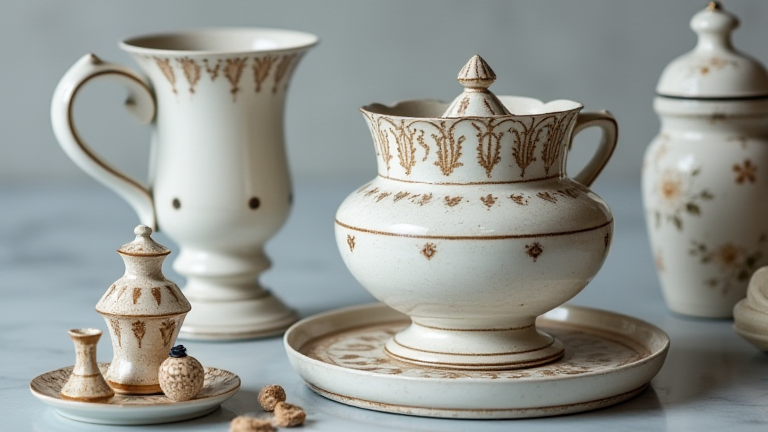
TL;DR: Recent advancements in digital fabrication and advanced materials science are revolutionizing porcelain production, enabling unprecedented precision and new aesthetic possibilities. These technologies are reshaping the industry by bridging traditional craftsmanship with modern engineering efficiency.
The Digital Renaissance in Ceramic Arts
Porcelain, a material with a history spanning over a thousand years, is undergoing a significant transformation. While its origins lie in the kilns of ancient China, modern porcelain is being redefined by cutting-edge technology. The integration of digital tools into the creative process has not only preserved traditional techniques but also expanded the boundaries of what is possible in ceramic art. Artists and manufacturers are now leveraging these innovations to create pieces that were previously impossible to produce by hand alone.
If you want to dig deeper, check out our guide on Porcelain History: Tech Behind the White Gold.
3D Printing and Additive Manufacturing
One of the most impactful developments is the adoption of 3D printing for ceramic green bodies. High-resolution stereolithography and material extrusion printers allow for the creation of intricate, lattice-like structures that defy traditional molding constraints. Modern industrial-grade ceramic printers, such as those from Carbon and 3D Systems, utilize photopolymerized slurry technologies. These machines achieve layer resolutions as fine as 20 microns, allowing for detailed surface textures and complex geometries. The specifications of these systems often include build volumes exceeding 1000 cubic inches, with material compatibility extending to fine china, bone china, and technical ceramics. This precision reduces material waste by up to 40% compared to traditional slip casting, significantly impacting production costs and sustainability metrics.
Advanced Kiln Control and AI Integration
Beyond fabrication, the firing process itself has been modernized. Traditional kilns required intense human oversight to manage temperature curves, a critical factor in determining the final color and strength of the porcelain. Today, AI-driven kiln controllers analyze real-time data from multiple thermocouples to adjust gas and oxygen inputs dynamically. This automation ensures consistent firing results across large batches, reducing the defect rate in high-volume manufacturing. Furthermore, digital simulation software allows artists to preview the final appearance of glazes before firing, saving time and resources. These smart kilns feature high-precision PID controllers capable of maintaining temperature stability within +/- 2 degrees Celsius, crucial for delicate porcelain pieces.
Industry Impact and Cultural Shifts
The industry impact of these technologies is profound. High-end porcelain manufacturers are seeing a surge in demand for personalized, tech-enabled designs. The cultural perception of porcelain is also shifting; it is no longer viewed solely as a traditional craft but as a medium for high-tech innovation. Galleries are increasingly featuring works created with digital tools, challenging the notion that technology diminishes artistic value. Instead, it enhances it. This fusion of heritage and innovation is attracting a new generation of artists who are skilled in both digital design and traditional pottery techniques. The result is a vibrant ecosystem where historical knowledge meets modern capability, ensuring the continued relevance and evolution of porcelain in the contemporary world.
FAQ
Q: What is the primary benefit of using 3D printing in porcelain production?
A: It enables the creation of complex, intricate designs that are impossible to achieve with traditional methods while reducing material waste.
Q: How does AI improve the porcelain firing process?
A: AI systems monitor and adjust kiln conditions in real-time, ensuring consistent temperature and reducing the risk of defects.
Q: Are traditional porcelain artists adopting these new technologies?
A: Many artists are integrating digital tools to enhance their creative process, combining traditional skills with modern precision.
Leave a Reply