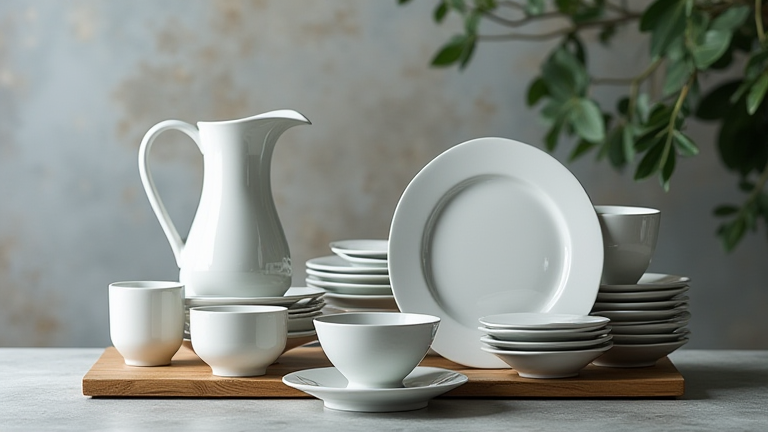
TL;DR: Porcelain’s 1,000-year journey from Chinese imperial courts to global factory floors reveals how scarcity, imitation, and supply-chain innovation built modern consumer markets. Its history offers a masterclass in brand protection, cultural localization, and premium pricing—strategies still vital for today’s cross-border commerce.
1. The Monopoly That Created the First Global Trade War
For centuries, China held an absolute monopoly on true porcelain (kaolin + petuntse fired at 1,300°C). The Silk Road and maritime spice routes turned Ming and Qing vases into the world’s most valuable manufactured goods—more expensive than gold by weight. European aristocrats paid in silver, causing a massive trade deficit that prompted Portugal, Holland, and Britain to fund espionage missions. This early “technology transfer” effort foreshadowed modern intellectual property battles: the recipe was stolen, but China’s brand equity (“fine china”) remained, teaching us that origin story is a durable competitive advantage.
If you want to dig deeper, check out our guide on Porcelain History & Culture: Tech Innovations Shaping Cerami.
2. The Alchemy of Imitation: Meissen and the Innovation Trap
In 1708, Johann Böttger cracked the formula for Augustus the Strong of Saxony, founding Meissen Porcelain. But Meissen’s strategy—hyper-secrecy and aristocratic-only sales—backfired. The factory’s output was too small, prices too high, and copying soon flooded Europe. The lesson: in a globalized market, imitation is inevitable; the winning move is not guarding secrets but scaling production and segmenting customers. Meissen’s failure to do so allowed Wedgwood (England) to dominate by industrializing and selling to the rising middle class—a pivot from luxury to premium-mass market.
3. The Wedgwood Case: Marketing as a Cultural Engine
Josiah Wedgwood (1730–1795) didn’t just make better pottery; he invented modern demand creation. He used showrooms, celebrity endorsements (Queen Charlotte), and “limited edition” drops (the Frog Service) to create desire. Critically, he aligned porcelain with Enlightenment-era values: civility, science, and moral refinement. This cultural positioning turned a tableware purchase into a status ritual. Today’s brand strategists still borrow his playbook—LVMH’s “heritage storytelling” and Apple’s “lifestyle ecosystem” are direct descendants.
4. Market Analysis: From Fragile Art to Industrial Commodity
By the 19th century, porcelain shifted from artisan craft to mass production (Spode, Limoges, Noritake). Market dynamics became volume-driven: lower unit costs, standardized patterns, and retail distribution via department stores. However, the mid-20th century saw a collapse in Western production as Japanese and later Chinese manufacturers undercut prices. Today, the global porcelain market is bifurcated: ultra-premium heritage brands (Haviland, Royal Copenhagen) compete on provenance, while mass-market players compete on design speed and logistics. The strategic insight: in mature categories, differentiation shifts from material to narrative and channel agility.
5. Strategy Insight: The “Cultural Authenticity” Premium
Modern porcelain brands that thrive (e.g., 1616 Arita in Japan, Astier de Villatte in France) share one trait: they anchor production in a specific geography with a documented lineage. They also embrace “co-opetition”—sharing kilns and techniques with rivals to build a regional cluster (like Arita’s 400th anniversary initiative). For global businesses, this means investing in local craft ecosystems, not just offshore factories. Consumers pay a 300–500% premium for a story that can be verified through place and process.
6. Case Study: The Rise of Chinese Revival Brands
After decades of cheap export production, Chinese companies like Longquan Celadon and Fuliang have re-positioned themselves by reclaiming ancient kiln sites and using modern e-commerce (Tmall, live-streaming) to sell story-driven collections. Their strategy: “heritage as innovation.” They pair 800-year-old glaze recipes with
Leave a Reply