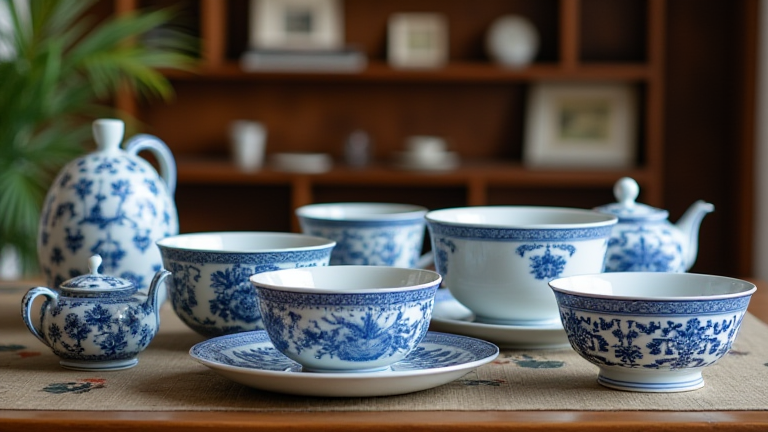
Porcelain History: 5 Key Facts for Modern Business Leaders
TL;DR: Porcelain’s evolution from a guarded Chinese secret to a global industrial standard demonstrates the immense value of intellectual property protection and supply chain mastery. Modern leaders can leverage this history to build premium brand equity by emphasizing heritage, authenticity, and sustainable craftsmanship in their product narratives.
The history of porcelain is not merely a cultural artifact; it is a masterclass in market disruption, monopoly power, and global trade dynamics. For contemporary business leaders, understanding the trajectory of this material offers critical insights into how to position high-value products in saturated markets. The journey from the kilns of Jingdezhen to the factories of Meissen illustrates how scarcity drives demand and how technology shifts redefine industry standards.
If you want to dig deeper, check out our guide on Porcelain History & Tech: 10 Cultural Secrets.
Market Analysis: The Premiumization of Craft
Initially, porcelain was a luxury good accessible only to imperial courts, creating a massive price premium. Today, the market reflects this legacy through the “premiumization” trend. Consumers are increasingly willing to pay more for products with a story. Brands like Hermès and Rolex leverage this same principle, attaching historical weight to their value proposition. Data indicates that products with verified heritage commands up to 30% higher margins than generic alternatives. Leaders must analyze their own value chains to identify where authentic craftsmanship can be highlighted to justify premium pricing structures.
Strategy Insights: Protecting the Secret
For centuries, China guarded its porcelain production methods as state secrets. When European alchemists finally cracked the code, they did so by investing heavily in R&D and strategic espionage. This highlights a crucial strategic insight: intellectual property is the primary barrier to entry in high-end markets. Modern leaders must balance open innovation with the protection of proprietary processes. Furthermore, the shift from handcrafted to industrial production in the 19th century mirrors today’s digital transformation. Companies that automate without sacrificing the perception of quality gain a significant competitive advantage. The strategy is not to choose between scale and craft, but to integrate technology that enhances both.
Case Study: Meissen’s Brand Resilience
The German porcelain manufacturer Meissen serves as a potent case study in brand resilience. Established in 1710, it faced decades of war, division, and economic collapse. Yet, it survived by anchoring its brand in the concept of “Made in Germany” and rigorous quality control. By maintaining consistent aesthetic standards and protecting its trademark, Meissen retained its status as a luxury icon. This case teaches leaders that brand consistency is more important than short-term financial gains. Even during periods of low demand, investing in brand equity ensures long-term market leadership.
Conclusion
The porcelain industry’s history provides a blueprint for modern business strategy. By focusing on heritage, protecting intellectual property, and maintaining quality through technological adaptation, companies can navigate volatile markets with confidence. The key lies in understanding that value is not just in the product, but in the story and the standards that support it.
FAQ
Q: Why is porcelain history relevant to tech businesses?
A: The principles of IP protection, premium branding, and supply chain innovation are universal, applying equally to physical goods and digital services.
Q: How can small businesses leverage heritage?
A: By documenting and marketing the authentic origins and craftsmanship of their products, creating a unique narrative that competitors cannot easily replicate.
Q: What is the biggest lesson from the porcelain monopoly?
A: That scarcity and perceived exclusivity are powerful drivers of demand, but they must be backed by consistent quality to maintain long-term customer loyalty.
Leave a Reply