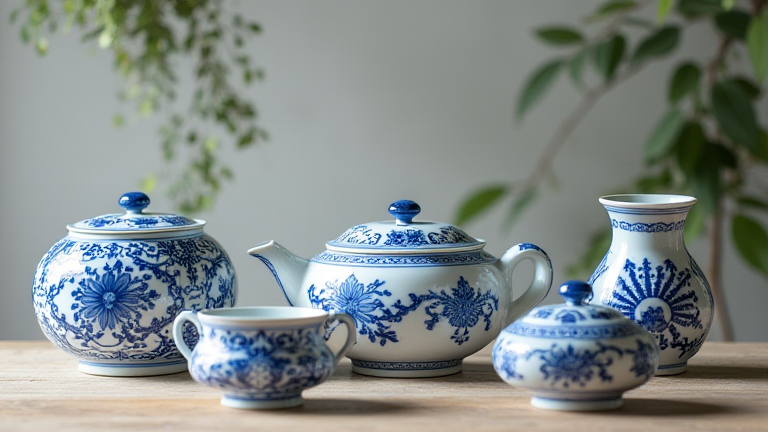
TL;DR: Porcelain is more than delicate dishware—it’s a 1,000-year-old cultural bridge linking Chinese imperial courts, European trade routes, and modern mindful living. Its legacy teaches us to blend utility with artistry, patience with innovation, and tradition with personal expression.
The Silk Road’s White Gold
Porcelain’s story begins in China during the Tang dynasty (618–907 AD), but it truly flourished under the Song and Ming dynasties. Artisans in Jingdezhen perfected a recipe of kaolin clay and petuntse stone, fired at 1,300°C, producing a translucent, ringing-white ceramic that the West called “white gold.” Unlike pottery, porcelain was non-porous, chip-resistant, and exquisite—making it the ultimate luxury export. By the 14th century, the Silk Road carried these treasures to the Middle East, where they inspired Ottoman and Persian ceramics, and later to Europe, where the hunt for the “arcanum” (the secret formula) became an obsession.
If you want to dig deeper, check out our guide on Porcelain History & Culture: A Deep Dive into Elegant Lifest.
From Royal Courts to Daily Rituals
Porcelain shaped global lifestyle habits. In China, tea ceremonies elevated thin, unglazed Yixing clay and cobalt-blue Ming porcelain to spiritual tools. In Europe, the 1709 discovery of hard-paste porcelain in Meissen, Germany, sparked a frenzy of royal manufactories—Sèvres in France, Wedgwood in England. These pieces weren’t just tableware; they were status symbols, diplomatic gifts, and canvases for botanical, mythological, and orientalist art. Today, collecting vintage porcelain—from Japanese Imari to Danish Royal Copenhagen—is a way to hold history in your hands. But the culture extends beyond collecting: it’s about slowing down. Drinking espresso from a thin-walled cup, serving a family dinner on heirloom plates, or using a porcelain teapot for a daily ritual connects you to centuries of craftsmanship.
Living with Porcelain: A Mindful Aesthetic
Adopting porcelain into modern life is an act of intentionality. Start small: replace one plastic or stoneware mug with a hand-thrown porcelain cup. Notice the weight, the glaze’s sheen, the ping of the rim. Use a porcelain serving bowl for your weekend soup—its thermal properties keep food warm longer, and its fragility forces you to slow down, handle with care, and appreciate the present. For travel, seek out local porcelain studios—whether in Lisbon’s Vista Alegre or a small village in Vietnam’s Bat Trang—and buy a single piece as a memento. This isn’t about accumulating objects; it’s about curating a life of tactile beauty. Porcelain’s lifestyle legacy is a reminder that true luxury is not disposable—it is patient, fragile, and worth preserving.
FAQ
Q: How do I tell real porcelain from ceramic or bone china?
A: Hold it to light—porcelain is translucent (fingers faintly visible). Tap it; porcelain rings a high, clear tone, while stoneware thuds. Bone china contains bone ash, making it lighter and whiter, but classic hard-paste porcelain is the original.
Q: Can I use antique porcelain every day, or is it only for display?
A: If the piece has no gold or enamel rim damage, you can use it gently—hand-wash with mild soap, avoid thermal shock (no sudden hot-to-cold), and skip microwaves. Many collectors rotate heirloom plates for Sunday dinners, not daily use.
Q: What’s the best way to start a porcelain collection on a budget?
A: Focus on modern studio porcelain from emerging artisans—often more affordable than antiques. Or hunt for “seconds” (slight glaze flaws) from brands like Le Creuset or Heath Ceramics. Thrift stores and estate sales also yield mid-century Japanese or German pieces under $20.
Leave a Reply