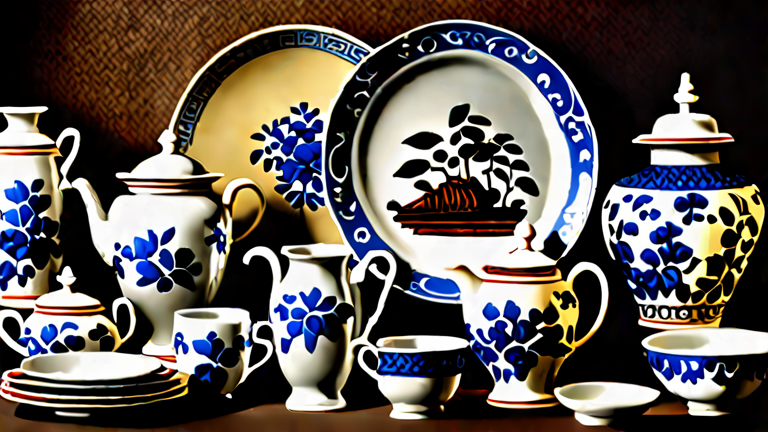
TL;DR: This guide reveals ten pivotal facts about porcelain’s global journey, from its origins in Jingdezhen to its European adoption. It provides collectors with the historical context needed to authenticate pieces and understand their cultural significance.
The Allure of White Gold
Porcelain has captivated the human imagination for over a thousand years, transcending its utility as tableware to become a symbol of status, artistry, and diplomatic exchange. For the serious collector, understanding the nuanced history behind these fragile vessels is just as important as appreciating their aesthetic beauty. This article distills ten essential facts that form the backbone of any porcelain collection, helping you navigate the complex world of ceramics with confidence and knowledge.
If you want to dig deeper, check out our guide on Porcelain History & Culture: Tech Behind the Art.
Feature Highlights of Historical Significance
First, it is crucial to recognize that true porcelain originated in China, specifically at the imperial kilns of Jingdezhen. This location remains the global capital of ceramics to this day. Second, the secret of porcelain production was closely guarded, involving a specific blend of kaolin and petuntse fired at extreme temperatures. This chemical composition gives porcelain its characteristic translucency and ringing sound when tapped. Third, the “Blue and White” style, using cobalt pigment, became the dominant export item during the Ming Dynasty, influencing artistic trends across Asia and eventually Europe.
Comparing Eastern and Western Techniques
When comparing Eastern and Western porcelain, the differences in philosophy and technique are stark. Chinese porcelain often emphasizes harmony with nature, featuring delicate floral motifs and landscapes. In contrast, European porcelain, developed later in Germany and France, frequently features more ornate, gilded designs and figurative scenes that reflect local courtly life. For instance, Meissen porcelain, the first hard-paste porcelain made in Europe, mimicked the Chinese aesthetic but introduced a distinct European sensibility. Understanding these divergences allows collectors to appreciate the unique identity of each region’s output rather than viewing them through a singular lens.
Cultural Impact and Modern Relevance
The cultural impact of porcelain extends far beyond the dining table. It served as a primary medium for cross-cultural exchange, with “Chinoiserie” styles becoming a craze in 18th-century Europe. Today, modern artists continue to push the boundaries of porcelain, using it as a canvas for contemporary social commentary. Collectors should also note the rarity of certain glazes, such as the elusive “Copper Red,” which requires precise oxygen control during firing. Mastery of this technique was a mark of imperial excellence, making surviving pieces highly valuable.
Call to Action for New Collectors
If you are ready to deepen your appreciation for ceramic history, start by examining your local museum collections. Look for the maker’s marks and study the provenance of each piece. Consider joining a local porcelain society to share insights with fellow enthusiasts. The journey of a collector is endless, filled with discoveries that connect you to centuries of craftsmanship and cultural dialogue. Begin your exploration today and let the history of porcelain enrich your understanding of art and history.
FAQ
Q: How can I distinguish between porcelain and ceramic?
A: Porcelain is a specific type of ceramic that is fired at higher temperatures, making it denser, more translucent, and less porous than standard stoneware or earthenware.
Q: Why is Jingdezhen so important to porcelain history?
A: Jingdezhen was the primary production site for Chinese imperial porcelain for centuries, establishing the standards for quality and technique that the rest of the world later attempted to replicate.
Q: Are older porcelain pieces always more valuable?
A: Not necessarily; value depends on condition, rarity, provenance, and artistic significance, meaning a well-preserved 20th-century piece can sometimes outweigh a damaged antique in value.
Leave a Reply