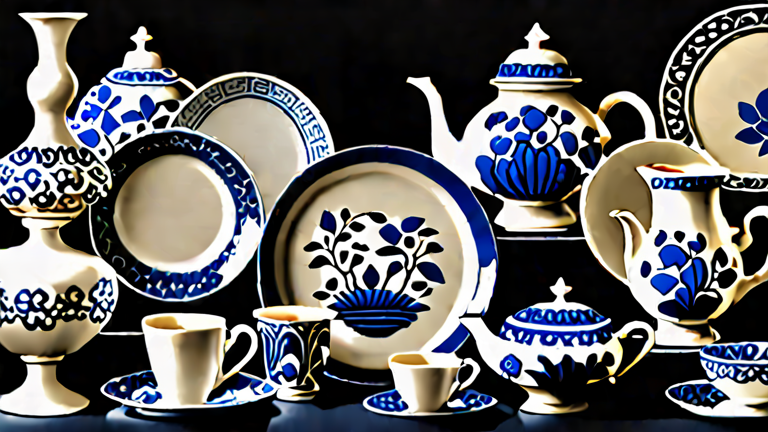
TL;DR: Porcelain has evolved from exclusive Chinese imperial artifacts to a global symbol of artistic and economic power, driving cross-cultural exchange for centuries. Today, its value lies in blending heritage craftsmanship with modern sustainability and technological innovation, shaping contemporary design markets significantly.
The Global Influence of White Gold
Porcelain, often termed “white gold,” has profoundly shaped global trade, diplomacy, and aesthetic standards. Originating in China during the Han Dynasty, its production secrets remained guarded for centuries, creating an immense demand across Europe and Asia. This scarcity fueled the Age of Exploration, as European powers sought direct access to Chinese markets, fundamentally altering global geopolitical landscapes and economic structures. The material’s durability, translucency, and aesthetic purity made it a coveted status symbol, influencing everything from tableware to diplomatic gifts. As trade routes expanded, porcelain became a catalyst for cultural hybridization, inspiring local variations like Delftware in the Netherlands and Meissen in Germany, which sought to replicate the Chinese original while developing distinct regional identities.
If you want to dig deeper, check out our guide on Porcelain History & Culture: The Ultimate Beginner’s Guide.
The industrial revolution further democratized porcelain access, transitioning it from elite luxury to middle-class necessity. Mechanized production lowered costs, embedding porcelain into daily domestic life. This shift not only changed household habits but also influenced social norms around dining and hospitality. The material’s adaptability allowed it to serve diverse functions, from utilitarian tiles to intricate art objects, reflecting broader societal values of hygiene, order, and refinement. Today, the porcelain industry is experiencing a renaissance driven by a renewed appreciation for artisanal craftsmanship and sustainable practices. Consumers are increasingly valuing the story behind their objects, seeking pieces that offer both aesthetic pleasure and ethical provenance. This trend is evident in the growing market for small-batch, hand-thrown ceramics that emphasize local materials and traditional techniques, countering the homogenization of mass-produced goods. The rise of e-commerce has also expanded reach, allowing niche studios to connect directly with global audiences, fostering a more diverse and inclusive ceramic culture.
Market Dynamics and Future Outlook
The global porcelain market is projected to grow steadily, driven by rising disposable incomes in emerging economies and a robust demand for premium home decor. Recent data indicates a 4.5% CAGR in the decorative ceramics sector, with a notable surge in interest for sustainable and eco-friendly production methods. Experts highlight that the integration of digital design tools with traditional firing techniques is creating new artistic possibilities, appealing to younger demographics who value innovation and sustainability. Future predictions suggest a continued shift towards personalized and custom-made porcelain items, facilitated by on-demand manufacturing technologies. Additionally, the growing awareness of cultural heritage is expected to drive investment in preserving traditional porcelain-making skills, ensuring that historical knowledge informs contemporary design. This blend of tradition and technology positions porcelain not just as a commodity, but as a living cultural artifact that continues to shape global tastes and economic trends. As the world grapples with environmental challenges, the porcelain industry’s move towards closed-loop production systems and non-toxic glazes will be critical in maintaining its relevance and appeal in the coming decades.
FAQ
Q: Why is porcelain historically significant?
A: Porcelain was historically significant because it was a highly valued trade commodity that drove global exploration, influenced diplomatic relations, and shaped artistic and cultural exchanges between East and West for centuries.
Q: How has technology impacted the porcelain industry?
A: Technology has transformed the industry by enabling mechanized mass production, which made porcelain more affordable, and recently, by introducing digital design tools and sustainable manufacturing processes that enhance precision and environmental responsibility.
Q: What are the future trends in porcelain consumption?
A: Future trends include a growing preference for sustainable, artisan-made pieces with ethical provenance, increased personalization through custom design, and a stronger emphasis on preserving traditional craftsmanship while integrating modern innovations.
Leave a Reply