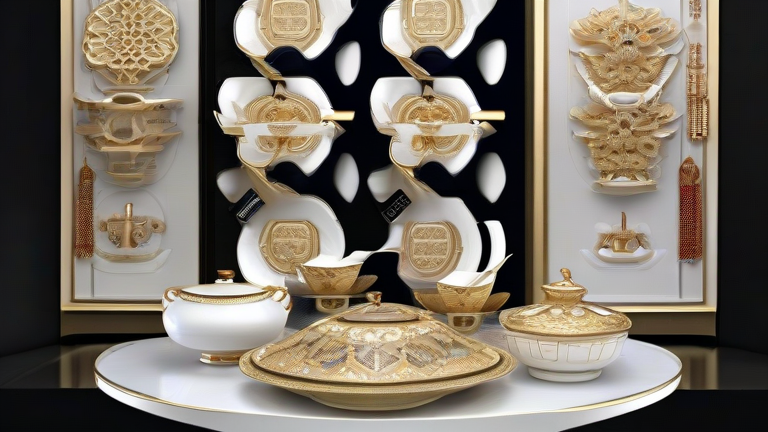
Porcelain History & Culture: The Tech Behind China’s White Gold
TL;DR: Modern Chinese porcelain production utilizes advanced material science and automated kiln technologies to achieve unprecedented consistency and translucency, effectively digitizing centuries-old artisanal techniques. This technological integration preserves cultural heritage while expanding global market accessibility through standardized quality metrics and eco-efficient manufacturing processes.
For millennia, Chinese porcelain has been revered not merely as a utilitarian object but as a cultural artifact representing the pinnacle of material mastery. Known globally as “white gold,” this ceramic medium has transcended its functional origins to become a symbol of sophistication and artistic refinement. In the twenty-first century, the industry is undergoing a significant transformation driven by digital fabrication, nanotechnology, and sustainable engineering. These advancements are not replacing tradition but rather enhancing it, allowing artisans to push the boundaries of what is physically possible with clay and glaze while maintaining the aesthetic integrity that defines the craft.
If you want to dig deeper, check out our guide on Porcelain History: 5 Cultural Trends Reshaping Ceramic Art.
Advanced Material Science and Composition
The core of modern porcelain innovation lies in the precise engineering of its raw materials. Traditional porcelain relies on a specific mix of kaolin, feldspar, and quartz, but contemporary labs are now utilizing spectroscopic analysis to optimize these ratios at a molecular level. By employing X-ray diffraction and thermal analysis, manufacturers can predict how clay bodies will behave under extreme temperatures, ensuring minimal shrinkage and maximum strength. Furthermore, the integration of nano-clays and synthetic mineral additives has led to the development of “high-fire” porcelains that exhibit superior translucency and resistance to thermal shock. These materials can withstand rapid temperature changes without cracking, a critical specification for both artistic sculptures and high-end kitchenware. The precision of these compositions allows for thinner walls, lighter weight, and a more resonant acoustic quality, all of which are key indicators of quality in the premium market.
Automation and Digital Firing Technologies
The firing process, historically the most unpredictable stage of porcelain production, has been revolutionized by computer-controlled kilns. Modern tunnel kilns and chamber kilns utilize real-time sensor networks to monitor temperature gradients with an accuracy of less than one degree Celsius. This precision ensures that the vitrification process occurs uniformly across the entire batch, eliminating the common defects of under-firing or warping. Additionally, digital printing technologies have been adapted for ceramic surfaces, allowing for the application of complex, high-resolution designs that were previously impossible to achieve by hand. This technology supports the mass production of culturally significant motifs, such as imperial dragon patterns or traditional landscape paintings, while maintaining the visual depth and color fidelity of hand-painted pieces. The data generated from these firing cycles is stored and analyzed, creating a feedback loop that continuously improves process efficiency and reduces waste.
Industry Impact and Cultural Preservation
The intersection of technology and culture has created a new paradigm for the porcelain industry. By standardizing production through technology, manufacturers can offer consistent quality at various price points, making high-quality porcelain more accessible to the global consumer. However, the industry also faces the challenge of preserving the intangible cultural heritage associated with hand-thrown and hand-painted techniques. Many leading firms are now adopting a hybrid model, where digital tools are used for design and structural integrity, while final detailing is left to master artisans. This approach ensures that the human element remains central to the product’s value. Moreover, eco-friendly innovations, such as low-carbon fuel systems and water recycling in the glazing process, are reducing the environmental footprint of production. These developments not only comply with international sustainability standards but also enhance the brand image of Chinese porcelain as a responsible and forward-thinking cultural export. The result is a vibrant industry that honors its past while actively shaping its future through technological excellence.
FAQ
Q: How does nanotechnology improve traditional porcelain?
A: Nanotechnology allows for the refinement of clay particles to the nanoscale, resulting in denser, more translucent, and stronger ceramic bodies that can be fired at lower temperatures, reducing energy consumption.
Q: What role does digital printing play in modern porcelain art?
A: Digital printing enables the precise application of intricate designs and gradients that are difficult
Leave a Reply