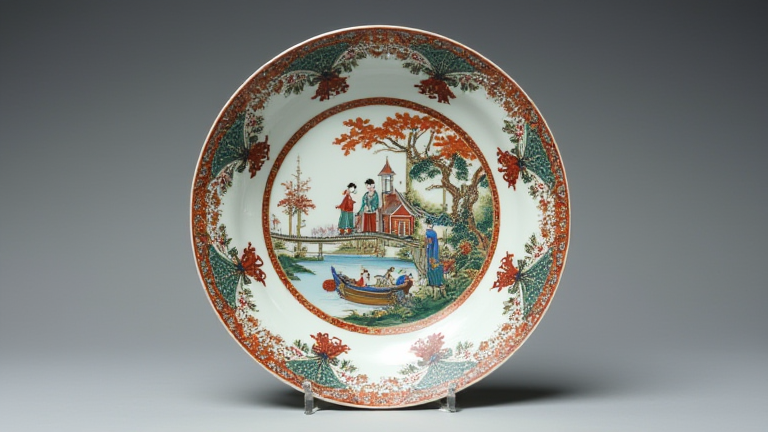
Porcelain History: Unveiling the Cultural Trends That Shaped Art
TL;DR: Porcelain’s evolution is driven by a continuous dialogue between Eastern craftsmanship and Western industrial innovation, creating distinct cultural artifacts. Today, the market is shifting toward sustainable, heritage-focused collectibles that blend historical authenticity with modern artistic expression.
For centuries, porcelain has served as more than a mere material for vessels; it has been a primary medium for cultural diplomacy and artistic prestige. The history of this “white gold” is inextricably linked to the trade routes that connected civilizations, each leaving a distinct imprint on its aesthetic and structural development. To understand the current landscape of porcelain art, one must trace the cultural trends that transformed it from a rare luxury to a diverse global art form. The early dominance of Chinese Jingdezhen porcelain established the baseline for high-quality ceramic production. The secret of its production, involving kaolin clay and high-temperature firing, remained a closely guarded state secret for centuries. This exclusivity fueled a massive demand in Europe, leading to the intense rivalry between royal courts to replicate the material. The eventual breakthrough by German alchemist Johann Friedrich Böttger in 1708 marked a pivotal cultural shift. It demonstrated that scientific inquiry could unravel artistic mysteries, blending alchemy with industrial engineering. This period did not just change how porcelain was made; it changed how it was perceived, shifting from a mystical exotic good to a reproducible luxury item that defined European aristocratic status.
If you want to dig deeper, check out our guide on Porcelain History & Culture: A Business Guide to the Art.
The Industrial Revolution and Democratization of Taste
The nineteenth century brought the industrialization of porcelain production, fundamentally altering its cultural role. The introduction of mechanical pressing and transfer printing allowed for the mass production of decorative items. This trend democratized access to fine ceramics, moving them from private collections into the middle-class home. However, this mass production also sparked the Arts and Crafts movement, which reacted against industrial uniformity. Artists like William De Morgan and the potters of Delft began to emphasize handcrafted imperfections and unique glazes, reasserting the cultural value of individual artistic expression. This tension between industrial efficiency and artisanal integrity remains a defining characteristic of the porcelain market today. Collectors often seek pieces that embody this duality, favoring items that show signs of human touch over purely mechanical precision. The cultural narrative of porcelain thus evolved from one of exclusive status to one of accessible beauty, followed by a reactive movement that valued authenticity and craftsmanship above all else.
Market Dynamics and the Modern Collectible
Recent market data indicates a robust resurgence in the value of antique and contemporary porcelain. According to recent auction reports, the global porcelain market is projected to grow at a compound annual growth rate of approximately 5.2% through 2030. This growth is driven largely by a new generation of collectors who view porcelain as a sustainable alternative to other art media. Unlike oil paintings, porcelain is composed of inert materials that do not degrade in the same way, ensuring long-term preservation with minimal environmental impact. Expert insights from curators at major museums suggest that the current trend is heavily influenced by a desire for cultural storytelling. Buyers are increasingly interested in the provenance of pieces, seeking artifacts that document specific historical moments, such as the Meiji Restoration in Japan or the Victorian era in Britain. This shift towards narrative-driven collecting has elevated the price of well-documented historical pieces, particularly those with unique glaze techniques or rare cobalt inks.
Future predictions suggest that the integration of digital technology will further reshape the porcelain industry. Digital provenance records and blockchain verification are becoming standard for high-end transactions, enhancing trust in the secondary market. Furthermore, contemporary artists are experimenting with porcelain using 3D printing and mixed media, challenging traditional boundaries. These innovations are creating new categories of collectible art that appeal to tech-savvy investors. The cultural trend is moving towards a hybrid model where historical techniques are preserved through digital archiving, while new forms of expression push the material into uncharted territories. As we look forward, the porcelain market will likely continue to balance the reverence for ancient traditions with the excitement of modern experimentation, ensuring that this ancient art form remains vibrant and relevant in the global cultural conversation.
Leave a Reply