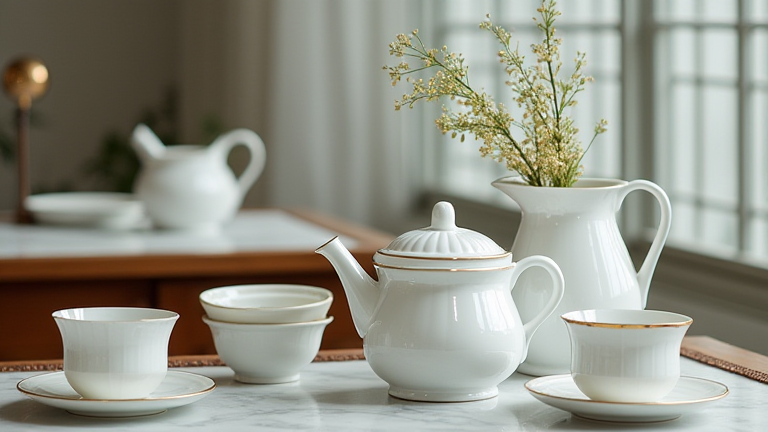
Porcelain History: 10 Cultural Secrets Behind the White Gold
TL;DR: Porcelain’s global dominance stems from its unique intersection of aesthetic purity, technical secrecy, and cultural prestige that has persisted for over a millennium. Understanding these ten historical secrets allows modern businesses to leverage heritage branding to command premium pricing in the luxury market.
The Alchemy of Exclusivity
For centuries, porcelain was not merely a material but a geopolitical asset. The first secret is its origin in imperial China, where the recipe for true hard-paste porcelain was state-owned. This exclusivity created a “white gold” trade that spanned continents. From a market analysis perspective, this historical scarcity established the baseline for luxury valuation. Today, brands like Villeroy & Boch and Wedgwood capitalize on this legacy by marketing their products not just as utility items, but as custodians of a lost art. The strategy here is heritage capitalization. Consumers do not just buy the object; they buy the narrative of exclusivity attached to it. By tracing the lineage back to the Ming Dynasty, companies can justify price points that are three to five times higher than generic alternatives.
If you want to dig deeper, check out our guide on Porcelain History & Culture: A Guide to China’s White Gold.
Strategic Positioning Through Cultural Codes
Another critical secret is the symbolic language embedded in porcelain designs. In East Asian cultures, specific motifs such as cranes, dragons, or lotus flowers carry deep spiritual and social meanings. Ignoring these codes can lead to market rejection or cultural insensitivity. A successful case study is the collaboration between Japanese artisans and international fashion houses. By respecting the traditional symbolism while modernizing the form, these brands attracted both local purists and global luxury consumers. The strategic insight is that cultural authenticity is a competitive moat. Companies that invest in deep ethnographic research to decode these symbols can create products that resonate on a subconscious emotional level, fostering brand loyalty that transcends functional utility.
The Industrial Shift and Modern Luxury
The industrialization of porcelain production in Europe during the 18th century, particularly in Meissen and Sèvres, shattered the Chinese monopoly. This shift democratized access but simultaneously elevated the status of handcrafted items. Today, the market is bifurcated. Mass-produced porcelain serves the hospitality and everyday consumer sectors, driven by cost-efficiency and durability. However, the high-end sector thrives on the “hand” of the artisan. Luxury brands are increasingly adopting a “slow luxury” strategy, emphasizing limited editions and visible craftsmanship. For instance, the resurgence of interest in mid-century modern glass and ceramic pieces demonstrates a consumer desire for objects with a story and a soul. Businesses must position their offerings carefully: either as efficient, high-quality standard goods or as exclusive, artistic statements. Blurring this line often leads to brand dilution.
Technological Integration and Preservation
Modern manufacturing technology has allowed for precise control over glaze chemistry and firing temperatures, ensuring consistency. Yet, the cultural secret remains in the imperfection. The “wabi-sabi” aesthetic, which finds beauty in imperfection, is a powerful marketing tool. Brands that highlight slight variations in color or form as unique features rather than defects align with contemporary consumer values of authenticity. This approach contrasts sharply with the sterile perfection of digital manufacturing. By embracing the human element in production, companies can differentiate themselves in a saturated market. The strategy is to sell the process as much as the product, offering transparency into the kiln, the clay sourcing, and the artisan’s journey.
Global Supply Chain Resilience
Finally, understanding the historical supply routes helps modern businesses navigate current geopolitical risks. The historical overland and maritime routes for porcelain trade are now replaced by complex global supply chains. However, the lesson of dependency on a single source remains relevant. Diversifying clay sources and manufacturing bases is crucial for risk mitigation. Companies that localize their supply chains, using regional materials and labor, can market their products as sustainable and ethically sourced. This not only appeals to the environmentally conscious consumer but also insulates the business from global trade disruptions. The cultural secret here is that provenance matters as much as quality. Knowing exactly where the clay came from and who shaped it adds a layer
Leave a Reply