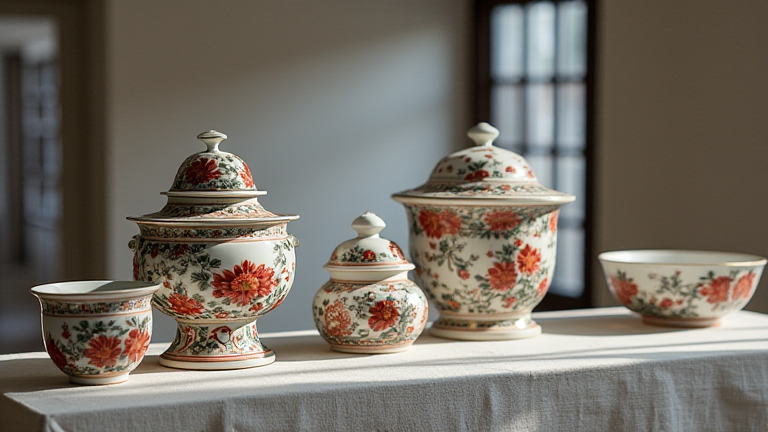
Porcelain History & Culture: A Tech-Driven Journey
TL;DR: Modern digital technologies are revolutionizing how we preserve, analyze, and experience the rich heritage of porcelain, transforming static museum artifacts into interactive data points. By integrating high-resolution 3D scanning, AI-driven provenance tracking, and augmented reality, the industry is bridging the gap between ancient craftsmanship and contemporary tech-savvy audiences.
The history of porcelain spans thousands of years, from the early kilns of the Song Dynasty to the delicate elegance of European Meissen. Traditionally, understanding this cultural artifact relied heavily on physical inspection and historical texts. However, the latest developments in digital heritage technology have fundamentally altered this landscape. Institutions and private collectors are now leveraging LiDAR and photogrammetry to create millimeter-accurate digital twins of fragile pieces. These digital replicas allow researchers to study micro-fractures and glaze compositions without handling the original, thereby preventing further degradation. This non-invasive approach is critical for artifacts that are too delicate for traditional handling but rich in historical significance.
If you want to dig deeper, check out our guide on Porcelain History & Culture: A Deep Dive into China’s White .
Technical Specifications and Digital Preservation
At the heart of this technological shift are specific hardware and software specifications designed for extreme precision. High-end industrial scanners now achieve resolutions down to 0.02mm, capturing the subtle variations in glaze texture and form. These devices are paired with advanced spectral imaging sensors that can detect mineral compositions invisible to the naked eye. For instance, hyperspectral imaging allows experts to identify the specific clay sources used in different eras, providing a forensic link to regional production techniques. The data generated is stored in cloud-based repositories using standardized formats, ensuring long-term accessibility and interoperability between global museums. This infrastructure supports complex rendering engines that can simulate how light interacts with the glossy surface of porcelain, offering a realistic visual experience even in virtual environments.
Industry Impact and Cultural Accessibility
The impact on the cultural heritage industry is profound. Museums are no longer just static repositories; they have become dynamic hubs of digital engagement. Augmented reality applications allow visitors to hold a digital version of a Ming Dynasty vase in their hands, rotating it to see details that are often obscured in physical display cases. This accessibility democratizes the appreciation of porcelain history, allowing users worldwide to explore collections that were previously confined to specific geographic locations. Furthermore, blockchain technology is being integrated into the provenance tracking of high-value porcelain items. Each digital certificate of authenticity contains a unique hash, verifying the item’s history and ownership chain. This transparency combats forgery and ensures that the cultural value of these artifacts is preserved alongside their physical integrity. As these technologies mature, the boundary between the historical and the digital continues to blur, offering a new chapter in the story of porcelain.
FAQ
Q: How does 3D scanning help preserve porcelain?
A: It creates precise digital replicas, allowing researchers to study details without physically handling fragile originals, thus reducing the risk of damage.
Q: What role does AI play in porcelain analysis?
A: AI algorithms analyze spectral data to identify clay origins and glaze compositions, providing deeper insights into historical manufacturing techniques.
Q: Can digital technology verify authenticity?
A: Yes, by combining digital fingerprints with blockchain records, institutions can create immutable provenance trails that help verify the history and authenticity of pieces.
Leave a Reply