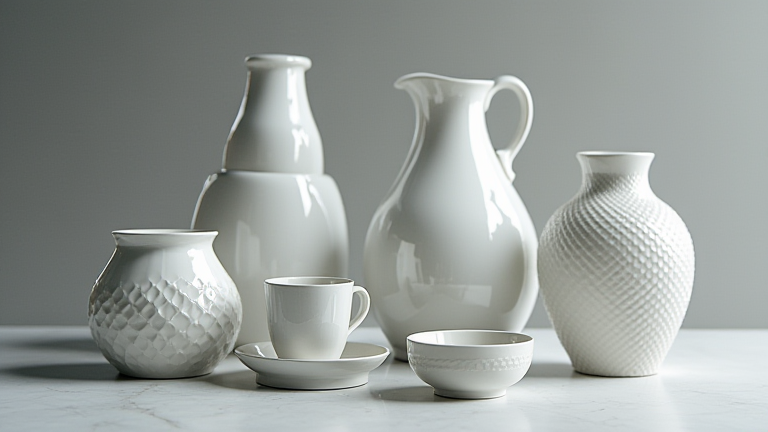
The Digital Revolution of Porcelain: Tech in Ceramic Art
TL;DR: Advanced digital fabrication and AI-driven design tools are transforming traditional porcelain craftsmanship by enabling unprecedented precision and complex geometries. This fusion of ancient art with modern technology is expanding the cultural reach and commercial viability of high-end ceramic products.
The history of porcelain is deeply rooted in cultural heritage, particularly from its origins in China. For centuries, the creation of fine porcelain relied almost exclusively on the artisan’s steady hand, intuitive knowledge, and manual wheel-throwing techniques. However, the latest developments in digital technology are fundamentally altering this landscape. By integrating computer-aided design (CAD) with high-precision 3D printing, manufacturers can now produce intricate porcelain forms that were previously impossible to achieve manually. This shift does not replace the artisan but rather augments their capabilities, allowing for the reproduction of delicate historical patterns with perfect consistency while also facilitating entirely new artistic expressions.
If you want to dig deeper, check out our guide on Porcelain History: How Ancient Craft Shapes Modern Health.
Recent technical specifications highlight the rapid advancement of ceramic 3D printers. Modern industrial units now offer layer resolutions as fine as 25 microns, ensuring that the surface finish of digital porcelain rivals that of hand-thrown pieces. These machines utilize specialized photopolymerization or stereolithography processes specifically calibrated for ceramic suspensions, reducing shrinkage rates during the kiln-firing process by up to forty percent. Furthermore, the integration of Internet of Things (IoT) sensors within kilns allows for real-time monitoring of temperature gradients and humidity levels. This precision control is critical for preventing micro-cracks in thin-walled porcelain structures, significantly improving the yield rate of production runs and preserving the structural integrity of delicate cultural artifacts.
The impact on the industry is profound. Museums and heritage institutions are utilizing digital scanning to create exact replicas of fragile historical porcelain, allowing public interaction without risking damage to the original masterpieces. This democratizes access to cultural heritage, making rare art forms more accessible to global audiences. Simultaneously, luxury brands are leveraging these technologies to offer mass customization, where consumers can design unique porcelain items online, which are then manufactured with high precision. This model bridges the gap between traditional craftsmanship and modern consumer expectations. The cultural significance of porcelain is being preserved and amplified, as digital archives ensure that traditional motifs and techniques are documented for future generations. As technology continues to evolve, the synergy between digital innovation and ceramic tradition will likely define the next era of artistic creation, ensuring that porcelain remains a vibrant and relevant medium in the modern world.
FAQ
Q: How does 3D printing differ from traditional throwing?
A: It allows for complex geometric precision and mass production of intricate designs that are difficult to achieve manually.
Q: What is the primary benefit of IoT in kilns?
A: Real-time monitoring ensures optimal firing conditions, reducing defects and preserving the structural integrity of delicate pieces.
Q: How does this affect cultural preservation?
A: Digital scanning enables safe replication of fragile artifacts, allowing broader public access without risking damage to originals.
Leave a Reply