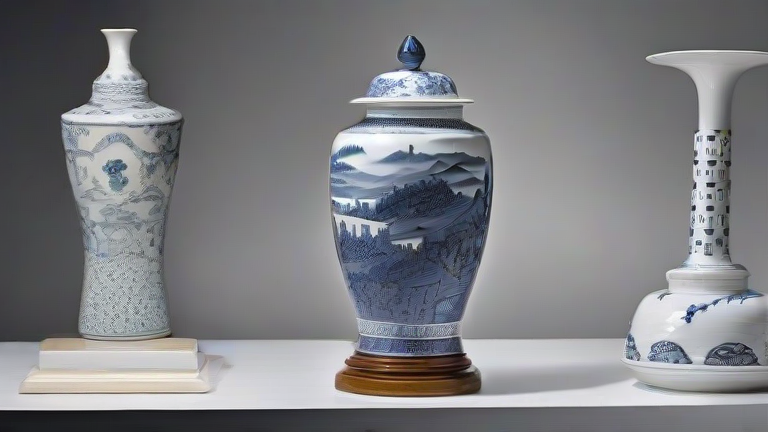
TL;DR: Porcelain is not just ceramic—it is a 1,000-year dialogue between empires, artisans, and global trade, and these five iconic pieces trace that evolution from Chinese imperial kilns to European royal courts. Each object captures a technological breakthrough or cultural exchange that redefined how the world made, valued, and displayed fine china.
Why These Five Pieces Define Porcelain’s Journey
Porcelain’s story begins in Tang dynasty China (618–907), where kaolin clay and feldspar were fired at 1,300°C to create a translucent, ringingly hard body that the West called “white gold.” The first essential piece is the Song dynasty celadon vase (960–1279)—its jade-green glaze, achieved through iron reduction, became the aesthetic benchmark for subtlety. Next, the Ming blue-and-white dish (14th century) introduced cobalt underglaze, a pigment imported from Persia, proving that porcelain was already a global commodity. The Kakiemon elephant (17th-century Japan) then broke the Chinese monopoly, using overglaze enamels to create asymmetrical, playful designs that European aristocrats craved. The Meissen teapot (c. 1710) represents Europe’s industrial espionage triumph—Johann Böttger cracked the formula, leading to the first hard-paste porcelain outside Asia. Finally, the Wedgwood Jasperware cameo (18th century) democratized porcelain by using unglazed stoneware with white reliefs, making neoclassical art affordable for the rising middle class.
If you want to dig deeper, check out our guide on Porcelain’s Rich History: A Guide to Its Culture & Lifestyle.
Feature Highlights and Comparisons
Material & Durability: The celadon vase and Ming dish are true hard-paste porcelain (high-fired, non-porous), while Meissen and Kakiemon are also hard-paste but with thicker walls. Wedgwood’s Jasperware is technically stoneware—lower fired but more chip-resistant, making it ideal for daily use. Decoration: Celadon relies on monochrome glaze; Ming uses cobalt underglaze (permanent, never fades); Kakiemon’s enamel overglaze is vivid but scratches easily; Meissen’s painted florals are delicate; Jasperware’s reliefs are molded, not painted, so they never wear off. Cultural Value: The Ming dish is the most historically significant—it was traded along the Silk Road and copied by Ottoman and Persian potters. The Meissen teapot is the rarest, with only a few hundred surviving from the first decade of production. For collectors, the Kakiemon elephant offers the best blend of artistry and scarcity, while the Wedgwood cameo is the most accessible entry point.
Which One Should You Start With?
If you want a museum-grade investment, seek a certified Ming dish fragment or a Meissen teapot with provenance. For everyday beauty and historical storytelling, a reproduction of the Kakiemon elephant or a vintage Jasperware pendant gives you the cultural essence without the six-figure price. Consider your display space—celadon and Jasperware suit minimalist shelves, while the blue-and-white dish pops against dark wood.
Call to Action
Don’t just read history—hold it. Visit a reputable antique dealer or museum shop to handle a replica of the Ming dish, or book a kiln workshop to throw your own porcelain bowl. The past is fragile, but your curiosity doesn’t have to be. Start your collection today, even with a single teacup.
FAQ
Q: What is the single most important technological breakthrough in porcelain history?
A: The invention of true hard-paste porcelain in China (Tang–Song dynasties) using kaolin and petuntse, fired at high temperatures to achieve vitrification, translucency, and ringing tone—a secret Europe chased for 500 years.
Q: How can I verify if
Leave a Reply