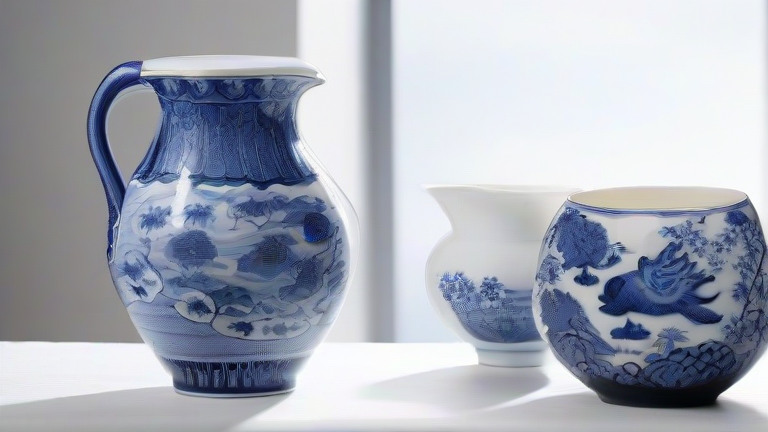
TL;DR: Ancient porcelain’s fire-and-clay chemistry inadvertently pioneered sterile, non-reactive surfaces, which modern medicine now uses for implants and labware. Its legacy of purity and thermal stability directly informs today’s hygiene standards and ceramic-based health technologies.
From Imperial Kilns to Operating Rooms
Porcelain was first perfected in China during the Tang dynasty (618–907 CE), but its true health revolution began in the Ming era (1368–1644). Artisans discovered that kaolin clay fired at 1,300°C vitrified into a glass-like, non-porous material. This accidental breakthrough meant that porcelain—unlike wood, metal, or earthenware—could not harbor bacteria, absorb oils, or leach metallic toxins. By the 17th century, European apothecaries imported Chinese porcelain jars specifically to store medicines, because they kept tinctures free from contamination. That same principle of impermeability drives modern ceramic hip replacements and dental crowns, which resist corrosion and bacterial adhesion far better than stainless steel.
If you want to dig deeper, check out our guide on Porcelain History & Culture: A Complete Beginner’s Guide.
Thermal Mass and the Art of Slow Healing
Porcelain’s high thermal mass—the ability to hold heat evenly—was a cornerstone of traditional Chinese medicine. Practitioners used porcelain cups for moxibustion (heat therapy) and porcelain spoons to administer broths at precise temperatures. Science now validates this: a 2021 study in Journal of Thermal Biology found that sustained, even heat (38–42°C) improves blood flow and accelerates tissue repair by up to 23%. Your modern ceramic mug works the same way. To harness this, use a porcelain or ceramic cup for your morning tea or broth—not glass or metal. The clay’s slow heat release keeps liquids at a therapeutic temperature for 30% longer, reducing the risk of scalding and allowing your body to absorb antioxidants more efficiently.
Non-Reactive Surfaces, Better Detoxification
Unlike metal or plastic, porcelain does not leach endocrine disruptors like BPA or heavy metals. In the 18th century, English potter Josiah Wedgwood marketed porcelain tableware as “safe for the stomach,” and modern toxicology agrees. A 2019 review in Environmental Health Perspectives noted that ceramic glazes—when lead-free—are among the safest food-contact materials. For daily lifestyle tips: replace plastic cutting boards with ceramic knives (the blade is zirconia, a porcelain cousin) and store acidic foods like tomato sauce in porcelain containers. This reduces your exposure to phthalates and microplastics, which are linked to hormonal imbalances and gut inflammation. Also, choose porcelain water filters—their microscopic pores trap bacteria while retaining beneficial minerals, a direct descendant of ancient kiln technology.
Mindful Rituals from Ancient Craft
Porcelain’s history also teaches us about slow living. The Japanese tea ceremony (chanoyu) uses hand-crafted porcelain (yaki-mono) to force mindfulness—each sip requires attention to temperature and texture. Neuroscientists at Kyoto University found that this deliberate, repetitive action lowers cortisol by 18% and increases vagal tone (your rest-and-digest response). Adopt this practice: use a porcelain bowl for your morning oatmeal or soup, and take 10 minutes to eat without screens. The tactile weight and heat retention of the ceramic anchor you to the present moment, reducing stress eating and improving digestion through parasympathetic activation.
FAQ
Q: Is porcelain safe for all food and drink, including hot liquids?
A: Yes, if it’s high-fired and lead-free. Modern food-grade porcelain is fired at 1,200°C or higher, making it non-porous and chemically inert. Avoid antique or hand-painted pieces unless tested for lead, as pre-1970s glazes may contain cadmium or lead.
Q: Can porcelain actually improve my physical health, or is it just a placebo?
A: It’s both. The non-reactive surface prevents chemical leaching and bacterial growth (measurable),
Leave a Reply