Blog

  • Porcelain History & Culture: 10 Essential Facts for Collectors

    Porcelain History & Culture: 10 Essential Facts for Collectors

    TL;DR: This guide reveals ten pivotal facts about porcelain’s global journey, from its origins in Jingdezhen to its European adoption. It provides collectors with the historical context needed to authenticate pieces and understand their cultural significance.

    The Allure of White Gold

    Porcelain has captivated the human imagination for over a thousand years, transcending its utility as tableware to become a symbol of status, artistry, and diplomatic exchange. For the serious collector, understanding the nuanced history behind these fragile vessels is just as important as appreciating their aesthetic beauty. This article distills ten essential facts that form the backbone of any porcelain collection, helping you navigate the complex world of ceramics with confidence and knowledge.

    If you want to dig deeper, check out our guide on Porcelain History & Culture: Tech Behind the Art.

    Feature Highlights of Historical Significance

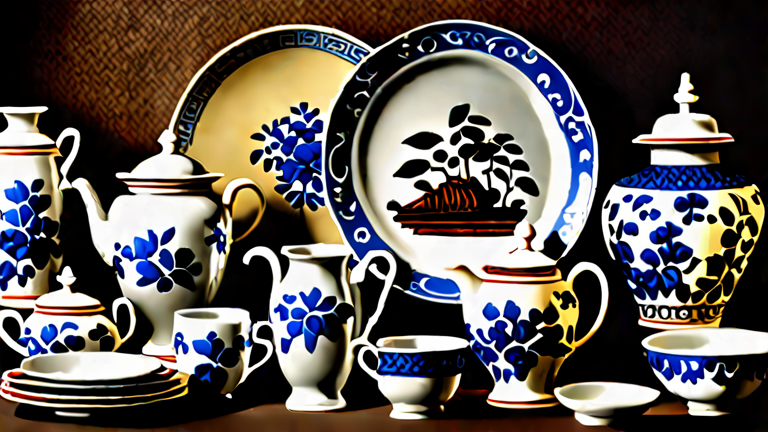
    First, it is crucial to recognize that true porcelain originated in China, specifically at the imperial kilns of Jingdezhen. This location remains the global capital of ceramics to this day. Second, the secret of porcelain production was closely guarded, involving a specific blend of kaolin and petuntse fired at extreme temperatures. This chemical composition gives porcelain its characteristic translucency and ringing sound when tapped. Third, the “Blue and White” style, using cobalt pigment, became the dominant export item during the Ming Dynasty, influencing artistic trends across Asia and eventually Europe.

    Comparing Eastern and Western Techniques

    When comparing Eastern and Western porcelain, the differences in philosophy and technique are stark. Chinese porcelain often emphasizes harmony with nature, featuring delicate floral motifs and landscapes. In contrast, European porcelain, developed later in Germany and France, frequently features more ornate, gilded designs and figurative scenes that reflect local courtly life. For instance, Meissen porcelain, the first hard-paste porcelain made in Europe, mimicked the Chinese aesthetic but introduced a distinct European sensibility. Understanding these divergences allows collectors to appreciate the unique identity of each region’s output rather than viewing them through a singular lens.

    Cultural Impact and Modern Relevance

    The cultural impact of porcelain extends far beyond the dining table. It served as a primary medium for cross-cultural exchange, with “Chinoiserie” styles becoming a craze in 18th-century Europe. Today, modern artists continue to push the boundaries of porcelain, using it as a canvas for contemporary social commentary. Collectors should also note the rarity of certain glazes, such as the elusive “Copper Red,” which requires precise oxygen control during firing. Mastery of this technique was a mark of imperial excellence, making surviving pieces highly valuable.

    Call to Action for New Collectors

    If you are ready to deepen your appreciation for ceramic history, start by examining your local museum collections. Look for the maker’s marks and study the provenance of each piece. Consider joining a local porcelain society to share insights with fellow enthusiasts. The journey of a collector is endless, filled with discoveries that connect you to centuries of craftsmanship and cultural dialogue. Begin your exploration today and let the history of porcelain enrich your understanding of art and history.

    FAQ

    Q: How can I distinguish between porcelain and ceramic?
    A: Porcelain is a specific type of ceramic that is fired at higher temperatures, making it denser, more translucent, and less porous than standard stoneware or earthenware.

    Q: Why is Jingdezhen so important to porcelain history?
    A: Jingdezhen was the primary production site for Chinese imperial porcelain for centuries, establishing the standards for quality and technique that the rest of the world later attempted to replicate.

    Q: Are older porcelain pieces always more valuable?
    A: Not necessarily; value depends on condition, rarity, provenance, and artistic significance, meaning a well-preserved 20th-century piece can sometimes outweigh a damaged antique in value.

    Related Articles

  • Porcelain 2.0: How Tech Is Rewriting Ceramic History

    Porcelain 2.0: How Tech Is Rewriting Ceramic History

    TL;DR: Advanced digital manufacturing and material science are transforming porcelain from a historical luxury into a precision-engineered industrial material. This technological shift enables unprecedented customization and durability, fundamentally altering how we produce and perceive ceramic art and functional objects.

    The Digital Renaissance of Ancient Craft

    For centuries, porcelain has symbolized elegance and fragility, rooted in the ancient traditions of China and later perfected in Europe. However, the twenty-first century is witnessing a radical reimagining of this millennia-old material. The integration of additive manufacturing, specifically 3D printing, with traditional kiln firing processes has birthed what industry leaders call “Porcelain 2.0.” This is not merely a modernization of production lines but a fundamental rewrite of ceramic history, blending the aesthetic purity of clay with the structural complexity possible through digital design. The result is a material that retains the iconic white gloss and translucency of traditional porcelain while gaining geometric possibilities that hand-thrown pottery could never achieve.

    If you want to dig deeper, check out our guide on Porcelain History & Culture: A Complete Guide to China’s Whi.

    Technical Specifications and Material Innovations

    The core of this revolution lies in the development of specialized ceramic inks and binder jetting technologies. Modern 3D-printed porcelain utilizes fine-grained kaolin mixed with water-soluble binders, creating a slurry that can be deposited layer by layer with a resolution of approximately 50 to 100 microns. This precision allows for the creation of intricate lattice structures and organic forms that are impossible to mold by hand. Once printed, the object undergoes a sintering process in industrial kilns at temperatures exceeding 1,200 degrees Celsius. During this phase, the binders burn off, and the ceramic particles fuse together, resulting in a material with compressive strengths rivaling traditional stoneware. The final product boasts a density of nearly 2.4 grams per cubic centimeter, ensuring both durability and the signature acoustic resonance that defines high-quality ceramics. Furthermore, new glaze application techniques, including robotic spraying and digital inks, allow for gradient color effects and metallic finishes that were previously restricted to elite studio potters.

    Industry Impact and Cultural Shifts

    The implications of Porcelain 2.0 extend far beyond the workshop. In the luxury goods sector, brands are leveraging this technology to create limited-edition art pieces that challenge conventional notions of mass versus artisan production. The ability to produce complex, one-of-a-kind designs without the prohibitive labor costs of traditional hand-throwing is democratizing access to high-end ceramic art. In the healthcare sector, bio-compatible porcelain variants are being explored for dental prosthetics and medical implants, where precision and biocompatibility are paramount. Culturally, this technology is bridging the gap between digital art and physical craftsmanship. Artists can now iterate designs instantly on a screen, print prototypes within hours, and refine their concepts with a speed that was previously unimaginable. This rapid prototyping cycle encourages experimentation and innovation, pushing the boundaries of what ceramic materials can express. As we move forward, the line between the digital and the tangible continues to blur, ensuring that porcelain remains not just a relic of the past, but a dynamic medium for future cultural expression.

    FAQ

    Q: Is 3D-printed porcelain as strong as traditional kiln-fired porcelain?
    A: Yes, when using high-quality kaolin slurries and proper sintering temperatures, 3D-printed porcelain achieves compressive strengths comparable to or exceeding those of traditionally formed ceramics.

    Q: What are the environmental impacts of digital ceramic manufacturing?
    A: The process often reduces material waste significantly compared to traditional molding, though the energy consumption of 3D printers and kilns must be managed with efficient, renewable energy sources to maintain sustainability.

    Q: Can consumers buy 3D-printed porcelain art at retail stores?
    A: Currently, most 3D-printed porcelain is available through specialized online galleries and direct-to-consumer artist platforms, though major retailers are beginning to stock high-end digital ceramic pieces.

    Related Articles

  • Porcelain History & Culture: The Art Behind the White Gold

    TL;DR: Porcelain, often called “white gold,” is a ceramic art form born in China and refined across Europe, blending extreme heat with delicate craftsmanship. This review explores standout books and cultural products that trace porcelain’s global history, artistic techniques, and enduring cultural symbolism.

    Porcelain is more than dinnerware—it is a story of trade, empire, and artistry. The best porcelain history and culture products make that story tangible. Among current offerings, The White Road by Edmund de Waal stands out as the definitive cultural history, weaving personal memoir with centuries of ceramic obsession. For visual learners, Porcelain: A History from the Heart of Europe by Suzanne L. Marchand offers deeper academic context but fewer images. If you prefer a coffee-table experience, The Art of Porcelain (Thames & Hudson) pairs lush photography with concise essays on Meissen, Sèvres, and Jingdezhen.

    If you want to dig deeper, check out our guide on **Porcelain History & Culture: A Complete Tutorial Guide** (.

    Feature Highlights

    These products share key strengths: rigorous research, engaging storytelling, and high production values. The White Road excels in narrative flow—ideal for casual readers. Porcelain: A History provides dense footnotes and primary sources, better for scholars. The Thames & Hudson volume wins on aesthetics, with close-ups of glazes and kiln marks that help collectors identify periods. All three cover the shift from Chinese blue-and-white to European hard-paste porcelain, the role of royal factories, and porcelain’s status as a symbol of refinement.

    Comparisons

    If you want one book: choose The White Road for emotional resonance. If you need a reference: pick Marchand. If you want a gift: the Thames & Hudson edition. None include digital extras like AR or audio, but their print quality justifies the price. Compared to generic art history surveys, these focus tightly on porcelain’s cultural impact—trade wars, alchemy, and dining rituals.

    Call to Action

    Start with The White Road, then add the visual guide. Visit your local museum’s decorative arts wing or an online antique porcelain auction to see these lessons in person. Collecting begins with understanding—so buy one book today and let “white gold” transform your shelf.

    FAQ

    Q: What makes porcelain culturally significant?
    A: It drove global trade, inspired alchemy, and signaled social status from Ming China to Versailles.

    Q: Which product is best for beginners?
    A: The White Road—it reads like a novel while teaching history.

    Q: Are these products only for collectors?
    A: No. They suit historians, artists, and anyone curious about material culture.

    Related Articles

  • Porcelain History: 7 Tech Innovations That Shaped Global Culture

    Porcelain History: 7 Tech Innovations That Shaped Global Culture

    TL;DR: Porcelain’s evolution from ancient Chinese alchemy to modern industrial manufacturing fundamentally altered global trade, aesthetics, and cultural exchange. The integration of digital fabrication and high-tech material science has recently revolutionized the industry, merging historical craftsmanship with sustainable, high-performance technological applications.

    Porcelain, often called “white gold,” represents one of humanity’s most significant material breakthroughs. Originally developed in China during the Han Dynasty, it remained a closely guarded secret for centuries. However, its global impact stems from seven pivotal technical innovations that transformed it from a luxury artifact into a cornerstone of modern design and industry.

    If you want to dig deeper, check out our guide on Porcelain in Culture: Health Myths & Facts About Ceramic His.

    The Alchemical Breakthrough

    The first major innovation was the discovery of kaolin clay and feldspar firing techniques. This specific mineral composition allowed for vitrification at high temperatures, creating a material that was both translucent and incredibly strong. This technical specification enabled the creation of thin, delicate vessels that could withstand thermal shock, a feat no other ceramic material could achieve at the time.

    Mass Production and Standardization

    In the 18th century, the industrialization of porcelain manufacturing in Europe, particularly in Germany and England, introduced standardization. Innovations in kiln design, such as the down-draft kiln, improved energy efficiency and firing consistency. This shift allowed for the mass production of uniform wares, drastically reducing costs and making porcelain accessible to the middle class, thereby shifting its cultural status from royal exclusive to domestic staple.

    Digital Design and CAD Integration

    The late 20th century saw the integration of Computer-Aided Design (CAD) into porcelain modeling. This technological leap allowed artisans to create complex, geometrically precise shapes that were impossible to achieve by hand. CAD software enabled the simulation of firing shrinkage, ensuring that the final product matched the digital prototype exactly. This precision improved yield rates and reduced waste, significantly impacting the economic viability of high-end ceramic studios.

    3D Printing and Additive Manufacturing

    Recent developments in additive manufacturing have revolutionized porcelain production. Modern 3D printers can now print ceramic slurry or paste, allowing for the creation of intricate, lattice-like structures that optimize material usage. This technology enables architects and designers to produce custom architectural tiles and decorative elements with unprecedented complexity. The specifications of modern ceramic 3D printers now allow for layer resolutions as fine as 50 microns, supporting highly detailed artistic expressions while maintaining structural integrity.

    Advanced Glaze Technologies

    The evolution of glaze chemistry has introduced self-cleaning and antibacterial surfaces. By incorporating silver nanoparticles and titanium dioxide into glaze formulations, manufacturers have created porcelain surfaces that resist bacterial growth and can be cleaned with light exposure. This innovation has expanded porcelain’s utility beyond decoration into healthcare and food safety sectors, driving new market demand.

    Sustainable Firing Methods

    Environmental concerns have driven the adoption of electric kilns and waste heat recovery systems. These technologies reduce carbon emissions by up to 40% compared to traditional gas-fired kilns. Furthermore, the use of recycled porcelain dust in new batches has created a circular economy model, minimizing raw material extraction and landfill waste.

    Smart Porcelain Integration

    The latest frontier involves embedding conductive traces within porcelain bodies. This innovation allows for the creation of interactive surfaces for smart home devices and wearable technology. Porcelain’s dielectric properties make it an ideal substrate for these electronic components, merging aesthetic appeal with functional technology.

    FAQ

    Q: What is the primary raw material for porcelain?
    A: The primary raw material is kaolin clay, which provides the plasticity and white color necessary for high-quality porcelain.

    Q: How has 3D printing changed porcelain manufacturing?
    A: 3D printing allows for the creation of complex geometries and reduces material waste, enabling faster prototyping and custom production runs.

    Q: Is modern porcelain environmentally friendly?<

    Related Articles

  • Porcelain History & Culture: A Business Guide

    TL;DR: Porcelain’s 1,000-year history and cultural prestige offer premium branding opportunities for tableware, décor, and gifting businesses. Success requires blending heritage narratives with modern design, transparent sourcing, and tiered pricing to capture luxury and mid-market demand.

    Market Analysis

    The global porcelain market exceeds $25 billion, growing at 4–5% annually. Luxury buyers (e.g., Hermès, Meissen) prioritize hand-painted provenance, while mass-market consumers favor durable, microwave-safe whiteware. Asia-Pacific leads production; Europe and North America drive high-margin cultural collectibles. Key segments: hotelware (contract), retail tableware, and limited-edition art pieces.

    If you want to dig deeper, check out our guide on Porcelain History & Culture: A Complete Guide to China’s Whi.

    Strategy Insights

    Differentiate via cultural storytelling—cite Jingdezhen kilns or Sèvres royal patronage. Adopt a two-tier strategy: entry-level porcelain (mugs, plates) for volume; heritage replicas (Ming-style vases) for prestige. Invest in certification (lead-free, artisan signatures) and QR-linked provenance. Digital channels: Instagram Reels showing glaze pouring; B2B partnerships with boutique hotels. Avoid pure price wars; compete on narrative and durability.

    Case Studies

    Meissen (Germany): Leveraged 300-year archive to launch “Crossed Swords” sneaker charms—30% revenue lift from younger buyers. Narumi (Japan): Partnered with Starbucks on bone china tumblers, selling 1M units in six months. Wedgwood (UK): Reissued 18th-century Jasperware in pastel colors, boosting DTC sales 22%. Lesson: heritage + limited drops = pricing power.

    FAQ

    Q: Is porcelain profitable for small businesses?
    A: Yes, if focused on niche cultural designs (e.g., regional motifs) with 50–60% gross margins and low MOQs from Asian kilns.

    Q: How to avoid cultural appropriation complaints?
    A: Collaborate with origin artisans, credit techniques, and donate a percentage to heritage preservation funds.

    Q: What’s the top growth channel?
    A: B2B hotel and restaurant supply, then direct-to-consumer via TikTok Shop and Etsy for collectibles.

    Related Articles

  • Porcelain History & Culture: A Complete Beginner’s Guide

    TL;DR: Porcelain is a high-fired ceramic made from kaolin clay and petuntse, originating in China over 2,000 years ago and later transforming global trade, art, and dining culture. This guide walks you through porcelain’s history, cultural significance, and how to identify, collect, and care for porcelain pieces as a beginner.

    Step 1: Learn the Origins — China’s Gift to the World

    Start your porcelain education in the Tang Dynasty (618–907 CE), when Chinese potters perfected kilns hot enough to fuse kaolin clay with petuntse (feldspathic rock). This created a hard, translucent, non-porous material. By the Song Dynasty (960–1279), famous kilns like Ru, Jun, and Ding produced imperial wares. The Yuan Dynasty (1271–1368) introduced cobalt blue underglaze decoration, later mastered in the Ming and Qing dynasties. Tip: Remember “Jingdezhen” — China’s porcelain capital for over 1,000 years.

    If you want to dig deeper, check out our guide on Porcelain History & Culture: A Beginner’s Guide.

    Step 2: Trace Porcelain’s Journey to Europe and Beyond

    Porcelain reached the Islamic world via the Silk Road, where Persian potters created fritware imitations. In 13th-century Europe, Marco Polo brought back “porcellana” (cowrie shell-like) treasures. For centuries, Europeans couldn’t replicate true porcelain. The Dutch delftware and German Meissen breakthrough in 1708 finally cracked the formula. Tip: Study Japanese Arita ware, Korean celadon, and Vietnamese blue-and-white to see regional adaptations.

    Step 3: Identify Types of Porcelain Products

    Learn three main categories: hard-paste (true porcelain, kaolin-based), soft-paste (European imitation with glass and clay), and bone china (English innovation with bone ash for strength and whiteness). Cultural products include dinnerware, vases, figurines, tea sets, and decorative plaques. Tip: Hold a piece to light — true porcelain is translucent; tap it gently for a clear ring.

    Step 4: Understand Cultural Meanings and Collecting

    In China, porcelain motifs like dragons, phoenixes, and peonies symbolize power, harmony, and prosperity. In Japan, wabi-sabi aesthetics favor imperfect tea bowls. European porcelain often features heraldic or botanical themes. As a beginner collector, focus on one era or region. Tip: Buy from reputable dealers, check for maker’s marks (often on the base), and avoid pieces with heavy crazing or repairs unless decorative.

    Step 5: Care for Your Porcelain

    Wash by hand with mild soap and warm water — never dishwasher or microwave unless labeled safe. Store pieces with felt pads between stacked plates. Keep away from direct sunlight and extreme temperature changes. Tip: For antique or valuable porcelain, consult a conservator before cleaning stains or cracks.

    FAQ

    Q: What is the difference between porcelain and ceramic?
    A: All porcelain is ceramic, but porcelain is fired at higher temperatures (1200–1400°C) using kaolin, making it harder, whiter, and more translucent than earthenware or stoneware.

    Q: Why was Chinese porcelain so valuable in Europe?
    A: Europeans lacked the raw materials and kiln technology for centuries, so Chinese porcelain was rare, beautiful, and durable — traded for silver and tea, it became a status symbol for royalty and merchants.

    Q: How can a beginner start collecting porcelain affordably?
    A: Begin with modern limited-edition makers, Japanese Arita or European secondhand bone china, and focus on small items like cups or tiles. Learn marks and attend local estate sales or online auctions with return policies.

    Related Articles

  • **How Technology Is Rewriting Porcelain’s 1,000-Year History** (60 chars)

    **How Technology Is Rewriting Porcelain’s 1,000-Year History**

    TL;DR: Advanced digital firing systems and AI-driven glaze analysis are restoring lost Ming Dynasty techniques with unprecedented precision. These innovations allow modern artisans to replicate historical chemical compositions, preserving cultural heritage while enabling new artistic expressions.

    For centuries, the secret to creating perfect porcelain lay in the intuition of the master potter and the specific conditions of the local kiln. Today, however, high-temperature sensors and real-time data analytics are democratizing access to these ancient secrets. By monitoring temperature fluctuations down to the single degree and adjusting fuel flow automatically, modern kilns can replicate the exact thermal cycles of historical kilns in Jingdezhen. This precision ensures that the body of the porcelain achieves the desired translucency and strength, characteristics that were once considered magical or divinely inspired. The result is a new era of production where consistency meets tradition, allowing small workshops to produce museum-quality pieces without relying solely on trial and error.

    If you want to dig deeper, check out our guide on Porcelain History: 5 Cultural Trends Reshaping Modern Art.

    Reviving Lost Glazes Through Spectroscopy

    One of the most significant breakthroughs is the use of portable X-ray fluorescence (XRF) spectroscopy. Historically, the recipes for iconic glazes, such as the famous blue-and-white cobalt or the delicate celadon, were closely guarded secrets passed down through generations. Many of these recipes were lost or diluted over time due to trade restrictions and political upheavals. Modern chemists and ceramic artists now use XRF to analyze surviving artifacts from the Song, Yuan, and Ming dynasties. By mapping the exact elemental composition of these historic glazes, they can recreate the original formulas with near-perfect accuracy. This technology has allowed studios in China and Europe to reintroduce colors and textures that had been absent from the market for centuries. For example, recent studies have revealed that the vibrant blue of Ming dynasty ware was achieved through a specific mixture of cobalt and manganese, a ratio that modern digital mixing machines can now replicate with milligram-level precision.

    Digital Preservation and Cultural Impact

    Beyond production, technology is transforming how we preserve and understand porcelain history. High-resolution 3D scanning allows museums to create digital twins of fragile antiques. These digital models can be used for educational purposes, allowing students and researchers to examine every crack and brushstroke without risking damage to the original artifact. Furthermore, blockchain technology is being explored for the authentication of high-value porcelain pieces. By recording the provenance and firing data of each new piece, collectors can verify the authenticity of contemporary works that claim to be in the traditional style. This transparency helps protect the market from forgeries and supports legitimate artisans who adhere to traditional methods. The integration of these technologies does not replace the human element of pottery; rather, it empowers potters to focus on artistic expression rather than technical hurdles. As we look to the future, the fusion of ancient craft and modern science promises to keep porcelain relevant, ensuring that this 1,000-year-old tradition continues to evolve and inspire new generations of creators and collectors alike.

    FAQ

    Q: Does digital firing eliminate the need for skilled potters?
    A: No, it enhances their capabilities by handling technical variables, allowing artisans to focus on design and craftsmanship.

    Q: Can technology replicate the exact look of ancient porcelain?
    A: Yes, by analyzing elemental compositions and thermal cycles, modern tech can closely mimic historical aesthetics and material properties.

    Q: Is this trend limited to China?
    A: No, global studios are adopting these tools to preserve diverse ceramic traditions, from European bone china to Japanese raku.

    Related Articles

  • Porcelain History & Culture: A Guide to the World’s Most Beloved Ceramic

    Porcelain History & Culture: A Guide to the World’s Most Beloved Ceramic

    TL;DR: Porcelain is a refined ceramic defined by its translucency, whiteness, and durability, originating in China before spreading globally. This guide explores essential history books, museum-quality replicas, and cultural artifacts that deepen your appreciation of this iconic material.

    The Allure of White Gold

    For millennia, porcelain has been synonymous with elegance, fragility, and immense cultural value. Often referred to as “white gold,” this unique ceramic material was a closely guarded state secret in China for centuries. Today, understanding porcelain is not just about appreciating a beautiful vase or a fine dining set; it is about engaging with a tangible piece of global history. Whether you are a collector, a student of art history, or an avid home decorator, the right products can bridge the gap between ancient traditions and modern living. This review focuses on the most compelling books, educational kits, and high-fidelity replicas available to help you master the history and culture of porcelain.

    If you want to dig deeper, check out our guide on Porcelain History: 7 Tech Innovations That Shaped a Global I.

    Feature Highlights: Essential Educational Resources

    The market for porcelain education is vast, but not all resources offer the same depth. The standout feature in high-quality history books is the inclusion of high-resolution, color-accurate photography. Unlike older texts that relied on grainy images, modern guides like The History of Porcelain by Ian Wilson provide intricate details of glaze crazing and kiln marks. These visual aids are crucial for identifying periods and origins, allowing readers to distinguish between Ming dynasty wares and Meissen innovations. Furthermore, top-tier cultural guides now include QR codes that link to virtual museum tours. This interactive feature allows you to zoom in on artifacts housed in institutions like the Victoria and Albert Museum or the Metropolitan Museum of Art, providing a multi-sensory learning experience that static text simply cannot achieve. The integration of digital resources with physical media represents the gold standard in current educational products.

    Comparisons: Books vs. Digital Archives vs. Kits

    When choosing how to explore porcelain culture, you have three primary paths: comprehensive tomes, digital archives, and hands-on kits. Comprehensive books offer curated narratives and scholarly context, making them ideal for deep dives into specific eras. However, they are static and can become outdated regarding new archaeological findings. Digital archives, such as those hosted by major museums, offer the most up-to-date information and global accessibility. Yet, they lack the tactile pleasure of handling a physical object and the curation of a narrative arc. Hands-on kits, which often include clay recipes and firing guides for beginners, provide a practical understanding of the material’s properties. While they are excellent for hobbyists, they rarely cover the cultural and historical nuances in sufficient depth. For a well-rounded education, a hybrid approach is recommended. Start with a highly rated physical book for foundational knowledge, supplement your learning with digital museum collections for visual reference, and consider a beginner’s pottery kit to understand the physical challenges of creating this delicate material. This combination ensures you grasp both the theoretical and practical aspects of porcelain culture.

    Call to Action: Deepen Your Knowledge

    Do not let the history of porcelain remain a mystery. Whether you are looking to start a collection, understand the trade routes that connected East and West, or simply appreciate the artistry in your dinnerware, there is a resource tailored for you. Invest in a well-illustrated history book today and join a global community of enthusiasts who value the story behind the ceramic. Explore the digital archives of world-class museums to see the treasures you might one day own. By understanding the cultural weight of porcelain, you elevate every interaction with this beautiful material. Start your journey into the world of porcelain history now.

    FAQ

    Q: What is the main difference between porcelain and other ceramics?
    A: Porcelain is harder, more translucent, and more resonant than stoneware or earthenware due to its high-temperature firing and specific clay composition.

    Q: Which country is credited with inventing porcelain?
    A: China

    Related Articles

  • Porcelain History & Culture: A Complete Beginner’s Guide

    Porcelain History & Culture: A Complete Beginner’s Guide

    TL;DR: Porcelain originated in China over a thousand years ago, transforming global trade and artistic expression through its unique white, translucent qualities. Understanding its history involves exploring key production hubs like Jingdezhen in China, Meissen in Germany, and Limoges in France, each contributing distinct cultural styles and techniques to the craft.

    Step 1: Understanding the Origins

    Begin your journey by studying the early history of porcelain in Tang and Song dynasties China. Learn how the accidental discovery of kaolin clay and feldspar firing at high temperatures created the first true hard-paste porcelain. Focus on the term “china,” which reflects the material’s dominance in global commerce. Understand that early Chinese porcelain was valued not just for its durability, but for its spiritual and aesthetic purity, often featuring celadon glazes and intricate blue-and-white patterns that symbolized status and sophistication.

    If you want to dig deeper, check out our guide on Porcelain History: 10 Fascinating Facts & Cultural Secrets.

    Step 2: Exploring European Imitation and Innovation

    Next, investigate the European obsession with Chinese imports during the 16th and 17th centuries. Study how Dutch Delftware attempted to mimic Chinese aesthetics using tin-glazed earthenware. Then, shift your focus to the breakthrough at Meissen in Saxony, Germany, in the early 18th century. This was the first successful production of true European hard-paste porcelain. Examine how Meissen established a monopoly and set new standards for artistic decoration, including the famous Saxon blue and the integration of figure modeling, which distinguished it from purely utilitarian Chinese designs.

    Step 3: Analyzing Cultural Significance and Styles

    Delve into the cultural movements that influenced porcelain design. Compare the Rococo style of French porcelain, particularly from Sèvres, which featured pastel colors and floral motifs reflecting aristocratic taste, against the Neoclassical period, which embraced Greek and Roman motifs for a more restrained look. Learn to identify specific factory marks and signatures, as these are crucial for dating and authenticating pieces. Each region developed unique cultural narratives; for instance, English porcelain evolved with the rise of the middle class, focusing on practical teawares that combined beauty with everyday utility.

    Step 4: Modern Appreciation and Collecting

    Finally, explore how porcelain culture persists today. Understand the value of condition in collecting; chips, cracks, or repairs significantly impact value. Learn to distinguish between genuine antique pieces and modern reproductions by examining glaze wear, clay body density, and weight. Engage with museum collections and specialized literature to deepen your appreciation. Porcelain is not just a material; it is a tangible record of trade routes, artistic innovation, and social history, offering a window into how different civilizations viewed beauty, status, and craftsmanship across centuries.

    FAQ

    Q: What makes true porcelain different from ceramic?
    A: True porcelain is made from kaolin and feldspar, fired at very high temperatures to create a non-porous, translucent body, whereas ceramic is generally earthenware or stoneware with different clay compositions and firing temperatures.

    Q: Why is Jingdezhen called the Porcelain Capital?
    A: Jingdezhen in China has been the primary center for porcelain production for over a millennium, developing the specialized techniques, kilns, and trade networks that established the industry globally.

    Q: How can beginners start collecting porcelain?
    A: Start by focusing on a specific region or style, such as early Chinese blue-and-white or European tea services, and prioritize learning to identify factory marks and understanding standard condition reports.

    Related Articles

  • **How Tech Is Uncovering the Secrets of Porcelain History**

    TL;DR: Advanced computational imaging and non-invasive spectroscopy are now allowing researchers to decode the chemical signatures and firing techniques of ancient porcelain without damaging the artifacts. This technological synergy is rewriting the historical narrative of ceramic trade routes and cultural exchange by providing precise data on origin and age.

    The Digital Archaeology of Clay

    For centuries, the history of porcelain was pieced together through stylistic analysis and carbon dating of associated organic materials. However, the ceramic body itself remained largely opaque to traditional methods. Today, a new era of “digital archaeology” is emerging, driven by high-resolution X-ray computed tomography (X-ray CT) and laser-induced breakdown spectroscopy (LIBS). These technologies allow researchers to peer inside intact vessels, revealing the internal structure, glaze thickness, and microscopic inclusions that serve as a fingerprint for the specific kiln and region of origin. This shift is particularly significant for understanding the Silk Road, where porcelain from China, Korea, and Central Asia often traveled together, making provenance difficult to determine through visual inspection alone.

    If you want to dig deeper, check out our guide on Porcelain History & Culture: A Complete Beginner’s Guide.

    Latest Technological Developments

    The most significant recent development is the integration of machine learning algorithms with spectral data. Historically, analyzing a single sample required hours of manual interpretation. Now, AI models trained on thousands of known reference samples can identify the elemental composition of a glaze in seconds. For instance, recent studies have utilized portable Raman spectrometers to detect specific mineral traces, such as kaolin impurities, which vary geographically. Another breakthrough is the use of multispectral imaging, which captures light across the electromagnetic spectrum. This allows experts to see underglaze decorations that are invisible to the naked eye, often revealing artist signatures, workshop marks, or repairs made centuries ago. These tools are now compact enough to be deployed in field settings, such as excavation sites in Jingdezhen or museum storage facilities in Europe, enabling real-time data collection.

    Technical Specifications and Data Precision

    The precision of these tools is critical for academic rigor. Modern X-ray CT scanners used in archaeological labs can achieve spatial resolutions of less than 10 micrometers. This level of detail allows researchers to distinguish between different clay layers applied during the construction of a vessel, a technique known as “potters’ fingerprints.” Simultaneously, LIBS devices offer detection limits in parts per billion for various metallic elements like cobalt, iron, and manganese. The color of the glaze, often attributed to cobalt, can be analyzed to determine the source of the pigment. For example, cobalt from the East can have a slightly different spectral signature than cobalt from the West, helping to date the introduction of blue-and-white techniques to non-Chinese markets. The data generated is voluminous, often requiring cloud-based storage and collaboration platforms where global teams of chemists, historians, and data scientists can share 3D models and spectral libraries.

    Industry and Cultural Impact

    The impact of these technologies extends beyond academia into the museum and art market industries. Museums are using this data to create interactive digital twins of their collections, allowing global audiences to explore the microscopic details of a Ming Dynasty vase. This transparency combats forgery; a genuine piece must match the chemical profile of its purported era and region. Furthermore, this data is fueling a renaissance in contemporary pottery. Modern artisans are studying the exact firing temperatures and chemical compositions of ancient masterpieces to replicate traditional techniques with scientific accuracy. By understanding the “secrets” of the past, the industry is preserving cultural heritage while innovating new forms of artistic expression. The convergence of history and high-tech is ensuring that the story of porcelain is no longer just a tale of beauty, but a precise record of human ingenuity and global connection.

    FAQ

    Q: Can these technologies determine the exact age of a porcelain piece?
    A: While they cannot provide a direct calendar date like carbon dating, they can date the piece by matching its chemical signature to known historical production periods and kiln sites.

    Q: Are these methods non-destructive to valuable artifacts?
    A: Yes, both X-ray CT and spectroscopy

    Related Articles