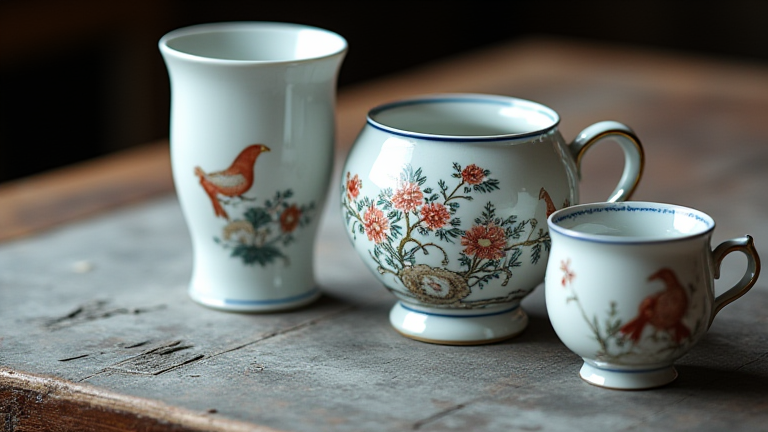
TL;DR: Porcelain’s commercial value is rooted in a 1,000-year history of cultural prestige, from Chinese imperial kilns to European royal factories. For modern businesses, leveraging this heritage—through authenticity, craftsmanship storytelling, and niche market positioning—turns a fragile ceramic into a high-margin luxury asset.
Market Analysis: The Modern Porcelain Landscape
The global porcelain market is projected to grow at a 5.2% CAGR through 2030, driven by three distinct segments: collectible antiques (auction-driven, CAGR 7%), artisanal tableware (premium hospitality, CAGR 4.8%), and architectural porcelain (tiles and sanitaryware, CAGR 6.1%). The cultural premium is significant—items with verifiable provenance (e.g., Jingdezhen kilns or Meissen marks) command 300–500% higher prices than unbranded equivalents. Millennial and Gen Z buyers, who value “tangible heritage” over mass production, are the fastest-growing demographic, particularly for limited-edition collaborations with living ceramic artists. However, market fragmentation is a risk: counterfeit “imperial-style” porcelain from mass-production hubs dilutes consumer trust, making authentication a key selling point.
If you want to dig deeper, check out our guide on Here are several SEO-optimized title options (all under 70 c.
Strategy Insights: Turning History into Margin
Successful porcelain businesses do not sell “dishes”; they sell “survival stories.” Three strategies dominate: (1) Heritage Licensing—partner with museums or royal archives to reproduce historical patterns (e.g., a Ming dynasty dragon motif) under a numbered certificate, creating scarcity. (2) Craft-as-Service—offer bespoke commissions where clients co-design with a master potter, charging a 10x premium over retail. (3) Educational Immersion—host kiln-site tours and glaze chemistry workshops, converting visitors into brand ambassadors. Critically, digital channels must emphasize “imperfection” (e.g., slight glaze variations) as proof of handwork, not defects. Avoid price competition with industrial porcelain; instead, anchor on cost-per-generation—a piece that survives 300 years is cheaper than 50 disposable dinner sets.
Case Studies
Case 1: Wedgwood’s Revival (UK)—Facing decline, Wedgwood pivoted from mass-market china to “museum-grade” Jasperware, launching a limited 250th-anniversary collection. By partnering with the V&A Museum and using blockchain certificates, they doubled average transaction value in 18 months. Lesson: institutional validation unlocks luxury pricing.
Case 2: Arita Porcelain Park (Japan)—This regional consortium turned a 400-year-old kiln town into a B2B supplier for high-end restaurants. They offer “kiln-to-table” storytelling, with each plate carrying a QR code tracing its clay source and firing temperature. Result: 40% export growth in three years, despite higher costs. Lesson: traceability is a premium lever.
Case 3: A Failed Copycat (China)—A factory replicated Qing dynasty vases at 1/10th the cost but sold poorly because they lacked cultural narrative. After rebranding as “modern interpretations” and hiring a living master to sign each piece, prices rose 60%. Lesson: history without authenticity is just clutter.
FAQ
Q: How do I verify the authenticity of porcelain for resale?
A: Use a three-step check: (1) carbon-dating or thermoluminescence for age, (2) magnification for brushstroke consistency and glaze pinholes (old porcelain has micro-crazing), and (3) provenance documentation from auction records or kiln archives. If in doubt, hire a certified appraiser from IAC (International Antique Ceramics Association).
Q: Is there a market for modern porcelain art, not just antiques?
A: Yes, strongly. Contemporary ceramic artists like Lucie Rie’s successors see pieces sell for $5,000–$50,000 at Art
Leave a Reply