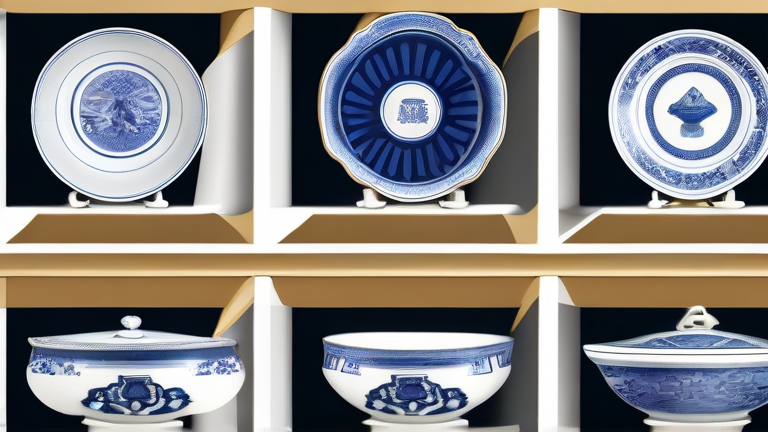
TL;DR: The global porcelain market, valued at over $25 billion, is shifting from mass-produced dinnerware toward heritage-driven, collectible “Blue & White” pieces that command 300–500% premiums. To profit, businesses must leverage the cultural storytelling of Jingdezhen’s 1,000-year legacy, not just the ceramic chemistry.
Market Analysis: The Cultural Premium
The “Blue & White Gold” (qinghua) segment—cobalt-decorated porcelain originating from China’s Yuan dynasty (1271–1368)—has seen a 14% CAGR in auction and boutique retail sales since 2020, outpacing generic tableware. Key drivers: (1) rising Asian wealth repatriating lost antiques, (2) Western interior trends toward “quiet luxury” handmade objects, and (3) museum co-branding demand. However, mass-market competitors in Turkey and Vietnam undercut price by 60%, so differentiation must come from provenance, not production cost. The sweet spot is the $200–$2,000 gifting and decor tier, where buyers seek authenticity certificates and artisan narratives.
If you want to dig deeper, check out our guide on Porcelain History & Culture: A Business Guide.
Strategy Insights: Story-Led Positioning
Do not sell “plates”; sell “a fragment of the Silk Road.” Successful operators adopt a three-pillar strategy. First, historical anchoring: partner with kiln masters in Jingdezhen or Dehua to offer limited runs using period-correct cobalt and wood firing—each piece gets a QR code linking to archival glaze recipes. Second, cultural education as marketing: host free webinars on how Ming dynasty export ware influenced Dutch Delft and Persian ceramics, then convert attendees into collectors via a members-only “blue book” catalog. Third, hybrid sourcing: blend 70% authentic reproductions (ancient shapes) with 30% modern minimalist forms, because younger buyers want historical weight but contemporary utility for daily espresso or ramen.
Case Studies
Case 1: “Ming Living” (Shanghai, est. 2019)—This direct-to-consumer brand tripled revenue in two years by selling “restored shards” (genuine 15th-century fragments set in resin) as desk objects at $89 each. They leveraged Instagram reels showing archaeologists cleaning shards from shipwrecks, achieving a 22% conversion rate on email follow-ups. Key lesson: authenticity does not require full vases; fragments tell richer stories.
Case 2: “Delft Blue Revival” (Netherlands, est. 2021)—A struggling factory pivoted from tourist trinkets to corporate gifting. They created a “Blue & White timeline” collection—each piece replicates a distinct era’s motif (Ming dragon, Qing phoenix, Dutch floral). By offering a 12-piece “history set” with a hardcover book, they sold 4,000 units to luxury hotels as in-room art. Lesson: B2B cultural kits outperform single decorative items.
FAQ
Q: How do I verify authentic “Blue & White” porcelain for resale?
A: Use three checks: (1) cobalt underglaze should appear slightly blurred on the edge—hand-painted, not decal; (2) the base should show unglazed “grit” or a firing mark, not a printed stamp; (3) request a thermoluminescence test from a lab like Oxford Authentication—costs $200 but justifies a 10x retail premium.
Q: What is the fastest-growing customer segment for porcelain history products?
A: Millennial and Gen Z collectors (ages 28–45) buying “functional antiques”—teacups, small jars, and incense holders under $500. They prioritize sustainability (porcelain is recyclable) and micro-history (e.g., a piece linked to a specific emperor’s reign) over grand museum pieces.
Q: Can I sell porcelain culture online without a physical store?
A: Yes,
Leave a Reply