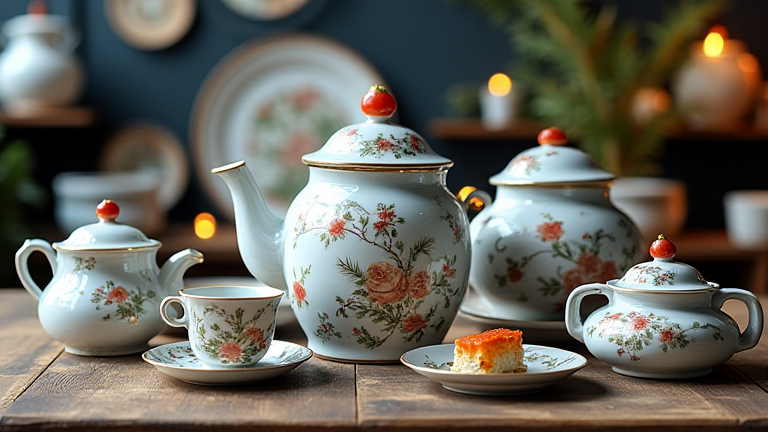
Porcelain History & Culture: A Deep Dive into Business
TL;DR: The global porcelain market is shifting from mass-produced utility to high-value cultural storytelling, driven by consumers seeking authentic heritage and artisanal quality. Businesses that successfully integrate historical narratives with sustainable, limited-edition production strategies are capturing premium price points and loyal customer bases in the luxury home goods sector.
Porcelain is not merely a material; it is a cultural artifact that has shaped economies and diplomatic relations for centuries. From the secret manufacturing processes of ancient Jingdezhen to the industrial revolution in Meissen, the history of porcelain is inextricably linked to its commercial evolution. Today, the business landscape for porcelain products is undergoing a significant transformation. The market is bifurcating into two distinct segments: the high-volume, cost-efficient tableware market dominated by Asian manufacturers, and the premium, design-led luxury segment where heritage and craftsmanship command substantial margins. Understanding this dichotomy is essential for any stakeholder looking to invest in or operate within the porcelain industry.
If you want to dig deeper, check out our guide on Porcelain History: 5 Key Facts About China’s White Gold.
Market Analysis
The global porcelain market is projected to grow steadily, fueled by the expansion of the middle class in emerging economies and a renewed interest in sustainable, durable goods among Western consumers. However, the growth is uneven. Standard white tableware remains a commodity, facing intense price competition from Chinese manufacturers who control over eighty percent of global production. Conversely, the segment for decorative porcelain, fine art pieces, and heritage-inspired tableware is experiencing double-digit growth. Consumers are increasingly willing to pay a premium for products that offer a narrative. This shift indicates that the value proposition has moved from functionality to emotional connection and aesthetic significance. Furthermore, the rise of e-commerce has lowered barriers to entry for niche brands, allowing small-scale artisans to reach global audiences without the need for extensive physical retail infrastructure.
Strategy Insights
To thrive in this environment, businesses must adopt a strategy that blends traditional craftsmanship with modern digital marketing. The key strategic insight is the power of storytelling. Brands that highlight their lineage, the specific clay sources used, and the hand-painted techniques involved can justify higher price points. For example, emphasizing the “kiln-fired” authenticity or the historical significance of a particular glaze recipe creates a barrier to entry that mass manufacturers cannot replicate. Additionally, sustainability is no longer optional; it is a core business requirement. Companies are moving toward closed-loop production systems, recycling ceramic waste, and using eco-friendly glazes. This not only appeals to environmentally conscious consumers but also mitigates regulatory risks. Collaborations with contemporary artists or interior designers can also revitalize older brands, bridging the gap between historical tradition and modern lifestyle trends.
Case Studies
Consider the case of a historic European porcelain manufactory that faced stagnation in the early 2010s. By pivoting from selling generic dinner sets to limited-edition collector pieces featuring intricate historical motifs, they increased their average order value by forty percent. They leveraged their archive of historical designs, releasing them as exclusive drops to create scarcity and urgency. Another example is a modern startup that uses 3D printing technology to create complex porcelain forms previously impossible by hand. By marketing these pieces as “techno-craft,” they attracted a younger demographic interested in innovation, while still maintaining the material integrity of traditional porcelain. Both cases demonstrate that success lies in differentiating through either deep heritage or cutting-edge innovation, never both simultaneously in a way that dilutes the brand message.
FAQ
Q: Why is heritage important in modern porcelain sales?
A: Heritage provides authenticity and emotional value, allowing brands to command premium prices by connecting products to historical significance and artisanal craftsmanship.
Q: What is the biggest challenge for small porcelain businesses?
A: Competing with mass-produced alternatives on price is nearly impossible, so the main challenge is effectively communicating the unique value and story of their handmade or specialized products.
Q: How does sustainability impact the porcelain market?
A: Sustainability is a key differentiator, as consumers prefer eco-friendly production methods, and companies that adopt green practices can attract loyal
Leave a Reply