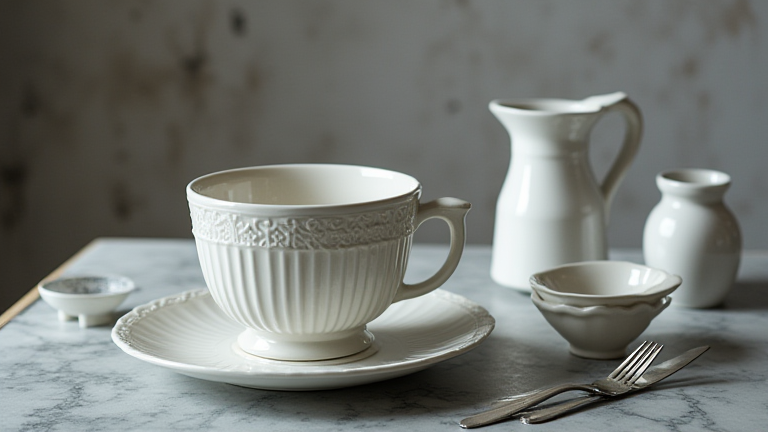
TL;DR: Porcelain has evolved from ancient Chinese art into a high-tech ceramic material driving modern industrial and artistic innovation. Recent advancements in kiln technology and material science have expanded its applications from luxury tableware to advanced aerospace components, significantly impacting global manufacturing and cultural preservation.
The Ancient Origins and Cultural Significance
Porcelain, often referred to as “white gold,” originated in China over a thousand years ago, with the earliest known examples dating back to the Eastern Han Dynasty. For centuries, it was a closely guarded secret, symbolizing prestige and technical mastery. The cultural impact of porcelain is profound; it was not merely a functional vessel but a canvas for artistic expression, reflecting the aesthetic values of dynastic China. The export of porcelain to Europe during the Ming and Qing dynasties sparked a craze that influenced Western art, architecture, and design, leading to the development of European porcelain industries in Saxony, France, and England. This cross-cultural exchange established porcelain as a universal language of beauty and status, embedding it deeply into global history and social rituals, from tea ceremonies to royal banquets.
If you want to dig deeper, check out our guide on Porcelain History & Culture: A Guide to Its Rich Heritage.
Modern Technical Specifications and Manufacturing
In the twenty-first century, porcelain has transitioned from a purely artisanal craft to a precision-engineered material. Modern technical porcelain, or fine china, utilizes kaolin, quartz, and feldspar fired at temperatures exceeding 1,300 degrees Celsius. This high-temperature process results in a material with exceptional density, low porosity, and high mechanical strength. Recent developments in digital kiln control allow for precise temperature and atmosphere management, ensuring consistent product quality and reducing energy consumption. Manufacturers now employ robotic arms for handling and glazing, minimizing human error and enhancing the uniformity of surface finishes. Furthermore, the integration of nanotechnology has led to the creation of porcelain composites that offer improved thermal shock resistance and durability. These specifications make modern porcelain suitable for demanding environments, where traditional ceramics would fail. The ability to produce thinner, yet stronger, porcelain sheets has opened new avenues for design, allowing for lighter and more intricate forms in both industrial and consumer products.
Industry Impact and Future Developments
The impact of advanced porcelain technology on the industry is multifaceted. In the luxury goods sector, porcelain remains a staple, but the focus has shifted toward sustainability and circular economy principles. Manufacturers are increasingly using recycled materials and implementing water-saving glazing techniques to reduce environmental footprints. In the industrial sector, technical porcelain is critical for electronics, serving as insulators and substrates in high-performance devices. Its dielectric properties and thermal stability make it indispensable for 5G infrastructure and electric vehicle components. The latest developments include the exploration of bio-based porcelain alternatives, which aim to reduce reliance on mined kaolin by using agricultural waste as a filler. This innovation not only addresses sustainability concerns but also lowers production costs, making advanced ceramic products more accessible. As digital fabrication techniques like 3D printing with ceramic pastes mature, we expect to see personalized and complex porcelain structures that were previously impossible to produce. This convergence of traditional craftsmanship and cutting-edge technology ensures that porcelain will continue to play a pivotal role in both cultural heritage and technological advancement, bridging the gap between past and future.
FAQ
Q: What is the primary difference between technical porcelain and traditional fine china?
A: Technical porcelain is optimized for industrial performance, focusing on dielectric strength and thermal stability, whereas fine china is designed for aesthetic appeal and food safety, prioritizing thinness and visual clarity.
Q: How does modern kiln technology improve porcelain production?
A: Modern digital kilns provide precise control over temperature and atmospheric conditions, resulting in higher consistency, reduced energy usage, and the ability to create complex, large-scale pieces without structural defects.
Q: Is porcelain production becoming more sustainable?
A: Yes, the industry is adopting recycled materials, water-saving glazing systems, and bio-based fillers to reduce environmental impact, aligning traditional manufacturing with modern sustainability goals.
Leave a Reply