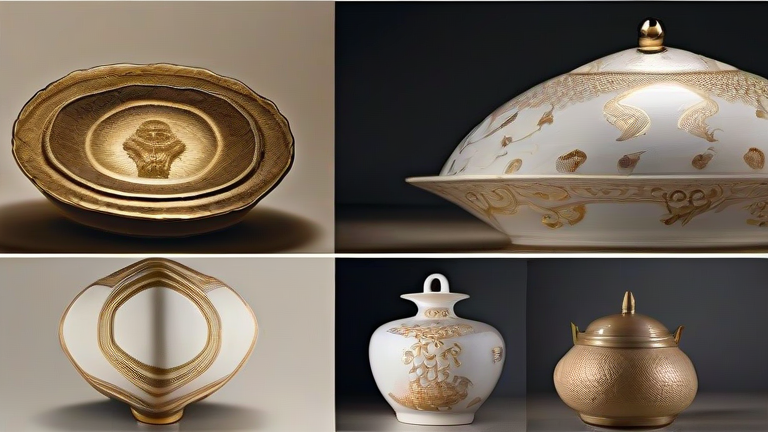
TL;DR: Porcelain’s “Golden Age” refers to the 16th–18th centuries when Chinese kilns perfected translucent, cobalt-blue ceramics that became the world’s first global luxury commodity. This era reshaped trade routes, inspired European imitations, and left a lasting cultural footprint in dining, art, and interior design.
The Birth of “White Gold”
Porcelain emerged in China during the Tang dynasty (618–907), but its true golden age began under the Ming (1368–1644) and early Qing (1644–1912) emperors. The secret lay in kaolin clay and petuntse stone, fired at over 1,300°C, producing a hard, translucent body unlike any pottery before it. By the 16th century, the imperial kilns at Jingdezhen had become a sprawling industrial city of 100,000 artisans, churning out thousands of pieces annually for the emperor’s court and, increasingly, for foreign buyers.
If you want to dig deeper, check out our guide on Porcelain History & Culture: A Business Guide to the Blue & .
Trade, Tea, and Cultural Exchange
Porcelain’s golden age was inseparable from the rise of global trade. Portuguese sailors first brought Ming blue-and-white ware to Europe in the 1550s, sparking a frenzy among royalty. The Dutch East India Company followed, shipping over 3 million pieces in the 17th century alone. These ceramics were not just tableware; they carried Chinese landscapes, mythical creatures, and floral motifs that fascinated European consumers. Tea drinking, newly fashionable in England and France, demanded delicate cups and saucers—porcelain became the physical vessel of a cultural ritual. In return, European merchants commissioned custom designs, blending Chinese aesthetics with Western heraldry, creating a hybrid style known as “chinoiserie.”
The European Obsession and Its Legacy
Europeans tried for centuries to crack porcelain’s formula, calling it “white gold” for its cost. Finally, in 1708, alchemist Johann Friedrich Böttger produced the first true hard-paste porcelain in Meissen, Germany. This breakthrough birthed iconic factories—Sèvres in France, Wedgwood in England—each adding local flair while still revering Chinese prototypes. The golden age’s cultural impact persists today: antique porcelain auctions fetch millions, while contemporary designers reinterpret classic blue-and-white patterns for modern tables. Museums from Shanghai to London dedicate entire wings to these shards of history, and collectors travel the world seeking Ming vases or Qing famille-rose plates, each piece a silent storyteller of empires, craftsmanship, and cross-continental desire.
Personal Growth Through Porcelain
Beyond its monetary value, porcelain offers a lens for self-reflection. Handling a 300-year-old bowl connects you to the hands that shaped it, the kiln that fired it, and the sailors who risked storms to carry it. Learning to identify a Kangxi mark or the subtle “orange peel” texture of a Ming glaze is a meditation in patience. For many enthusiasts, collecting porcelain becomes a journey of humility—every piece teaches you how little you know, and how much beauty can emerge from earth, fire, and human obsession.
FAQ
Q: What makes Ming dynasty porcelain so valuable today?
A: Ming pieces combine flawless craftsmanship, rare cobalt blue from Persia, and historical scarcity—many were lost in shipwrecks or wars, so surviving examples are prized for their artistic precision and age.
Q: How can a beginner start identifying genuine antique porcelain?
A: Look for foot ring wear, glaze crazing, and hand-painted brushstrokes (not machine-perfect lines), and verify the base mark with reference books or museum databases—but always buy from reputable dealers and request provenance.
Q: Did porcelain really influence politics or economics beyond luxury trade?
A: Yes—porcelain trade helped fund China’s maritime exploration and later destabilized European economies due to silver outflows, while European attempts to replicate it spurred early industrialization and scientific experimentation in ceramics.
Leave a Reply