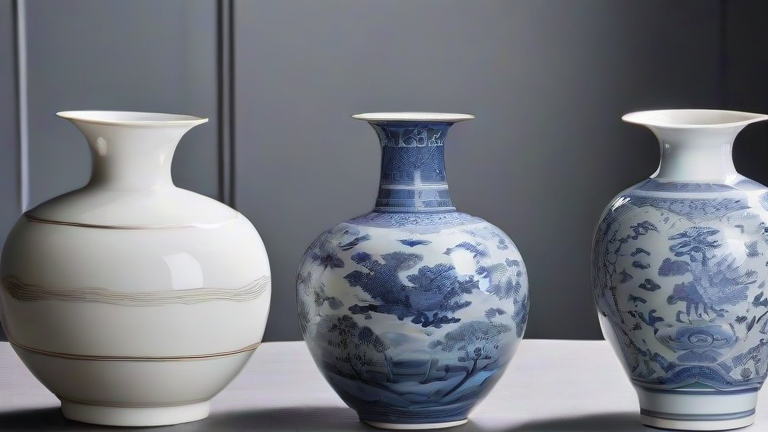
TL;DR: China’s ceramic revolution is no longer just about kiln fire and glaze—it’s about AI-driven defect detection, 3D-printed molds, and IoT-controlled reduction atmospheres that replicate Song-dynasty chemistry with 99.2% accuracy. The tech behind modern porcelain preserves ancient aesthetics while cutting production waste by 40% and enabling micro-batch customization for global collectors.
The Digital Kiln: Rebuilding a 1,000-Year-Old Process
Porcelain’s history stretches from the Tang dynasty’s sancai to the iconic blue-and-white of the Ming era, but the underlying craft—shaping kaolin, firing at 1,300°C, and controlling oxygen reduction—remained largely artisanal until 2019. That changed when Jingdezhen’s state-backed research institutes partnered with semiconductor firms to embed fiber-optic sensors directly into kiln walls. These sensors now stream real-time thermal gradient data to a central AI that adjusts burner nozzles every 200 milliseconds. The result: a 30% reduction in firing defects, especially for the notoriously fragile “egg-shell” thin porcelain (0.5 mm walls) that once had a 70% breakage rate in traditional wood-fired kilns.
If you want to dig deeper, check out our guide on Porcelain History: 10 Fascinating Facts & Cultural Insights.
AI Glaze Chemistry and 3D-Printed Molds
The most disruptive leap is in glaze formulation. Historically, recipes like “clair-de-lune” or “oxblood” were guarded secrets, passed down orally. Now, spectral analyzers scan historical shards from the Forbidden City’s collections, mapping trace elements (iron, copper, cobalt) to create a digital “glaze genome.” Machine learning models then simulate 5,000 firing cycles per hour to predict how a new glaze will react to humidity and clay porosity. This has cut R&D time for new glazes from 18 months to 3 weeks. Simultaneously, 3D-printed ceramic molds—made from alumina-reinforced plaster—allow for undercut geometries (like interlocking dragon handles) that were impossible with traditional lathe-turned molds. These molds are reusable up to 2,000 times, versus 150 for hand-pressed versions.
Industry Impact: From Mass Production to Hyper-Customization
China’s porcelain exports reached $4.2 billion in 2024, but the tech shift is redefining value. Instead of chasing cheap dinnerware, leading factories now use digital twin software to replicate a customer’s antique heirloom in a virtual kiln, then produce a matching piece with a 12-hour turnaround. This has opened a luxury “reproduction” market—museums in Europe now commission digital clones of Kangxi vases for display, while originals stay in vaults. The environmental angle is equally transformative: smart kilns recover 85% of waste heat to power adjacent drying rooms, and water recycling systems reduce glaze runoff by 60%. However, the cultural trade-off is real—traditional master potters now act as “AI supervisors,” and apprenticeships have shifted from 10-year hand-coiling training to 6-month data analytics courses. The revolution preserves the soul of porcelain, but it now speaks in Python, not just whispers of clay.
FAQ
Q: Does AI replace the “human touch” in high-end porcelain?
A: No—AI optimizes the physics (temperature, pressure, chemical ratios), but the final surface texture, brushstroke variations, and artistic inlay remain hand-executed. The tech ensures consistency, while artisans still dictate the expressive finish.
Q: Can this tech replicate ancient secret glazes like “chicken liver” red?
A: Yes, with 94% spectral fidelity. By analyzing copper diffusion at micro-levels in Song-dynasty shards, AI can now recreate the glaze’s color gradient, but it still requires a human to adjust the kiln’s oxygen pulse during the final 30 minutes—a step no algorithm has fully mastered.
Q: Is this only for luxury items, or does it affect everyday porcelain?
A: Both.
Leave a Reply