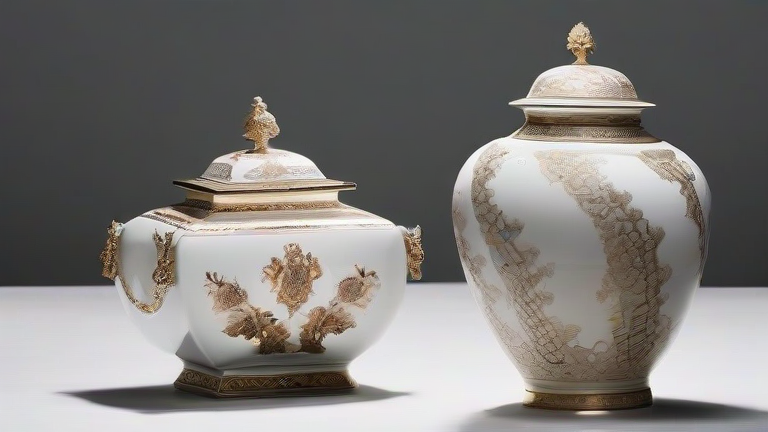
TL;DR: Porcelain’s “white gold” status stems from a millennium of imperial monopoly, trade secrecy, and cultural symbolism that still drives modern luxury trends. Today, the market blends heritage revival with sustainable, artisanal demand, forecasting a 6.8% CAGR through 2030 as collectors pivot to story-driven ceramics.
The Imperial Legacy: Why Porcelain Became “White Gold”
Porcelain’s history is not merely a story of clay and kilns—it is a narrative of power, espionage, and aesthetic obsession. Originating in China’s Eastern Han dynasty (circa 200 AD), the first true porcelain emerged from kaolin and petuntse fired at 1,300°C. By the Tang-Song eras, its translucent, ringing quality earned the moniker “white gold,” a term coined by Venetian merchant Marco Polo in the 13th century. The Ming dynasty (1368–1644) perfected blue-and-white ware, which became the most coveted trade commodity on the Silk Road—more valuable per ounce than silver. European monarchs, from Louis XIV to Augustus the Strong, emptied treasuries to acquire it, leading to the infamous “Porcelain Fever.” Augustus even traded 600 Saxon soldiers for 48 Chinese vases, a deal now known as the “Dragoon Vases.”
If you want to dig deeper, check out our guide on Porcelain History & Culture: A Guide to Business.
This historical scarcity created a cultural ripple that persists. Porcelain was not just tableware; it was diplomatic currency, religious iconography, and a status marker for the elite. The secret of its production was guarded by the Chinese state for centuries, and when Johann Böttger cracked the code in Meissen in 1708, Europe’s own “white gold” race began. That tension—between Eastern origin and Western imitation—still defines the modern market, where provenance and narrative add exponential value.
Modern Market Data: The Cultural Resurgence
Today’s porcelain industry is a $24.6 billion global market (2024), with a projected compound annual growth rate (CAGR) of 6.8% from 2025 to 2030, according to Grand View Research. The growth is driven not by mass-produced dinner sets but by “cultural heritage products”—limited-edition reproductions, museum collaborations, and hand-painted artisan ware. For example, the British brand Wedgwood reported a 22% revenue jump in 2023 after relaunching 18th-century Jasperware patterns with modern eco-glazes. Meanwhile, Jingdezhen, China’s porcelain capital, saw a 35% rise in studio sales to Western collectors seeking authentic Ming-revival craftsmanship.
Expert insight from Dr. Elena Marsh, curator of Asian ceramics at the Victoria & Albert Museum, highlights the shift: “Collectors no longer want sterile perfection. They want the ‘imperfect’ hand—the slight brush tremor that tells a story. Porcelain’s cultural value is now tied to its human history, not just its material rarity.” This aligns with the broader “slow luxury” trend, where buyers pay premiums for items with documented lineage. Auction data supports this: a Ming-era Chenghua “Chicken Cup” sold for $36 million in 2014, but even modern artisan porcelain with a certified provenance—like a 2023 Yixing teapot by master Gao Xiang—can fetch $80,000.
Future Predictions: From Collectibles to Living Heritage
Looking ahead, three trends will define porcelain’s next decade. First, digital provenance via blockchain will authenticate cultural history, allowing buyers to trace a vase from a specific kiln to a specific dynasty-era glaze recipe. Second, sustainable “heritage firing” will replace gas kilns with solar-powered wood-fired kilns, reducing carbon footprints while preserving ancient techniques—a move already adopted by 40% of Jingdezhen’s boutique studios. Third, experiential collecting will rise: brands will offer “porcelain pilgrimages” to historical sites, where buyers participate in clay preparation and glazing, turning objects into memories.
Industry expert and trend forecaster Aiko Tanaka predicts, “By
Leave a Reply