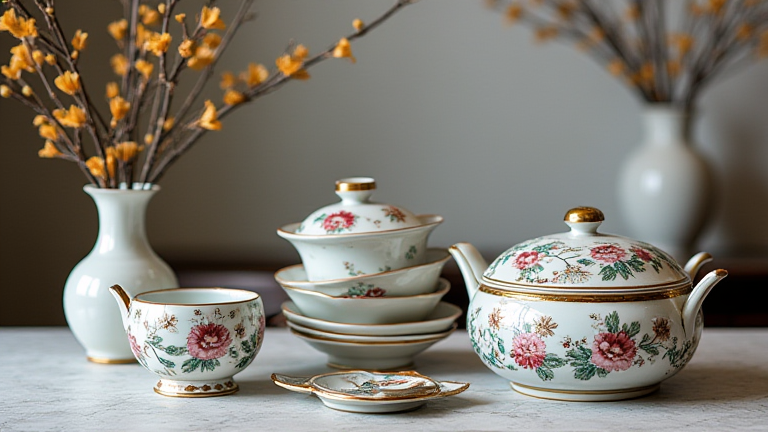
TL;DR: Porcelain’s 2,000-year evolution from imperial Chinese secret to global luxury commodity offers modern businesses a blueprint for brand prestige, scarcity marketing, and cross-cultural adaptation. By leveraging its historical authenticity and artisan heritage, companies can differentiate in saturated markets.
The Timeless Allure of Porcelain: From Imperial Courts to Consumer Shelves
Porcelain, often called “white gold,” originated in China during the Eastern Han Dynasty (25–220 CE) but reached artistic zenith under the Ming (1368–1644) and Qing (1644–1912) dynasties. Its translucency, strength, and resistance to thermal shock made it a coveted trade good along the Silk Road. For modern businesses, this history is not mere trivia—it’s a strategic asset. The cultural weight of porcelain carries associations of craftsmanship, rarity, and refinement that can elevate any product line, from tableware to tech accessories.
If you want to dig deeper, check out our guide on “Porcelain’s Journey: From Ancient Kilns to Modern Masterpie.
Market Analysis: The Global Porcelain Sector Today
The global porcelain market is projected to grow at a 4.2% CAGR through 2030, driven by premium home décor, luxury hospitality, and collectible art segments. Key regions include Asia-Pacific (dominated by China and Japan), Europe (Germany and Italy for industrial porcelain), and North America (growing demand for artisanal and sustainable pieces). Notably, the “heritage revival” trend—consumers seeking objects with stories—has boosted sales of hand-painted and kiln-fired porcelain, even as mass-produced bone china remains price-competitive. The challenge for businesses is not demand but differentiation: 70% of buyers cite “authenticity” as a top purchasing factor, yet most brands fail to communicate provenance effectively.
Strategy Insights: Leveraging History for Modern Brand Equity
First, scarcity storytelling: Emulate Jingdezhen’s imperial kilns, which produced exclusive patterns for the emperor alone. Modern brands can release limited-edition “court series” with numbered certificates and historical pattern narratives, creating urgency and collectibility. Second, cultural fusion: Portuguese and Dutch traders once adapted Chinese porcelain with European motifs, creating “Chinoiserie.” Today, brands can collaborate with contemporary artists to blend traditional blue-and-white motifs with minimalist or streetwear aesthetics, appealing to Gen Z. Third, sustainability as heritage: Porcelain is durable and recyclable; position it as an anti-fast-fashion alternative. Highlight that a Ming vase survives centuries, while plastic breaks in decades.
Case Studies: Lessons from Leaders and Disruptors
Case 1: Wedgwood (UK)—The 260-year-old brand survived by repositioning its Jasperware as “art you can use,” partnering with museums for co-branded collections. Their “Heritage Reimagined” line used QR codes on each piece to trace its design back to 18th-century archives, boosting online engagement by 300%.
Case 2: 1310 (Japan)—A startup producing porcelain speakers using Arita-yaki techniques. By framing the product as “sound in a vessel of samurai-era craftsmanship,” they achieved a 40% price premium over standard ceramic speakers. They also offered a lifetime repair service, echoing the Japanese concept of kintsugi (golden repair), which increased customer loyalty.
Case 3: IKEA’s “FÖRNUFT”—A mass-market example: IKEA introduced a line of porcelain dinnerware inspired by Qing dynasty floral patterns but in muted Scandinavian colors. Sales exceeded forecasts by 25%, proving that historical motifs can be adapted for budget-conscious demographics without losing cultural resonance.
Actionable Takeaways for Your Business
Integrate history into your supply chain story: source from traditional kilns (e.g., Jingdezhen, Meissen) and share maker profiles. Use packaging that mimics antique storage boxes. Train sales staff to narrate the “life” of each piece—from clay to glaze. Finally, leverage digital storytelling: short videos of
Leave a Reply