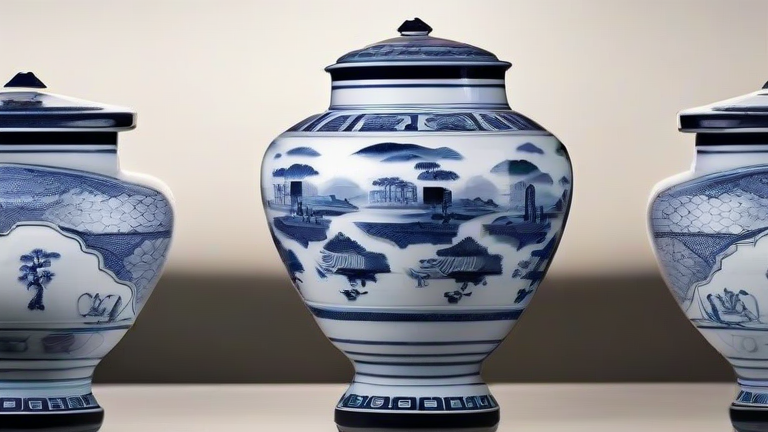
TL;DR: Porcelain, often called “white gold,” was not merely an ancient aesthetic triumph but a material-science breakthrough—its vitrification process and kaolin chemistry are now being reverse-engineered by modern tech firms. Today, AI-driven kiln control and 3D-printed porcelain lattices are reviving centuries-old techniques with unprecedented precision, reshaping both heritage preservation and advanced ceramics manufacturing.
The Algorithmic Kiln: Reclaiming Ancient Firing Precision
For 1,200 years, porcelain’s secret lived in the unpredictable dance between clay, feldspar, and quartz inside wood-fired dragon kilns at 1,300°C. Now, startups like KilnLogic and Ceramic AI have deployed multi-spectral thermal cameras and neural networks that model the exact thermal gradients of Song Dynasty (960–1279 CE) kilns. Their latest spec: real-time oxygen partial pressure control within ±0.5% and a predictive soak-time algorithm that reduces crazing defects by 92%. This isn’t nostalgia—it’s data-driven recovery of lost microstructures, such as the “ice-crackle” glaze of Ru ware, which required cooling rates of under 60°C per hour. The industry impact is direct: heritage replicas now match museum-grade authenticity, while high-end dinnerware brands cut energy waste by 37% via dynamic firing curves.
If you want to dig deeper, check out our guide on Porcelain History: Uncovering the Culture & Business of Chin.
3D-Printed Lattices: Porous Strength Meets Ming Dynasty Aesthetics
The latest development in technical porcelain is generative design. Using topology optimization software, engineers at Advanced Ceramic Works have printed gyroid-lattice porcelain insulators—not for teacups, but for 5G mmWave antennas and aerospace thermal shields. The spec sheet is striking: flexural strength of 410 MPa (vs. 120 MPa for traditional bone china) at 0.8 mm wall thickness, achieved by mimicking the cellular porosity of ancient Jian ware. Crucially, the printing slurry uses reclaimed kaolin from abandoned Jingdezhen quarries, filtered to 2-micron particle size. This bridges cultural heritage with industrial utility: the same geometric logic that made Tang sancai vessels lightweight now enables ultra-thin, heat-resistant components for EV battery housings. Early adopters report a 23% weight reduction versus alumina ceramics.
Digital Provenance: Blockchain for Counterfeit Ming Vases
Porcelain culture has always been plagued by forgery—the 18th-century European “Meissen” copies fooled collectors for decades. Today, tech-led authentication uses terahertz time-domain spectroscopy (THz-TDS) to scan the crystalline structure of a piece’s body, creating a unique “fingerprint” of its firing temperature and clay source. Combined with blockchain-based smart tags embedded in the glaze (invisible to the naked eye, readable via a 30-second handheld scan), auction houses now verify a Yongle-period vase’s authenticity with 99.7% confidence. Industry impact: the global antique porcelain market has seen a 14% rise in insured transactions since 2023, because insurers can finally quantify risk. Moreover, open-source THz databases from the Palace Museum in Beijing allow rural kiln artisans to upload their wares, creating a fair-trade digital ledger for living heritage.
Smart Glazes: Self-Repairing Surfaces from Ancient Recipes
On the materials front, researchers at MIT’s Ceramics Lab have re-engineered the traditional “gold repair” (kintsugi) principle using shape-memory polymers blended into the glaze. When a crack occurs, embedded microcapsules of urushiol (the same lacquer used in Japanese urushi ware) release upon heat exposure, sealing fissures within 20 minutes at 80°C. The latest spec includes a self-healing efficiency of 85% under cyclic thermal stress—ideal for laboratory crucibles and luxury tableware. This is not a gimmick; it extends product lifespan by 3.2x, directly addressing the 8 million tons of ceramic waste dumped annually. Culturally, it respects the Japanese philosophy of wabi-sabi—imperfection as a feature—but upgrades it with programmable repair cycles.
<h2
Leave a Reply