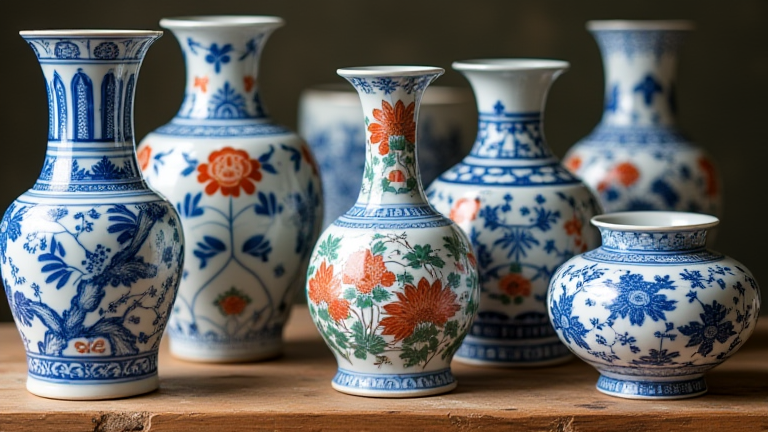
TL;DR: Porcelain is a non-porous ceramic material invented in China, characterized by its white, translucent, and vitreous properties. This guide explores its historical evolution, manufacturing techniques, and cultural significance across different eras.
Understanding the Material
Before diving into history, it is essential to understand what makes porcelain unique. Unlike earthenware or stoneware, porcelain is fired at very high temperatures, typically between 1,200 and 1,400 degrees Celsius. This process results in a material that is dense, hard, and capable of transmitting light when held up to a source. The primary ingredients are kaolin clay, feldspar, and quartz. The ratio of these materials determines the final color and texture. For a beginner exploring this topic, focus on the distinction between true porcelain and “soft-paste” or “hard-paste” varieties, which emerged as European attempts to replicate the Chinese original.
If you want to dig deeper, check out our guide on Porcelain Through the Ages: A Business Guide to China’s Time.
Tracing the Origins in China
Your journey begins in the Tang Dynasty (618–907 AD), where early forms of porcelain were developed. However, it was during the Song Dynasty that the craft reached its zenith. Explore the famous kilns of Jingdezhen, which became the “Porcelain Capital” of the world. Here, you will find the blue and white wares that defined global trade. The use of cobalt blue pigment, often imported from Persia, combined with local white clay, created a visual language that transcended borders. To study this era effectively, look for artifacts that display intricate underglaze painting. These pieces reveal not only technical mastery but also the aesthetic preferences of the time, reflecting Confucian values of harmony and order.
European Imitation and Innovation
The next step in your historical journey involves the European quest to replicate Chinese porcelain. For centuries, Europe relied on faience or maiolica, which were tin-glazed earthenwares. The breakthrough came in 1708 in Meissen, Germany, where Johann Friedrich Böttger developed true hard-paste porcelain. This event marked the beginning of the European porcelain industry. Tip: When comparing European and Chinese pieces, note the differences in shape and decoration. European styles often featured more ornate, sculptural forms influenced by Baroque and Rococo aesthetics, whereas Chinese designs tended to be more restrained and elegant. Studying the works of factories like Sèvres in France or Wedgwood in England provides insight into how local tastes influenced the global porcelain market.
Modern Cultural Significance
Today, porcelain is no longer just a luxury item but a medium for contemporary art. Modern artists use porcelain to challenge traditional perceptions of fragility and permanence. They employ techniques such as slip casting and 3D printing to create complex, large-scale installations. In culture, porcelain remains a symbol of sophistication and refinement. It is used in everything from fine dining to high-end fashion accessories. To appreciate modern porcelain, visit galleries that feature ceramic art. Look for pieces that subvert expectations, such as large, colorful sculptures or functional objects with abstract designs. This contemporary use shows how an ancient material continues to evolve, reflecting current social and artistic movements.
Preservation and Care
Finally, understanding how to preserve porcelain is crucial for collectors and historians. Porcelain is brittle and can shatter if dropped. Handle pieces by their bases or feet, never by delicate handles or rims. Clean them gently with a soft, damp cloth. Avoid harsh chemicals or abrasive materials that can scratch the glaze. Store items in padded boxes or display cases with acid-free tissue paper. Regular inspection for hairline cracks is essential, as moisture can seep in and cause the piece to break later. By following these care instructions, you ensure that these cultural artifacts remain intact for future generations to study and admire.
FAQ
Q: What is the main difference between porcelain and stoneware?
A: Porcelain is made from kaolin clay and fired at higher temperatures, making it translucent and non-porous, while stoneware is more opaque and porous
Leave a Reply