**The Porcelain Trail: A Beginner’s Guide to History & Culture** (62 chars)
TL;DR: Porcelain is a high-fired ceramic material originating in China, defined by its translucency and high vitrification. It represents a pinnacle of cultural exchange, artistic innovation, and technical mastery spanning over a thousand years of global history.
Understanding the Material
Begin your journey by understanding what makes porcelain unique. Unlike earthenware or stoneware, true porcelain is fired at extremely high temperatures, typically between 1,300 and 1,400 degrees Celsius. This process creates a dense, non-porous body that is often white and semi-translucent. The key ingredients usually include kaolin clay, feldspar, and quartz. Kaolin provides plasticity and whiteness, while feldspar acts as a flux that melts during firing to bind the particles together. Quartz adds structural stability. To identify genuine porcelain, hold a piece up to light; if you can see the shadow of a finger through the rim, it is likely high-quality porcelain. Alternatively, tap the piece gently. Porcelain produces a clear, ringing sound, whereas lower-quality ceramics sound dull and thuddy. Understanding these physical properties is the first step in appreciating the art form.
If you want to dig deeper, check out our guide on Porcelain History & Culture: 10 Facts Behind the White Gold.
Tracing Historical Roots
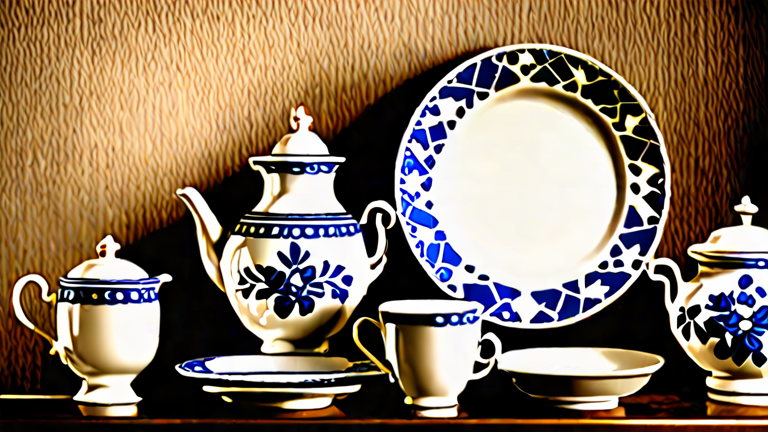
Next, explore the historical timeline. Porcelain was invented in China during the Han Dynasty, but it reached its golden age during the Song and Ming Dynasties. The Ming Dynasty, specifically, saw the rise of the Jingdezhen kilns, which became the center of ceramic production in the world. From here, porcelain traveled along the Silk Road and maritime routes, influencing cultures across Asia, Europe, and the Americas. In Europe, the quest to replicate Chinese porcelain led to significant scientific advancements. Meissen in Germany is often credited with the first successful production of true porcelain in Europe around 1708, followed closely by Sèvres in France. Studying the evolution of glazes and decorative techniques helps you understand how trade routes shaped artistic styles. Look for specific motifs, such as the blue-and-white design, which became a global standard for cross-cultural communication.
Collecting and Care
Finally, learn the basics of collection and preservation. Start with small, accessible pieces rather than expensive antiques. Focus on learning to identify marks, glazes, and forms. Proper care is essential to maintain value and beauty. Clean porcelain with a soft, dry cloth to avoid scratching the glaze. Avoid sudden temperature changes, as thermal shock can cause cracks. Store items in padded boxes to prevent physical damage. By combining historical knowledge with practical care, you build a respectful and informed appreciation for this remarkable material. The porcelain trail is not just about objects; it is a narrative of human ingenuity, global connection, and aesthetic pursuit. Embrace the learning process as a lifelong journey through time and culture.
FAQ
Q: What is the main difference between porcelain and ceramic?
A: Porcelain is a specific type of ceramic that is fired at higher temperatures, resulting in a denser, harder, and often translucent material compared to standard ceramics.
Q: Why is Chinese porcelain so historically significant?
A: It pioneered high-temperature firing techniques and global trade networks, influencing artistic styles and manufacturing processes worldwide for centuries.
Q: How can I tell if a piece is genuine porcelain?
A: Check for translucency when held to light, listen for a ringing sound when tapped, and examine the base for manufacturer marks or specific glaze characteristics.
Leave a Reply