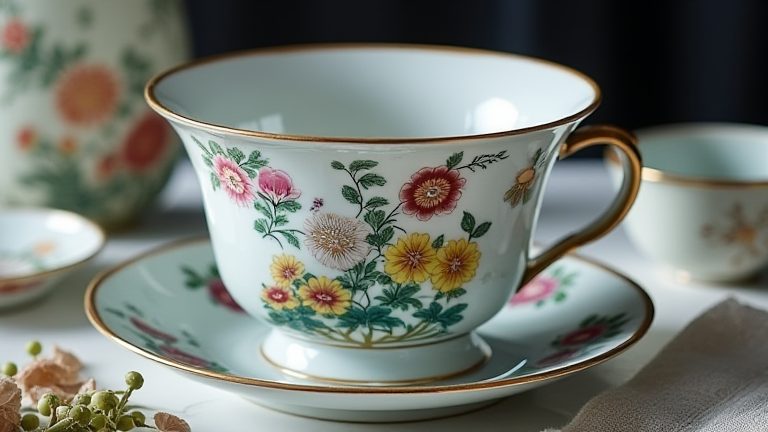
TL;DR: Porcelain’s history spans over 1,000 years, from Chinese imperial kilns to European royal factories, evolving from a guarded secret to a global art form. Its culture reflects trade, technology, and aesthetic ideals, making it a timeless collectible and decorative staple.
The Rich History and Culture of Porcelain: A Brief Guide
Porcelain is not just ceramic—it is a story of fire, chemistry, and conquest. Originating in China during the Eastern Han Dynasty (circa 200 AD), true porcelain—hard, translucent, and ringingly resonant—required kaolin clay and high-temperature kilns. By the Tang and Song dynasties, pieces like celadon and whiteware became imperial treasures. The Silk Road carried these fragile wonders westward, where they were prized as “white gold.”
If you want to dig deeper, check out our guide on Porcelain History: Tech & Culture Behind China’s White Gold.
Feature Highlights: Modern porcelain products still honor these traditions. Look for hand-painted underglaze blue-and-white patterns (a nod to Ming dynasty exports), delicate famille rose enamels from the Qing era, and European innovations like Meissen’s hard-paste formula (1708) or Sèvres’ soft-paste luxury. Today’s high-quality porcelain retains three key features: chip-resistant vitrification, non-porous surfaces (ideal for hygiene), and translucency when held to light. Many artisan studios now offer limited-edition pieces with traditional cobalt pigments or gold luster, blending ancient techniques with modern kiln precision.
Comparisons: When choosing porcelain, compare Chinese Jingdezhen ware (classic, affordable, diverse) against Japanese Arita or Kutani (often more minimal, with bold iron-red accents). European brands like Royal Copenhagen or Wedgwood excel in molded relief and pastel palettes, but they are pricier. For daily use, porcelain stoneware (a hybrid) offers durability, while bone china—containing bone ash—adds strength but less historical purity. If you value provenance, opt for museum-replica pieces; if you prefer function, choose dishwasher-safe modern glazes. Avoid low-fired earthenware marketed as porcelain—it lacks the signature ring and density.
Call-to-Action: Whether you are a collector, host, or history lover, owning a piece of porcelain connects you to centuries of craftsmanship. Start with a single hand-painted teacup or a small vase—then explore matching dinnerware sets that tell a cultural story. Visit a reputable dealer or online artisan marketplace today, and ask for kiln certificates or origin tags. Don’t let this living heritage gather dust—bring it to your table, and let every meal echo with the clink of empires.
FAQ
Q: How can I tell if my porcelain is antique or just vintage?
A: Check the base for unglazed foot rings, irregular glaze pooling, and hand-painted brush strokes. Antique pieces (pre-1800s) often show slight asymmetries and lack machine-stamped marks; use a magnifying glass for kiln grit or stacking scars. If uncertain, consult an appraiser who specializes in Asian or European ceramics.
Q: Why is blue-and-white porcelain so iconic in Chinese culture?
A: Cobalt blue pigment, imported from Persia, was stable under high firing and contrasted beautifully with white porcelain. The Yuan dynasty (1271–1368) perfected this palette, and it symbolized wealth, trade, and cultural exchange—later imitated worldwide but never equaled in depth.
Q: Can I use antique porcelain for daily dining, or will it crack?
A: Most antique porcelain is not microwave- or dishwasher-safe due to fragile gold or enamel paints. Hand-wash with mild soap and avoid thermal shock (no boiling water in cold cups). For daily use, buy modern reproductions that mimic historical designs but are kiln-fired to modern safety standards.
Leave a Reply