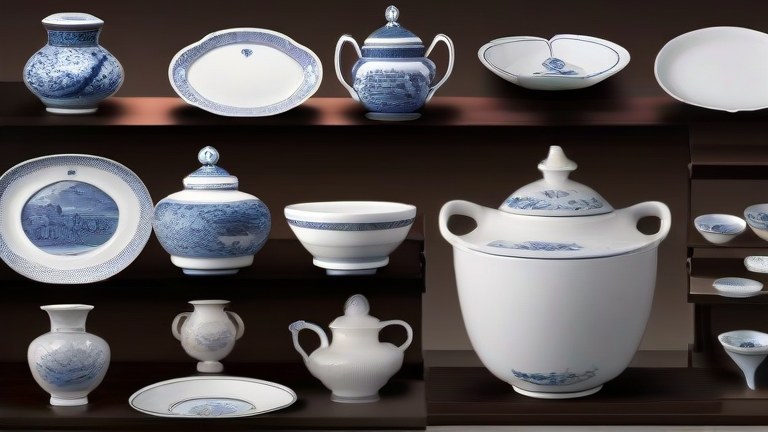
From China to Europe: The Tech Behind Porcelain’s History
TL;DR: Porcelain’s journey from imperial China to European workshops was driven by the mastery of high-temperature firing and specific clay compositions, notably kaolin. Modern advancements in ceramic engineering now replicate and enhance these historical techniques, creating durable, aesthetically superior materials for contemporary luxury and industrial applications.
Porcelain is not merely a material; it is a testament to the intersection of geology, chemistry, and engineering. Originating in China during the Han Dynasty, the secret lay in the unique properties of kaolin clay, a white, plastic clay found in Jiangxi Province. Unlike standard earthenware, which fires at lower temperatures and remains porous, porcelain requires firing at temperatures exceeding 1,200 degrees Celsius. At this intensity, the clay particles vitrify, creating a non-porous, translucent, and incredibly hard body. This technical superiority allowed for the creation of vessels that could withstand thermal shock and resist staining, qualities that became highly coveted across the Silk Road.
If you want to dig deeper, check out our guide on Porcelain History & Culture: A Guide to Timeless Lifestyle.
The European Reverse-Engineering Era
For centuries, European artisans attempted to replicate Chinese “white gold.” The breakthrough came in 1708 in Meissen, Germany, when Johann Friedrich Böttger, a court alchemist, discovered the correct mixture of kaolin, quartz, and feldspar. This triad remains the foundation of modern ceramic technology. The Meissen factory’s success was not just artistic but industrial; it established standardized production lines and quality control protocols that mirrored modern manufacturing. The ability to mass-produce consistent, high-quality goods transformed porcelain from a royal luxury into a middle-class staple, driving economic shifts across the continent.
Modern Specs and Industry Impact
Today, the “tech” behind porcelain has evolved into a sophisticated field of materials science. Modern specifications focus on thermal conductivity, microwave transparency, and chemical stability. For instance, high-tech porcelain is now used in medical implants and electronic substrates due to its biocompatibility and insulating properties. The industry has also embraced sustainable practices, utilizing recycled glass and bio-based binders to reduce the carbon footprint of firing. These developments ensure that while the core chemistry remains rooted in ancient Chinese discoveries, the applications and environmental impacts are entirely modern. The global market for architectural and fine porcelain continues to grow, driven by demand for hygienic, low-maintenance surfaces in healthcare and high-end residential design.
Cultural Resonance and Future Trends
Culturally, porcelain serves as a bridge between East and West, symbolizing trade, diplomacy, and artistic exchange. Contemporary artists are pushing the boundaries further, using 3D printing to create complex, unglazed forms that highlight the raw beauty of the fired body. This fusion of traditional craftsmanship with digital fabrication represents the latest development in the field. As consumer preferences shift towards durability and sustainability, porcelain’s inherent longevity ensures its continued relevance. It is a material that has survived millennia, adapting its technology to meet the demands of each new era, from imperial courts to modern laboratories.
FAQ
Q: What is the primary chemical component that distinguishes porcelain from other ceramics?
A: Kaolin clay, combined with quartz and feldspar, allows for high-temperature vitrification, resulting in a non-porous, translucent body.
Q: How did the discovery of kaolin in Europe impact the local economy?
A: It enabled the establishment of major industrial centers like Meissen and Sèvres, creating jobs and transforming local economies through high-value manufacturing and export.
Q: Are modern porcelain products environmentally friendly compared to historical methods?
A: Yes, modern kilns are more energy-efficient, and many manufacturers now use recycled materials and lower-emission firing processes to reduce environmental impact.
Leave a Reply