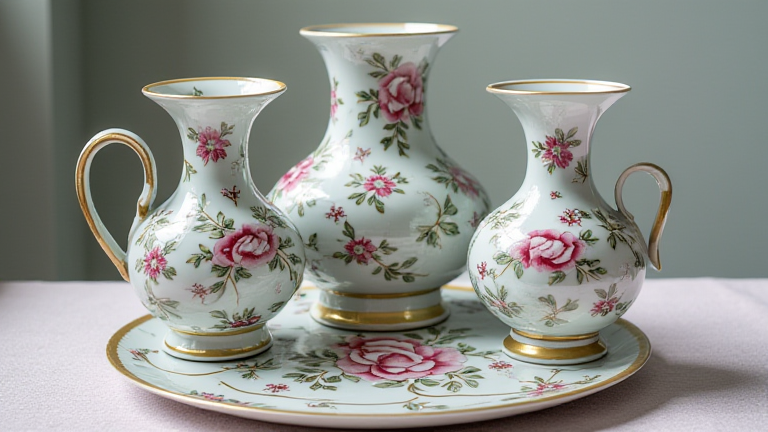
TL;DR: Porcelain is a high-fired ceramic material originating in China, renowned for its white, translucent, and durable properties that shaped global trade and art. Understanding its history involves exploring the evolution from early stoneware to modern industrial production and its cultural significance in dining, decoration, and diplomatic exchange.
Step 1: Understand the Origins of Porcelain
Begin your journey by studying the early development of porcelain in China, particularly during the Han and Tang dynasties. Focus on the discovery of kaolin, a white clay essential for creating true porcelain. Learn how the secret of high-temperature firing was guarded for centuries, making Chinese porcelain a highly valued export. Research the specific regions, such as Jingdezhen, which became the center of production and innovation. This foundational knowledge provides context for why porcelain was considered a “white gold” in global markets.
If you want to dig deeper, check out our guide on Porcelain History & Culture: Unveiling the Legacy of Fine Ch.
Step 2: Explore the Global Spread and Imitation
Investigate how porcelain traveled along the Silk Road and maritime routes to Europe, the Middle East, and East Asia. Study the intense desire for Chinese wares in European courts, which led to the term “china” for dinnerware. Examine the efforts by European potters, such as those in Meissen, Germany, and Sèvres, France, to replicate the material. Compare the distinct styles that emerged in different cultures, noting how local aesthetic preferences influenced the design of imported and locally produced pieces. This step highlights the cross-cultural exchange that defined the early modern period.
Step 3: Analyze Cultural Significance in Daily Life
Examine the role of porcelain in social status, etiquette, and daily rituals. In China, porcelain was central to tea culture and ancestral offerings, symbolizing purity and refinement. In Europe, it became a marker of wealth and sophistication, influencing table settings and interior design. Look at how the material’s durability and elegance allowed it to transition from luxury goods to mass-produced household items. Understanding these social dynamics helps you appreciate why porcelain remains a symbol of cultural identity and artistic achievement across different civilizations.
Step 4: Identify Key Historical Periods and Styles
Learn to distinguish between major historical periods, such as the Ming and Qing dynasties in China, and the Baroque and Rococo periods in Europe. Study the specific decorative techniques associated with each era, including blue-and-white painting, famille rose enamels, and gilding. Recognize the shift from hand-painted intricate designs to the introduction of transfer printing in the 19th century, which made porcelain more accessible. This historical timeline allows you to place specific artifacts within their proper cultural and technological context.
Step 5: Engage with Modern Preservation and Collection
Conclude by learning about the preservation of historical porcelain and the ethics of collecting. Understand the importance of proper handling, storage, and display to prevent damage from humidity and temperature fluctuations. Visit museums or reputable online archives to view authenticated pieces and learn from expert curators. Consider the impact of industrialization and modern technology on contemporary porcelain art, which continues to evolve while honoring its ancient roots. This final step ensures you approach the subject with respect for its heritage and an eye for future developments in the field.
FAQ
Q: What is the main difference between porcelain and ceramic?
A: Porcelain is a specific type of ceramic made from kaolin clay, fired at higher temperatures, resulting in a harder, whiter, and more translucent material.
Q: Why was porcelain so valuable in the 17th and 18th centuries?
A: It was rare, difficult to produce, and associated with high status, making it a luxury item that signaled wealth and sophistication in both East and West.
Q: How can beginners start collecting porcelain?
A: Start by focusing on a specific region or period, research authentication methods, and consult with experts or reputable dealers to avoid reproductions and damaged pieces.
Leave a Reply