TL;DR: Porcelain is more than fragile tableware—it is a 1,000-year-old cultural passport that links imperial trade routes, ritual tea ceremonies, and modern minimalist living. Its history teaches us that beauty, utility, and patience are intertwined, making the “porcelain lifestyle” a practice of mindful curation rather than mere consumption.
The Firing of Empires: A Brief Origin Story
Porcelain was born in China during the Tang dynasty (618–907 CE), but it reached its alchemical peak under the Song and Ming dynasties. The secret—kaolin clay fired at over 1,300°C—produced a translucent, ringing body that Arabs, then Europeans, called “white gold.” By the 16th century, the Portuguese and Dutch shipped millions of pieces along the Maritime Silk Road, sparking a global obsession. In Europe, kings bankrupted treasuries trying to replicate it; only in 1708, at Meissen, did Johann Friedrich Böttger crack the code. This history is not dusty trivia: every porcelain teacup you hold carries the residue of that cross-continental hunger for perfection.
If you want to dig deeper, check out our guide on Porcelain History & Culture: A Guide to Its Lifestyle Legacy.
Tea, Ritual, and the Slow Table
Travelers to Jingdezhen—China’s porcelain capital—still see artisans throwing pots as their ancestors did a millennium ago. But the true cultural portal is the Japanese tea ceremony, which adopted Chinese porcelain and transformed it into a philosophy of wabi-sabi (imperfect beauty). Using a hand-painted chawan (tea bowl), you learn that chips and glaze drips are not flaws but biographies. This mindset has migrated into modern lifestyle trends: the “slow table” movement urges you to eat from handmade ceramics, not mass-produced stoneware. The ritual of rinsing, warming, and pouring becomes a meditation—a break from plastic convenience and digital noise.
From Palace Walls to Personal Growth
Porcelain’s cultural journey also mirrors personal growth. Early blue-and-white pieces were designed for imperial courts—rigid, hierarchical, flawless. But as trade spread, artisans adapted to foreign tastes: Persian floral motifs, Dutch tulips, African geometric patterns. This flexibility is a lesson in identity. Collecting porcelain—or simply choosing one good teapot—teaches you to value provenance over price, function over trend. The act of repairing a broken heirloom with gold (kintsugi, a Japanese cousin of porcelain culture) turns a loss into a visible strength. You stop chasing perfection and start honoring history.
Living With Porcelain Today
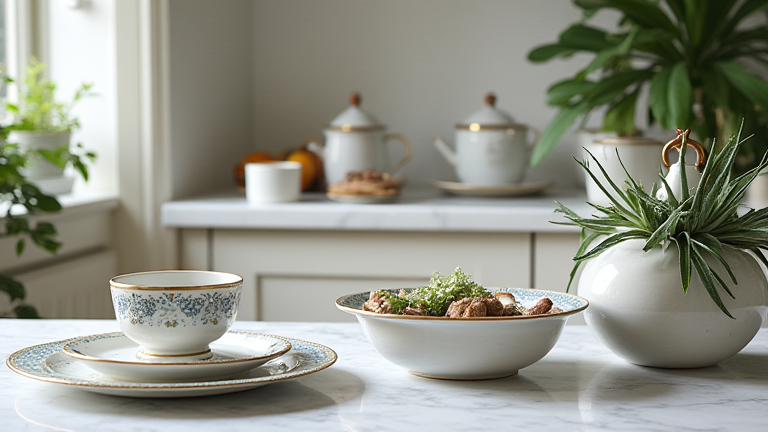
Incorporating porcelain into your home is not about buying a full set of Limoges. It might mean a single celadon bowl for your morning oats, or a vintage transferware plate used as a wall accent. The lifestyle angle is curation: choose pieces with a story—a potter’s mark, a glaze color unique to a kiln, a rim worn smooth by decades of tea. Display them on open shelves, not locked cabinets. Use them daily. Porcelain is durable, but its real strength is cultural: it connects your hands to Tang merchants, Ming scholars, and Dutch traders who all believed that a meal shared on beautiful ceramic is a meal shared with dignity.
FAQ
Q: Why is porcelain called “china” in English?
A: Because Europe first encountered it exclusively from China, and the name stuck as a geographic shorthand for the material, even after Japanese and European kilns mastered the craft.
Q: What is the main difference between porcelain and regular ceramic?
A: Porcelain uses kaolin clay fired at higher temperatures (above 1,200°C), making it vitrified—non-porous, harder, and translucent when thin, unlike earthenware which remains porous and opaque.
Q: How can a beginner start a porcelain collection without overspending?
A: Visit flea markets or estate sales for chipped “seconds” from known makers, or buy modern studio pieces directly from potters. Focus on one color or motif (e.g., celadon or cobalt blue) to build
Leave a Reply