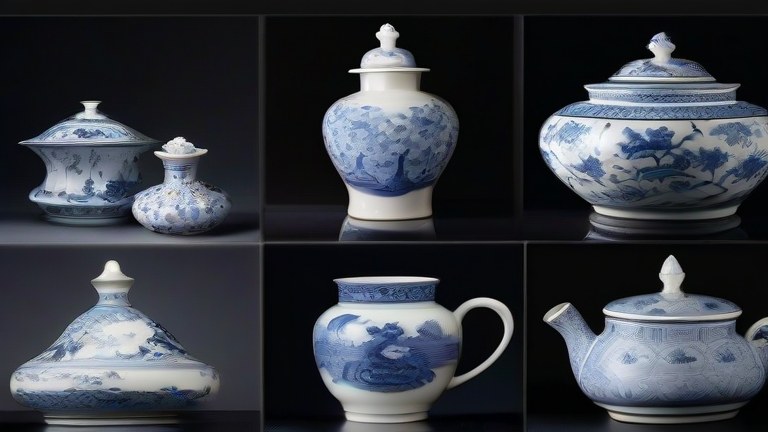
TL;DR: Porcelain history reveals a global journey from Chinese exclusivity to Western industrial dominance, driven by centuries of technological secrets and cultural prestige. Today’s market blends heritage craftsmanship with modern innovation, projecting sustained growth in luxury collectibles and sustainable manufacturing techniques.
The Alchemy of Earth and Fire
Porcelain, often referred to as “white gold,” has captivated civilizations for over a millennium. Originating in China during the Han Dynasty, its true refinement occurred in the Tang and Song dynasties, where kilns achieved temperatures exceeding 1,300 degrees Celsius. This heat transformed kaolin clay and feldspar into a material that was not only durable but also translucent, a quality unknown to other ceramics. The secrecy surrounding its production was so intense that Chinese officials reportedly executed potters who attempted to leave the imperial kilns, guarding the recipe as a state secret. This exclusivity fueled a massive trade network, with porcelain becoming the world’s first true global commodity, flowing along the Silk Road and later maritime routes to Europe.
If you want to dig deeper, check out our guide on Porcelain History & Culture: A Business Guide.
The European quest to replicate Chinese porcelain began in earnest in the 18th century. Alchemists and scientists, including the famous German alchemist Johann Friedrich Böttger, worked tirelessly to crack the code. Their breakthrough at the Meissen factory in Saxony in 1708 marked a pivotal shift in global trade dynamics. By creating “hard-paste” porcelain, Europe ended its dependence on Asian imports and began its own era of ceramic artistry. This technological transfer did not merely satisfy curiosity; it reshaped economic landscapes, creating new industries and artistic movements that would define European culture for centuries. The rivalry between Meissen, Sèvres, and other European factories drove innovation in glazing techniques and decorative styles, such as the delicate Rococo and the grand Neoclassical motifs.
Modern Market Dynamics and Expert Insights
In the contemporary era, the porcelain industry has evolved significantly, blending historical reverence with modern commercial strategies. Market data indicates that the global fine ceramics market was valued at approximately $5 billion in 2023, with a projected compound annual growth rate of 4.5% through 2030. This growth is driven largely by the luxury sector and the increasing interest in sustainable, artisanal products. Consumers are increasingly seeking items that tell a story, favoring hand-thrown pieces with historical significance over mass-produced alternatives. Experts note that the resurgence of interest in traditional Japanese Raku and Korean Buncheong styles reflects a broader cultural shift toward mindfulness and authenticity in consumer goods.
Dr. Elena Rossi, a leading historian of material culture, emphasizes that the value of porcelain today lies not just in its aesthetic appeal but in its cultural narrative. “Porcelain is a mirror of history,” Rossi states. “Each piece carries the technological and artistic aspirations of its era. As we move forward, the most valuable collections will be those that demonstrate a clear lineage of craftsmanship and cultural exchange.” This insight underscores the importance of provenance in the modern market. Auction houses report that pieces with documented histories, particularly those from the Ming or Qing dynasties, continue to command premium prices, often surpassing initial estimates by significant margins.
Looking ahead, future predictions suggest a strong integration of technology in porcelain production. Digital firing controls and AI-assisted design are becoming more common, allowing for greater precision and consistency without sacrificing artistic integrity. Furthermore, the growing emphasis on sustainability is pushing manufacturers to adopt cleaner energy sources and recycled materials. The industry is expected to see a rise in “eco-luxury” porcelain, where environmental responsibility becomes a key selling point. As climate concerns intensify, consumers and collectors are likely to prioritize producers who demonstrate a commitment to reducing carbon footprints, ensuring that the legacy of porcelain is preserved for future generations.
FAQ
Q: What makes authentic antique porcelain so valuable?
A: Its rarity, historical significance, and the skill required to produce it with specific period techniques contribute to its high market value.
Q: How has technology changed porcelain production recently?
A: Modern kilns and digital tools allow for greater precision and sustainability, while maintaining the
Leave a Reply