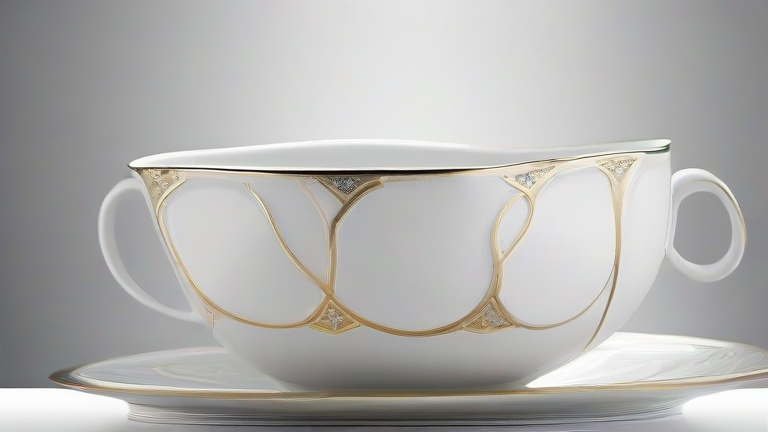
Porcelain History: Unveiling the Tech Behind the White Gold
TL;DR: The technology behind porcelain lies in the precise thermal and chemical engineering of high-kiln firing, which creates a vitrified, translucent, and durable ceramic body from kaolin, feldspar, and quartz. Modern advancements in electric kilns and digital glazing have revolutionized production, making this ancient “white gold” more accessible while preserving its cultural significance.
The Ancient Engineering of White Gold
Porcelain, often referred to as “white gold” due to its rarity and value, is not merely a decorative art form but a feat of materials science. Its history dates back to the Han Dynasty in China, where artisans discovered that specific clays, when subjected to extreme heat, could transform into a material that was both strong and translucent. The core of this technology involves the “vitrification” process. Unlike standard earthenware, which remains porous, porcelain reaches a temperature where the silica and alumina components melt slightly, forming a glassy matrix. This matrix locks the structure together, eliminating porosity and creating a body that is waterproof, chemically inert, and acoustically resonant. The secret ingredient is kaolin, a pure white clay that provides the necessary plasticity and refractoriness to withstand kiln temperatures exceeding 1,300 degrees Celsius without collapsing.
If you want to dig deeper, check out our guide on Porcelain History: 5 Cultural Secrets Behind the White Gold.
Modern Specs and Manufacturing Innovations
In the twenty-first century, the production of porcelain has evolved from a craft reliant on intuition to a precise industrial process. Modern specifications for high-quality porcelain require a firing range of 1,350 to 1,450 degrees Celsius. Today’s manufacturers utilize advanced electric and gas kilns with computerized temperature controls, ensuring uniform heat distribution that prevents warping and uneven glazing. The raw material composition has also been refined. While traditional recipes relied on local geological variations, modern factories use globally sourced, chemically consistent batches of kaolin, feldspar, and quartz. This consistency allows for the production of large-scale architectural porcelains, such as those used in high-end bathroom fixtures and industrial tiles, which require specific compressive strengths and thermal shock resistance. The coefficient of thermal expansion is carefully calibrated to match the glaze, preventing micro-cracks that could compromise the item’s longevity. Furthermore, the introduction of digital inkjet printing on unglazed porcelain bodies has allowed for intricate, multi-color designs that were previously impossible to achieve with hand-painting, merging traditional aesthetics with modern digital precision.
Industry Impact and Cultural Significance
The impact of porcelain technology extends far beyond the dining table. In the healthcare sector, bio-ceramic porcelains are used for dental implants and joint replacements due to their biocompatibility and durability. In the tech industry, high-purity alumina ceramics, a cousin of traditional porcelain, are essential for semiconductor substrates and insulation in high-voltage applications. Culturally, the history of porcelain is a narrative of global exchange. The “China trade” of the seventeenth and eighteenth centuries saw European powers desperately trying to replicate the technology, leading to the establishment of factories in Meissen, Germany, and Sèvres, France. Each region developed unique stylistic and technical signatures, creating a rich tapestry of cultural heritage. The ability to produce durable, beautiful, and functional vessels transformed social rituals, from tea ceremonies in East Asia to formal dining in Europe. Today, the industry is shifting towards sustainability, with new recycling technologies that allow broken porcelain to be ground down and reused as raw material, reducing the carbon footprint of new production. This circular approach ensures that the legacy of “white gold” continues to thrive in an era of environmental consciousness. The intersection of ancient art and modern engineering makes porcelain a timeless material, constantly reinventing itself while honoring its historical roots.
FAQ
Q: What makes porcelain different from standard ceramic?
A: Porcelain is denser and less porous due to higher firing temperatures, making it more durable, waterproof, and translucent than standard ceramics.
Q: Is modern porcelain production more environmentally friendly?
A: Yes,
Leave a Reply