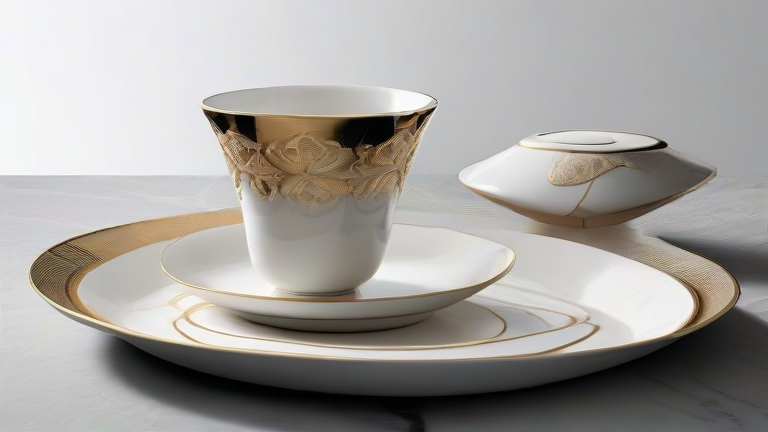
Porcelain History: Tech Behind the White Gold
TL;DR: The latest developments in “white gold” focus on advanced kiln automation and high-temperature ceramic composites that enhance durability and aesthetic perfection. These innovations reduce energy consumption while preserving the historical craftsmanship that defines porcelain’s cultural and industrial value.
Porcelain has long been revered as “white gold” due to its rarity, beauty, and the complex chemistry required to create it. Historically, the secret to its production was guarded closely, particularly in China, where the specific ratio of kaolin and petuntse clay was a state secret. Today, the technology behind porcelain has evolved dramatically, merging ancient artistry with modern engineering. The latest developments in the industry center on precise temperature control and material science, allowing manufacturers to produce porcelain with unprecedented consistency and strength. This shift is not merely about mass production; it is about enhancing the intrinsic properties of the material to meet contemporary demands for both decorative and functional applications.
If you want to dig deeper, check out our guide on Porcelain History & Culture: The Complete Guide.
Latest Technical Specifications
Modern porcelain production utilizes state-of-the-art electric and gas kilns equipped with computerized feedback loops. These systems can maintain temperatures within a narrow range of 1300 to 1450 degrees Celsius, which is critical for achieving the desired vitrification. Vitrification is the process where the clay becomes glass-like, non-porous, and highly durable. Recent advancements include the integration of sensors that monitor oxidation and reduction atmospheres in real-time. This precision allows for the creation of porcelain with specific translucency levels and acoustic properties. Furthermore, new composite materials are being developed that combine traditional porcelain with fiber-reinforced ceramics, resulting in products that are up to forty percent lighter and significantly more resistant to thermal shock than traditional varieties.
Industry Impact and Cultural Preservation
The impact of these technological advancements on the industry is profound. Manufacturers can now produce large-scale architectural porcelain panels for facades and interiors without compromising on the delicate aesthetic qualities that define the material. This has expanded the market beyond traditional tableware and decorative objects into high-end construction and industrial design. However, the focus remains on cultural preservation. Many artisanal studios are adopting these technologies not to replace handcrafting, but to assist in the firing process, ensuring that the unique characteristics of local clay bodies are preserved. The industry is seeing a resurgence in interest for heritage styles, driven by a desire for authenticity in consumer products. As technology continues to advance, the balance between innovation and tradition remains the central theme in the evolution of porcelain. The “white gold” is no longer just a historical artifact; it is a dynamic, evolving material that continues to influence global design and culture.
FAQ
Q: What makes modern porcelain different from historical versions?
A: Modern porcelain benefits from precise computer-controlled kilns and advanced material composites, offering greater durability, consistency, and reduced production waste compared to historical methods.
Q: How does technology affect the cultural value of porcelain?
A: Technology enhances cultural value by preserving traditional aesthetics through consistent quality while enabling new forms of artistic expression and architectural application that were previously impossible.
Q: Are these new techniques environmentally friendly?
A: Yes, modern kiln automation significantly reduces energy consumption and emissions, making the production of porcelain more sustainable and eco-efficient than in previous decades.
Leave a Reply