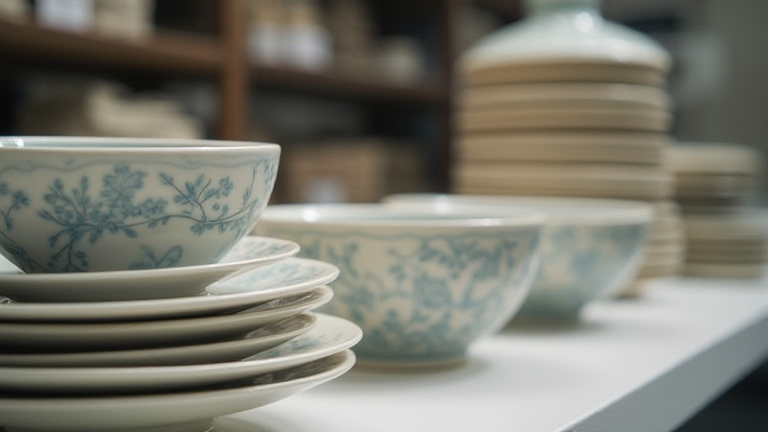
From Kiln to Culture: The Tech Behind Porcelain’s History
TL;DR: The evolution of porcelain is driven by advanced kiln technologies and material science that preserve historical aesthetics while enhancing manufacturing efficiency. Modern innovations in digital firing controls and sustainable glaze chemistry have revolutionized how we produce and appreciate this ancient art form.
The Historical Foundation of High-Fired Clay
Porcelain, known historically as “white gold,” originated in China over a thousand years ago. Its unique properties—translucency, hardness, and low porosity—stem from the specific mineral composition of kaolin clay and the extreme temperatures required for firing. Traditionally, achieving the perfect “meiping” or fine white porcelain required master potters to monitor wood-fired kilns for days. The technology was limited by the inability to precisely control heat gradients, leading to inconsistent results and high breakage rates. This historical reliance on empirical knowledge laid the groundwork for the cultural significance of porcelain, turning it into a symbol of refinement and status across global trade routes.
If you want to dig deeper, check out our guide on Porcelain History: A Guide to Its Health Benefits and Cultur.
Modern Thermal Engineering and Precision Control
Today, the core of porcelain production has shifted from manual intuition to digital precision. Modern electric and gas kilns utilize computerized control systems that maintain temperatures within a margin of error of just a few degrees Celsius. The latest developments include multi-zone temperature sensors that allow manufacturers to manage heat distribution across large chambers. This ensures that every piece in a batch receives uniform thermal treatment, which is critical for achieving the desired vitrification without warping. Furthermore, the integration of IoT sensors allows for real-time data logging, enabling potters to track every second of the firing cycle. This data-driven approach reduces energy consumption by up to 30 percent compared to traditional methods, addressing both cost and environmental concerns.
Molecular Glaze Chemistry and Sustainable Practices
Beyond the body of the ware, the glaze is where modern science intersects with artistic expression. Recent breakthroughs in ceramic chemistry have led to the development of lead-free and non-toxic glaze formulations that offer vibrant colors without compromising safety. These new compounds are engineered to bond more effectively with the porcelain body at lower temperatures, a process known as low-fire compatibility. This innovation allows for greater design flexibility and faster production cycles. Additionally, the industry is moving toward sustainable practices by recycling slip waste and utilizing renewable energy sources for kiln operations. The specs for modern glazes now emphasize durability and chemical stability, ensuring that cultural pieces remain intact for centuries. This shift not only protects the environment but also preserves the integrity of the art form for future generations.
Industry Impact and Cultural Preservation
The impact of these technologies extends beyond the factory floor into the cultural sphere. By standardizing quality and reducing production costs, high-tech manufacturing makes fine porcelain accessible to a broader audience. However, this has sparked a debate about the value of handmade versus machine-produced items. In response, many artisans are adopting hybrid approaches, using digital tools for design and firing while retaining hand-finishing techniques. This fusion ensures that the cultural narrative of porcelain remains alive. Museums and collectors increasingly value the provenance of pieces, often looking for documentation of the technological processes used. Thus, the tech behind porcelain is not just about efficiency; it is about preserving a cultural legacy through modern innovation.
FAQ
Q: What temperature is required to fire modern porcelain?
A: Modern porcelain typically requires firing temperatures between 1,300 and 1,450 degrees Celsius to achieve full vitrification and translucency.
Q: How does digital kiln control improve traditional methods?
A: Digital controls allow for precise temperature management and uniform heat distribution, reducing defects and energy waste compared to manual wood or gas firing.
Q: Are modern porcelain glazes safer than historical ones?
A: Yes, contemporary glazes are predominantly lead-free and non-toxic, adhering to strict modern safety standards while maintaining aesthetic quality.
Leave a Reply