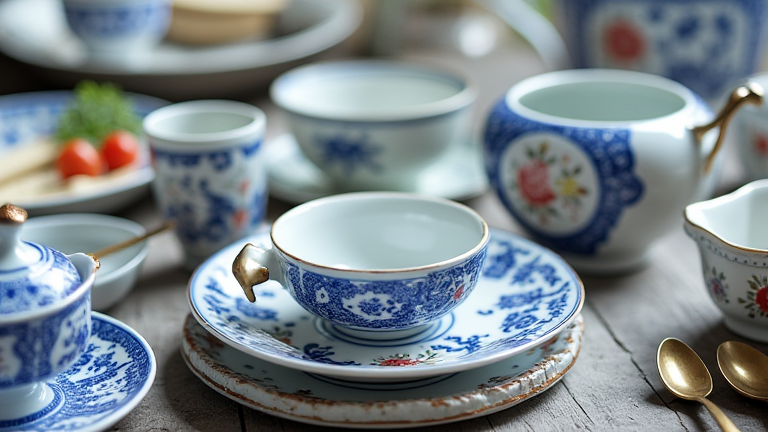
Porcelain History: 7 Key Facts & Cultural Insights
TL;DR: Porcelain originated in China over a thousand years ago and remains a symbol of refinement and artistic mastery worldwide. Understanding its seven key historical milestones reveals why this material continues to dominate high-end home decor and cultural exchange.
Feature Highlights: The Enduring Allure
The primary feature that defines porcelain is its unique vitrified composition. Unlike standard ceramic, true porcelain is fired at extremely high temperatures, resulting in a body that is white, translucent, and nearly impervious to liquids. This physical distinctiveness allows for intricate detailing and delicate thinness, which is a hallmark of high-quality collections. Modern enthusiasts value porcelain not just for its utility, but for its ability to reflect light, creating a sense of elegance in any interior setting. The material’s durability ensures that pieces from the Ming Dynasty can still be admired today, making historical porcelain a timeless investment for collectors and history buffs alike.
If you want to dig deeper, check out our guide on The Digital Revolution of Porcelain: Tech in Ceramic Art.
Cultural Comparisons and Global Impact
When comparing Eastern and Western porcelain traditions, distinct philosophical approaches emerge. Chinese porcelain, often referred to as “white gold,” focuses on subtle glaze variations and naturalistic motifs, such as dragons and peonies. In contrast, European porcelain, which emerged later in the 18th century, often incorporates more ornate gilding and classical European iconography. Meissen in Germany and Sèvres in France became famous for their specific aesthetic signatures, yet both were heavily influenced by the desire to replicate the Chinese original. This cross-cultural pollination highlights how porcelain served as a diplomatic and economic bridge between civilizations for centuries. Today, the market compares these traditions by valuing authenticity, provenance, and the specific craftsmanship techniques employed by master artisans in their respective regions.
Key Historical Facts
First, porcelain was invented in China during the Han Dynasty. Second, the secret of its production was guarded for centuries before leaking to Europe. Third, the term “porcelain” derives from the Italian word for shell, due to its translucent quality. Fourth, the Meissen factory in Germany was the first European factory to produce true hard-paste porcelain. Fifth, the Qing Dynasty saw the peak of export porcelain trade. Sixth, Art Nouveau significantly influenced the shape and decoration of late 19th-century porcelain. Seventh, modern technological advancements have allowed for mass production while maintaining high artistic standards.
Call to Action
Ready to deepen your appreciation for this exquisite material? Explore our curated collection of historical and contemporary porcelain pieces. Whether you are a seasoned collector or a curious novice, discover the story behind each glaze. Visit our gallery today to find a piece that speaks to your personal taste and brings a touch of ancient history into your modern home. Do not miss the opportunity to own a fragment of cultural heritage.
FAQ
Q: What makes porcelain different from ceramic?
A: Porcelain is made from kaolin clay and fired at higher temperatures, making it denser, whiter, and more translucent than standard ceramic.
Q: Which country is famous for its modern porcelain production?
A: While China remains the largest producer, Germany and France are renowned for their high-end, artistic porcelain traditions.
Q: How should I care for antique porcelain?
A: Handle with clean hands, avoid sudden temperature changes, and display in a low-humidity environment to prevent cracking or crazing.
Leave a Reply