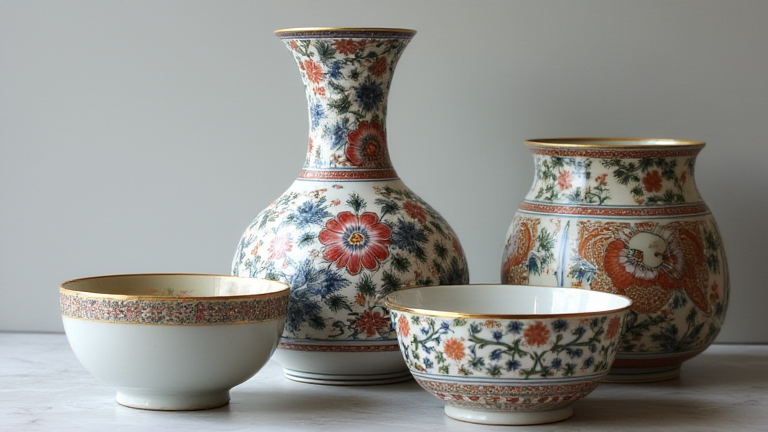
Porcelain History & Culture: A Guide to Ceramic Art
TL;DR: This guide explores the rich legacy of porcelain, from its imperial origins in China to its global influence on modern aesthetics. It provides a curated selection of educational resources and collector-grade items to deepen your understanding of this timeless art form.
The Origins of White Gold
Porcelain, often referred to as “white gold,” has a history that spans over a thousand years. Its origins are deeply rooted in the Tang and Song dynasties of China, where artisans discovered the perfect combination of kaolin clay, quartz, and feldspar. This breakthrough allowed for the creation of a material that was not only durable but also translucent and resonant. Unlike earthenware or stoneware, true porcelain is vitrified at high temperatures, resulting in a body that is nearly waterproof and exceptionally strong. Understanding this technical foundation is crucial for any enthusiast, as it distinguishes authentic pieces from modern imitations. The cultural significance of porcelain extends far beyond its utility; it has been a symbol of status, trade, and diplomatic exchange for centuries. From the intricate blue-and-white patterns of Jingdezhen to the delicate white glazes of the Longquan kilns, each piece tells a story of craftsmanship and cultural pride.
If you want to dig deeper, check out our guide on Porcelain History: Tech & Culture Behind China’s White Gold.
Global Influence and Evolution
As trade routes expanded, porcelain traveled from Asia to Europe, sparking a craze that influenced art, design, and even philosophy. In Europe, attempts to replicate the Chinese secret led to the development of bone china in England and hard-paste porcelain in Germany, particularly at the Meissen factory. These European innovations introduced new techniques and styles, such as the Rococo and Neoclassical periods, which further enriched the global ceramic landscape. Today, porcelain is a vibrant medium for contemporary artists who blend traditional techniques with modern concepts. Whether you are interested in historical artifacts or modern sculptures, the world of porcelain offers a diverse range of subjects to explore. The interplay between Eastern and Western ceramic traditions provides a unique lens through which to view global history and cultural exchange. By studying the evolution of forms, glazes, and motifs, collectors can gain a deeper appreciation for the artistic decisions made by potters across different eras and regions.
Feature Highlights for Collectors
When selecting porcelain pieces for your collection or home, several features stand out. First, consider the provenance. Pieces with documented history from renowned kilns, such as Jingdezhen or Meissen, often carry higher value and historical significance. Second, examine the craftsmanship. Look for fine brushwork, consistent glazing, and structural integrity. Modern artisan porcelain also offers unique opportunities, with many contemporary creators using traditional methods to produce one-of-a-kind pieces that reflect current social and environmental themes. Additionally, the versatility of porcelain makes it suitable for both functional and decorative purposes. High-quality porcelain tableware, for instance, is not only beautiful but also practical, resisting stains and chipping better than other materials. For those interested in cultural education, there are numerous books, museum catalogs, and online courses available that provide detailed insights into the technical and historical aspects of porcelain production. These resources can help you identify authentic pieces and understand their cultural context.
Comparison: Traditional vs. Modern
Comparing traditional and modern porcelain reveals distinct differences in purpose and aesthetic. Traditional pieces often emphasize symmetry, historical motifs, and adherence to specific regional styles. They are typically valued for their rarity, age, and association with famous kilns. In contrast, modern porcelain tends to be more experimental, with artists exploring abstract forms, mixed media, and conceptual themes. Modern pieces may use digital technology in their design process, allowing for intricate patterns and complex shapes that would be difficult to achieve by hand. While traditional porcelain appeals to collectors who appreciate heritage and craftsmanship, modern porcelain attracts those who value innovation and contemporary expression. Both styles offer unique benefits, and a well-rounded collection might include elements from both categories. This diversity allows for a richer narrative, connecting the past to the present and highlighting the continuous evolution of ceramic art.
Call to Action
Ready to deepen your appreciation for porcelain? Start by visiting
Leave a Reply