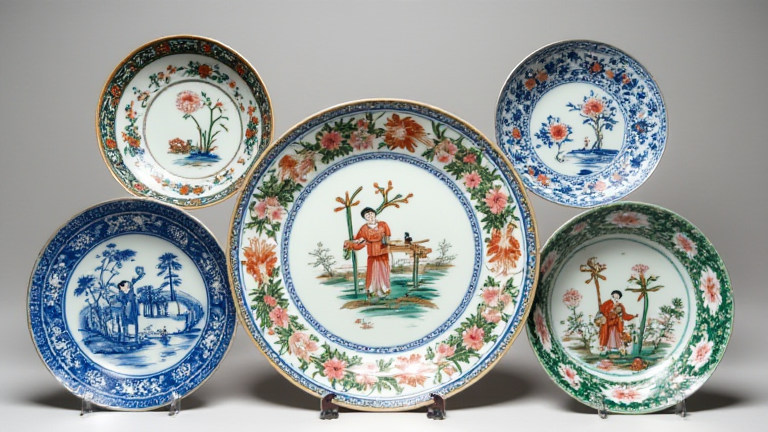
Porcelain History & Culture: The Ultimate Beginner’s Guide
TL;DR: Porcelain originated in China around the 2nd century BC and became a highly coveted luxury item across global trade routes. Understanding its history involves exploring its evolution from Chinese imperialware to European imitation and its enduring cultural significance in art and daily life.
Learning about porcelain is not just about collecting pretty cups; it is about understanding a material that shaped global economics, diplomatic relations, and artistic expression for centuries. This guide will walk you through the essential steps to appreciating the rich history and cultural impact of this “white gold.” By following these instructions, you will gain a foundational knowledge that allows you to engage with porcelain as both an art form and a historical artifact.
If you want to dig deeper, check out our guide on Porcelain History: How Ancient Craft Boosts Modern Health.
Step 1: Understand the Origins in China
Your journey begins in ancient China. Porcelain, known as “bai tao” or white pottery, was first perfected during the Han Dynasty. Unlike earthenware, porcelain is fired at extremely high temperatures, resulting in a dense, white, and translucent body. To study this, look for resources on the Longquan and Jingdezhen kilns. Jingdezhen, often called the “Porcelain Capital,” was the center of imperial production for over a thousand years. Read about the specific techniques used, such as the use of kaolin clay and feldspar, which are critical to understanding why porcelain is so distinct from other ceramics.
Step 2: Trace the Silk Road and Global Trade
Next, explore how porcelain traveled the world. During the Tang and Song dynasties, Chinese porcelain began exporting to the Middle East and Europe. In Europe, the arrival of Chinese blue-and-white wares sparked a craze. To understand this cultural exchange, examine the “Ming Vases” that became status symbols in European courts. Study how local artisans attempted to replicate the look, leading to the development of faience and delftware. This step highlights how a single material influenced global aesthetics and trade networks, making porcelain a key player in early globalization.
Step 3: Discover the European Revolution
In the 18th century, Europe finally cracked the code of true hard-paste porcelain. This was a monumental scientific and artistic achievement. Focus your research on the Meissen factory in Germany, which was the first to produce true porcelain in Europe in 1708. Follow this with the rise of Sèvres in France and Wedgwood in England. Each of these entities developed unique cultural styles. Meissen is known for its delicate baroque designs, while Sèvres became synonymous with French aristocracy. Understanding these distinctions helps you appreciate the regional variations that emerged from the original Chinese inspiration.
Step 4: Appreciate Modern Cultural Significance
Finally, consider porcelain in the modern context. Today, porcelain is not just for tea sets; it is a medium for contemporary art, sculpture, and even industrial applications. Look at how modern artists use porcelain to challenge traditional perceptions of fragility. Engage with cultural institutions that host porcelain exhibitions to see how this material continues to evolve. This step connects the past to the present, showing that porcelain remains a vital part of cultural dialogue.
By following these steps, you move from a passive observer to an informed enthusiast. You will be able to look at a piece of porcelain and see the layers of history, trade, and artistry embedded within its form. Whether you are a collector, a student, or simply a curious mind, this knowledge enhances your appreciation of one of humanity’s most enduring creations.
FAQ
Q: What makes porcelain different from other ceramics?
A: Porcelain is made from specific materials like kaolin clay and fired at very high temperatures, resulting in a dense, white, translucent, and vitrified body that is harder and less porous than earthenware or stoneware.
Q: Why was porcelain so valuable in Europe?
A: It was valued for its aesthetic beauty, durability, and scarcity, as it was initially impossible
Leave a Reply