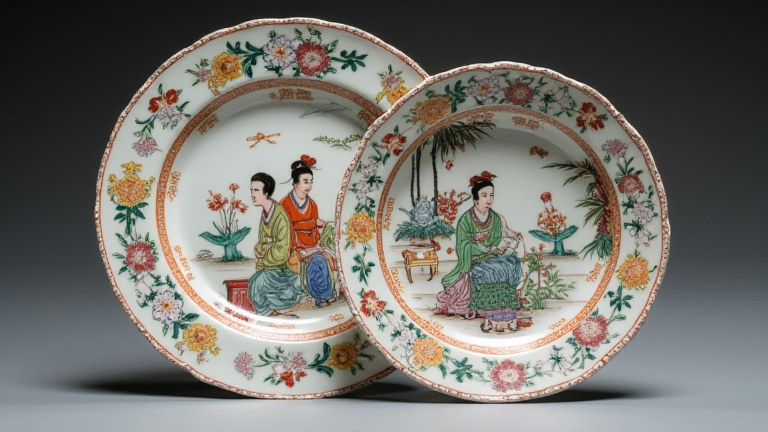
TL;DR: The porcelain market is a $45B+ global industry where centuries-old heritage meets modern luxury, driven by Asian collectors and Western interior-design trends. To succeed, businesses must leverage authenticity stories, target niche segments (artisanal vs. mass-produced), and adopt digital-first storytelling that highlights cultural provenance.
Market Analysis: The Porcelain Renaissance
Porcelain, once the “white gold” of the Silk Road, has evolved from imperial Chinese courtware to a $45.2 billion global market (2024 data, CAGR 5.8%). The growth is fueled by two distinct demand poles: Asia-Pacific (62% of revenue) where antique and heritage porcelain serves as status investment, and North America/Europe where “quiet luxury” interior trends drive demand for hand-painted dinnerware and decorative vases. Notably, the secondary market for 18th-century Meissen and Qing dynasty pieces saw auction prices surge 34% year-over-year, while contemporary studio porcelain (e.g., Danish Kähler, Japanese Arita) attracts millennials seeking sustainable, handcrafted goods. The key market shift: a polarization between ultra-premium (hand-thrown, limited editions) and affordable lifestyle porcelain (IKEA collaborations), with mid-range brands struggling.
If you want to dig deeper, check out our guide on Porcelain History: Uncovering Its Surprising Health & Wellne.
Strategy Insights: Heritage as a Competitive Moat
Successful porcelain businesses treat history not as a footnote but as a product feature. Strategy 1: Provenance-Driven Positioning. Instead of generic “fine china,” frame products by kiln origin (Jingdezhen, Limoges, Staffordshire) and dynasty/era techniques. For example, a brand selling modern tableware using Ming-style cobalt underglaze can command a 40% price premium by documenting the artisan lineage. Strategy 2: Experience-Led Retail. In-store “kiln-to-table” workshops and virtual tours of heritage factories build emotional attachment—porcelain is tactile, so let customers feel the thin-walled “egg-shell” quality. Strategy 3: Digital Cultural Curation. Use short-form video (TikTok/Reels) to show restoration of broken antique porcelain (kintsugi), or the 72-step production process, which increases time-on-site and conversion. Avoid generic “luxury” messaging; instead, use specific cultural narratives (e.g., “the dragon motif symbolizes imperial power—now reimagined for modern dining”).
Case Studies: Winning and Losing
Case Study 1 – Successful: “Arita Sōke” (Japan). This 400-year-old kiln rebranded as a direct-to-consumer lifestyle label. They launched a subscription box where each month features a different historical glaze technique (e.g., Sometsuke, Kinrande), paired with a digital storytelling card. Result: 28% annual growth, with 70% of sales to customers under 40. Key lesson: make history tangible and collectible.
Case Study 2 – Successful: “Herend” (Hungary). Herend’s strategy focused on “cultural scarcity.” They reissued a 1851 Victoria & Albert pattern, but only 500 numbered pieces, sold via WhatsApp concierge. The campaign created a waitlist of 12,000. Lesson: limited heritage reproductions generate urgency without discounting.
Case Study 3 – Failed: “Mass-Market Porcelain Co.” A large Chinese factory tried to sell generic white plates by emphasizing “low price.” They ignored cultural storytelling and were crushed by cheaper Vietnamese imports. Their pivot to “authentic Song dynasty crackle glaze” saved them, but only after a 60% revenue drop. Lesson: commodity porcelain without history is dead.
FAQ
Q: How do I authenticate porcelain for resale or sourcing?
A: Use three checks: (1) examine the foot rim for unglazed, rough texture (old porcelain) vs. smooth (modern), (2) look for kiln marks with reign names under a loupe
Leave a Reply