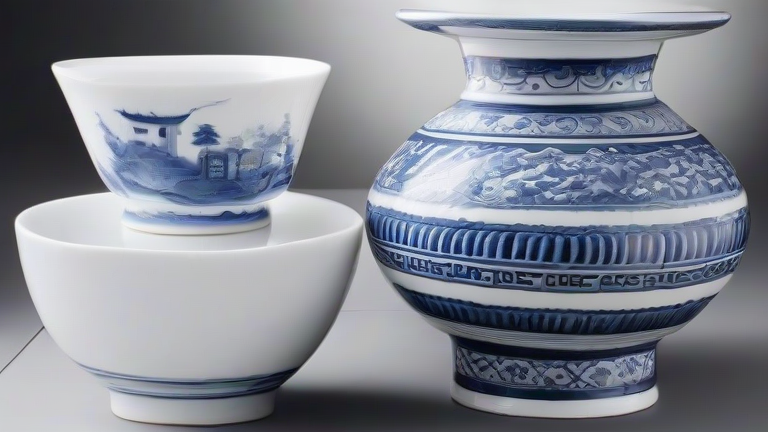
TL;DR: Recent advancements in digital kiln control and nanotechnology have revolutionized traditional Chinese porcelain, allowing for unprecedented precision in firing and glaze application. These innovations preserve historical craftsmanship while enabling mass production of high-fidelity cultural artifacts for the global market.
The Digital Revival of Ancient Craft
The narrative of porcelain history is often viewed through the lens of static museum pieces, yet the industry is currently undergoing a silent technological revolution. For centuries, the production of Jingdezhen ceramics relied heavily on the intuitive experience of master artisans and the variable nature of natural clay and wood-fired kilns. Today, the integration of Industry 4.0 technologies has transformed this ancient craft into a high-precision engineering discipline. The core of this shift lies in the development of smart kilns equipped with IoT sensors that monitor temperature, humidity, and atmosphere composition in real-time. These systems can adjust firing parameters with a precision of 0.1 degrees Celsius, eliminating the unpredictability that historically resulted in high waste rates and inconsistent quality. This technological leap ensures that the delicate translucency and resonant tone characteristic of true porcelain are replicated with statistical reliability, bridging the gap between historical tradition and modern industrial standards.
If you want to dig deeper, check out our guide on The Enduring Allure of Porcelain: A Journey Through History.
Material Science and Nanotechnology
Beyond kiln automation, the raw materials themselves have undergone significant scientific refinement. Researchers have introduced nano-scale additives to traditional kaolin mixes, enhancing the structural integrity and thermal shock resistance of the final product. These nanomaterials allow for thinner, lighter, and more durable ceramics without compromising the iconic white or blue-and-white aesthetic. Furthermore, digital glaze formulation software now allows chemists to simulate chemical reactions before a single drop is mixed. By analyzing the molecular structure of historical glazes found on Ming Dynasty artifacts, modern chemists can recreate ancient formulas with exacting accuracy. This capability has enabled the restoration of lost techniques, such as the specific cobalt pigments used in the early 1400s, which were previously thought to be lost forever. The result is a new class of “tech-porcelain” that serves both aesthetic and functional purposes, finding applications in high-end tableware, architectural decor, and even specialized medical devices where biocompatibility is paramount.
Industry Impact and Cultural Export
The economic impact of these technological integrations has been substantial. The Chinese porcelain industry has seen a significant increase in export value, driven by the ability to offer consistent quality at scale. Large manufacturers can now fulfill international orders for custom cultural products with faster turnaround times and lower defect rates. This efficiency has also democratized access to high-quality porcelain, making intricate designs available to a broader consumer base. Moreover, these technologies facilitate the preservation of cultural heritage. Digital archives now store the precise parameters of historical firings, creating a digital twin of the manufacturing process. This data serves as an educational tool for new generations of artisans, ensuring that the tactile knowledge of the craft is not lost but is instead augmented by scientific understanding. The synergy between tradition and technology has positioned porcelain not just as a commodity, but as a sophisticated cultural export that embodies both historical depth and modern innovation.
FAQ
Q: How does IoT improve traditional porcelain firing?
A: It enables real-time monitoring and automatic adjustment of kiln variables, ensuring consistent quality and reducing waste.
Q: What role does nanotechnology play in modern ceramics?
A: It enhances material strength and durability, allowing for thinner products that resist thermal shock and breakage.
Q: Can modern tech recreate ancient glaze formulas?
A: Yes, digital simulation and chemical analysis allow for the precise recreation of lost historical glaze compositions.
Leave a Reply